Sistema Renina-Angiotensina-Aldosterona y antihipertensivos
Understanding the Renin-Angiotensin-Aldosterone System
Overview of the Renin-Angiotensin-Aldosterone System (RAAS)
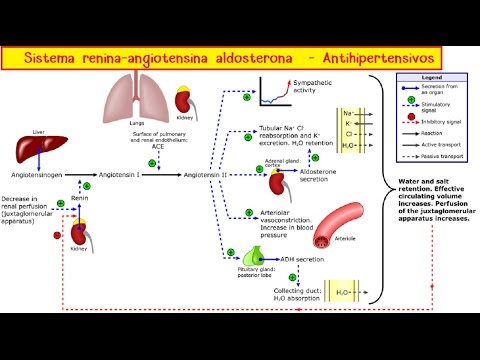
- The video explains the RAAS, focusing on its role in regulating blood pressure and fluid balance in response to renal hypoperfusion.
- The juxtaglomerular apparatus detects decreased renal blood flow or pressure, triggering renin secretion from specialized cells.
Mechanism of Action
- Renin catalyzes the conversion of angiotensinogen, produced by the liver, into angiotensin I. This process is crucial for subsequent steps in blood pressure regulation.
- Angiotensin I is converted to angiotensin II primarily in the lungs via angiotensin-converting enzyme (ACE), leading to vasoconstriction and increased blood pressure.
Effects of Angiotensin II
- Angiotensin II stimulates aldosterone secretion from the adrenal cortex, promoting sodium reabsorption and potassium excretion at the kidney level.
- It also enhances sympathetic nervous system activity and stimulates ADH release from the posterior pituitary gland, contributing to water retention and increased thirst.
Pharmacological Interventions
- Various antihypertensive medications target different points within this system: ACE inhibitors block conversion of angiotensin I to II; ARBs inhibit angiotensin II receptors; direct renin inhibitors like Aliskiren reduce overall renin activity.