Introduzione completa all'apparato cardiocircolatorio
Overview of the Cardiovascular System
Introduction to the Cardiovascular System
- The cardiovascular system's primary function is to nourish body tissues and eliminate waste through blood, a specialized connective tissue for transport.
Structure of the Heart
- The heart acts as a pump, circulating blood through hollow organs known as vessels, which are categorized into arteries (red) and veins (blue). Arteries carry blood away from the heart, while veins return it.
Blood Vessel Classification
- Arteries transport oxygenated blood away from the heart, while veins carry deoxygenated blood back. Capillaries connect these two types of vessels and facilitate nutrient and waste exchange between blood and tissues.
Gas Exchange in Tissues
Nutrient Exchange Dynamics
- Oxygen is crucial for bodily functions, while carbon dioxide is a primary waste product. Conventionally, oxygen-rich blood is depicted in red and carbon dioxide-rich blood in blue; however, not all arteries contain oxygenated blood nor do all veins contain deoxygenated blood.
Heart Structure Details
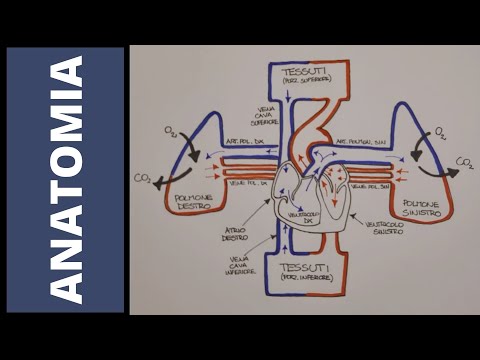
- The heart consists of four chambers: two atria (right and left) and two ventricles (right and left). Deoxygenated blood enters the right atrium via superior and inferior vena cavae before moving to the right ventricle.
Pulmonary Circulation
Pathway of Blood to Lungs
- From the right ventricle, deoxygenated blood is pumped into the pulmonary artery (which contains blue-colored deoxygenated blood), leading to gas exchange in lungs where it picks up oxygen and releases carbon dioxide.
Return Journey of Oxygenated Blood
- After gas exchange in lungs, oxygen-rich blood returns via pulmonary veins (four total), entering the left atrium before moving into the left ventricle for systemic circulation.
Systemic Circulation
Distribution of Oxygen-Rich Blood
- The aorta distributes oxygen-rich blood throughout both upper and lower body tissues where further gas exchanges occur—body tissues extract needed oxygen while releasing carbon dioxide back into circulation.
Summary of Circulatory Types
- Two circulations exist: systemic circulation transports oxygenated blood to body tissues via systemic arteries; pulmonary circulation sends deoxygenated blood from heart to lungs via pulmonary arteries for reoxygenation before returning it back to heart through pulmonary veins.
Functions Beyond Transport
Additional Roles of Cardiovascular System