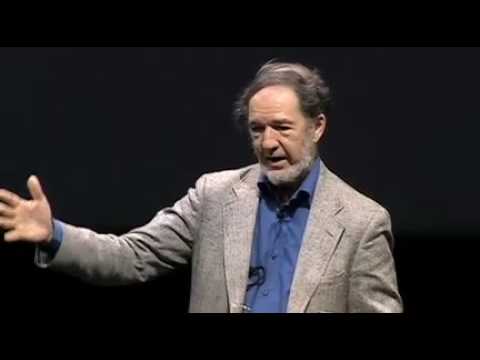
Why societies collapse | Jared Diamond
Understanding Societal Collapse
Introduction to Societal Collapses
- The speaker discusses the fascination with historical societies that collapsed, such as the Maya and Great Zimbabwe, highlighting environmental issues as a common factor in these collapses.
- Contrasts fragile societies with those that have thrived for millennia (e.g., Japan, Tonga), raising questions about what makes some societies more resilient than others.
Relevance to Modern Society
- Draws parallels between past collapses and current situations in countries like Somalia and Rwanda, emphasizing the importance of learning from history to avoid similar fates.
- Asserts that societal collapse is complex and cannot be attributed to a single cause; warns against oversimplified explanations.
Five-Point Framework for Analyzing Collapse
Case Study: Greenland Norse Society
- Introduces a five-point framework used to analyze societal collapses, beginning with the extinction of the Greenland Norse society around 1450.
Human Environmental Impacts
- First point: Examines how human actions led to environmental degradation, specifically soil erosion and deforestation among the Vikings due to their iron production needs.
Climate Change Factors
- Second point: Discusses climate change's role; while temperatures dropped in Greenland during the late 1300s, it did not affect all groups equally (e.g., Inuit thrived).
Relations with Neighboring Societies
- Third point: Highlights trade relations with Norway that weakened over time due to various factors including sea ice, impacting resource availability for the Norse.
Hostile Relations Impacting Survival
- Fourth point: Describes conflicts with Inuit populations who may have contributed significantly to Norse decline by blocking access to vital resources.
Cultural and Political Factors
- Fifth point: Explores internal cultural factors hindering problem-solving capabilities within Norse society, such as religious commitments and social hierarchies.
Contemporary Analysis of Montana's Environment
Current Environmental Issues
- The speaker reflects on personal experiences in Montana, revealing underlying environmental problems despite its seemingly pristine appearance.
Checklist Application
- Applies the same five-point checklist:
- Human impacts include toxic mine waste causing significant economic damage.
- Climate change is affecting agriculture reliant on snowpack irrigation due to warming trends.
Economic Vulnerabilities
- Discusses economic dependencies where over half of Montana’s income comes from external sources, making it vulnerable.
Global Sensitivities
Understanding Societal Collapse
The Role of Long-Held Values
- Montanans' traditional values, such as devotion to logging, mining, and agriculture, are now hindering their ability to address contemporary issues.
- Historical values that once served societies well may not be effective in solving current problems.
Patterns of Collapse in Societies
- Many societies experience rapid collapse shortly after reaching their peak; this is a common thread observed across different cultures.
- Examples include the lowland Maya's decline in the early 800s and the Soviet Union's collapse within decades of its greatest power.
Resource Mismatch and Rapid Decline
- A significant factor contributing to societal collapse is the mismatch between resource consumption and availability.
- The analogy of bacteria growth in a petri dish illustrates how societies can quickly exhaust resources after a period of expansion.
Mathematical Insights into Societal Health
- To assess societal stability, one should focus on the first and second derivatives of wealth rather than just its total value.
Environmental Fragility Factors
- Subtle environmental factors contribute to some societies being more fragile than others; for instance, Easter Island faced unique challenges leading to deforestation.
- Key environmental influences included volcanic fallout and nutrient input from continental dust, which were critical yet overlooked until recent studies.
Perception Failures in Societal Decision-Making
- Students often question how past societies failed to recognize their destructive actions; this raises concerns about modern society's awareness of similar issues.
- There is an expectation that future generations will also wonder why current populations did not take corrective actions when they had the chance.
Conflicts of Interest Leading to Collapse
- A major risk factor for societal collapse is when decision-making elites prioritize short-term gains over long-term societal health.
- Historical examples show that elite interests can lead to unsustainable practices that ultimately harm society as a whole.
- In Greenland Norse society, chiefs prioritized immediate resource accumulation at the expense of long-term sustainability.
Modern Implications for Society
Understanding Societal Decision-Making and Environmental Challenges
Conflicts of Interest in Societal Decisions
- Societies often make poor decisions due to conflicts of interest, where short-term benefits for certain groups lead to long-term detriments for society as a whole.
- Strongly held values can hinder societal adaptability; the Greenland Norse's commitment to religion and social cohesion limited their ability to learn from the Inuit during environmental challenges.
- Australia's British identity has historically supported its survival but now poses challenges in adapting to its geographical context in Asia.
The Ticking Time Bombs of Modern Society
- There are numerous pressing global issues—referred to as "time bombs"—that threaten sustainability, including water scarcity, climate change, and invasive species.
- Many of these problems have imminent deadlines; for instance, the Philippines may lose all accessible loggable forests within five years.
The Importance of Comprehensive Solutions
- Addressing environmental issues requires a multifaceted approach; focusing on one problem while neglecting others could lead to failure.
- A non-sustainable course is inevitable if current practices continue; resolution will occur within decades through either proactive measures or adverse consequences like war or starvation.
Choices and Control Over Our Future
- Individuals under 60 will likely witness how these environmental paradoxes resolve, emphasizing the urgency for action.
- Major threats today stem from human actions rather than uncontrollable events (e.g., asteroids), suggesting that solutions are within our reach.
Taking Action
Turn any video into a summary like this
YouTube links, meetings, lectures. With transcripts, search, and chat.