clase 28 02 2026
Calculating Reception Power in Communication Systems
Understanding Reception Power Calculation
- The calculation of received power involves several components: transmission power, transmission gain, reception gain, and losses such as FCPL (or FCL), transmission attenuation, reception attenuation, and miscellaneous losses.
- The formula for received power is expressed as: Received Power = Transmission Power + Transmission Gain + Reception Gain - FCPL - Transmission Attenuation - Reception Attenuation - Miscellaneous Losses.
- An example calculation shows that with a transmission power of 23 dBMs and a total gain of 54 dBI, the resulting value after accounting for various losses is approximately 62.67 dB.
Implications of Calculated Values
- Despite significant losses in the system, high gains from antennas can compensate for these losses; thus, maintaining an acceptable level of received power.
- The distance involved (25 km) necessitates consideration of modulation techniques to ensure robustness and efficiency in communication systems.
Interpretation and Analysis
- It’s crucial to interpret results meaningfully rather than just performing calculations; this helps in understanding the practical implications of the data obtained.
- A reasonable reception power indicates potential effectiveness for directive links but requires further analysis due to longer distances involved.
Alertness to Potential Issues
- A cautionary note is raised regarding the reliability of results over longer distances; visual cues like alert signs are used to emphasize this point.
Effects on Modulation and SNR
- Attention must be given to how modulation affects signal-to-noise ratio (SNR), particularly concerning MSC (Modulation Scheme Characteristics).
- While SNR values are not directly provided, other parameters like noise figure and temperature can be utilized to derive necessary insights about system performance.
Understanding Thermal Noise
Key Concepts in Thermal Noise
- Thermal noise at a typical temperature of 290 Kelvin is critical for understanding overall system performance; it is quantified as approximately -174 dBm/Hz.
- Recognizing how thermal noise interacts with bandwidth configurations is essential since wider bandwidth increases total noise levels significantly.
Bandwidth Impact on Noise Levels
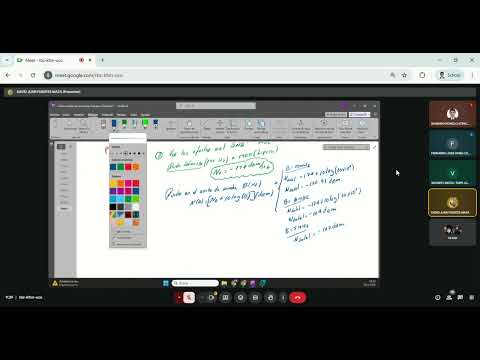
- To measure noise within a specific bandwidth, one can use the formula: Total Noise = Thermal Noise + 10 log(Bandwidth), expressed in decibels m.
- For instance, using a bandwidth of 20 MHz results in a calculated total noise level around -160.98 dBm. This highlights the importance of managing bandwidth effectively to minimize added noise.
Calculating Noise and Bandwidth in Communication Systems
Understanding Noise Levels
- The calculation begins with determining the noise level, resulting in a value of -1.91 dBm, which is expressed in decibels relative to 1 milliwatt (dBm).
- The total noise for a bandwidth of 10 MHz is calculated as -174 + 10 log(10 * 10^6), yielding a total noise level of 104 dBm.
- Reducing the channel width decreases the noise level; lower negative values indicate better signal quality.
Signal-to-Noise Ratio (SNR)
- A clear distinction is made between different types of noise, emphasizing thermal noise and its impact on signal clarity.
- The importance of maintaining a significant margin between signal strength and noise levels is highlighted, leading to discussions about SNR.
- The instructor emphasizes that adjusting bandwidth can improve SNR but may also lead to trade-offs such as reduced throughput.
Calculating SNR Values
- SNR is defined as the difference between received power and total noise, expressed in decibels.
- For various bandwidth settings (20 MHz, 10 MHz, and 5 MHz), distinct SNR values are calculated:
- For 20 MHz: -67.24 dB
- For 10 MHz: 41.33 dB
- For 5 MHz: 44.33 dB
Evaluating Efficiency Based on SNR
- All calculated SNR values are deemed acceptable; however, higher values correlate with cleaner channels and better performance.
- It’s suggested that an optimal SNR leads to high efficiency in communication systems while filtering out less noise.
Technical Viability Assessment
- Discussion shifts towards assessing technical viability over distances like 25 km based on previously established parameters.
- The relationship between SNR and error probability is introduced as crucial for understanding modulation effects within communication systems.
Modulation Choices Based on Distance
- Emphasis on selecting appropriate modulation techniques based on distance requirements; current technology supports efficient communication over long distances like 25 km.
- Engineers must balance efficiency with robustness depending on specific distance needs; longer distances may necessitate more robust solutions.
Understanding Efficiency and Robustness in Modulation
Key Concepts of 16 QAM
- The speaker emphasizes the importance of efficiency and robustness in modulation, specifically mentioning the use of 16 QAM (Quadrature Amplitude Modulation) for achieving these goals.
- A formula is introduced involving SNR (Signal-to-Noise Ratio), where K equals 4, leading to calculations that are essential for understanding modulation performance.
Bandwidth and Capacity Considerations
- The discussion shifts to bandwidth requirements, highlighting that transmitting at different speeds (80 Mbps vs. 700 Mbps) necessitates varying channel widths to maintain capacity.
- Clarification is made between transmission speed and bandwidth; they are distinct parameters that can affect overall system performance.
User Impact on Channel Width
- An analogy comparing road width to data transmission illustrates how user demand influences the need for wider channels; more users require larger bandwidth.
- With a proposed channel width of 10 MHz, an SNR value of 41.33 is calculated, indicating sufficient conditions for effective communication.
Exam Preparation Insights
- The instructor stresses the importance of interpretation over mere calculation in exams, urging students to understand their choices under realistic assumptions.
- Students are prompted to calculate specific values related to Gaussian functions as part of their learning process, reinforcing practical application skills.
Gaussian Function Application
- The speaker discusses using Gaussian function tables for calculations, emphasizing accuracy in determining acceptable error rates (BER).
- Acknowledgment is given that a channel width of 10 MHz yields an acceptable BER value based on previous calculations discussed earlier in the session.
Final Thoughts on Robustness and Efficiency
- Concluding remarks highlight that while typical BER values range from -10 to -15 dB, achieving robust performance with 16 QAM is deemed acceptable within this context.
- A correction regarding the negative exponent in Gaussian function formulas reinforces critical thinking about mathematical expressions used throughout the discussion.
Discussion on Robustness and Coding in Network Design
Importance of Redundancy in Coding
- The speaker emphasizes the need for coding to enhance robustness, stating that it is a straightforward process.
- Different coding rates are discussed: 1/2, 2/3, and 3/4. The redundancy percentages associated with each rate are highlighted as follows:
- 50% redundancy for 1/2
- 66% redundancy for 2/3
- 33% redundancy for 3/4
- The speaker suggests using at least an acceptable level of redundancy to ensure robustness, recommending two specific options based on performance.
Considerations for Distance and User Demand
- The discussion shifts to practical considerations regarding user demand and distance. If many users require high speeds, a more conservative approach is advised.
- When distances exceed 25 km, factors like interference from environmental conditions (wind, sun, rain) must be considered.
Review of Key Concepts
- A reminder is given about previous discussions on bandwidth effects related to Signal-to-Noise Ratio (SNR), indicating potential areas for deeper exploration.
Class Logistics and Student Presentations
Scheduling Adjustments
- The instructor proposes rescheduling the next class from one o'clock to twelve o'clock to accommodate students' schedules better.
Student Work Presentation Guidelines
- Students are instructed on presenting their work involving seven parameters necessary for network design calculations.
Technical Calculations in Network Design
Geodesic Distance Calculation
- Students must select latitude and longitude points to calculate geodesic distance; this involves converting values into radians.
Free Space Loss (FSL)
- For FSL calculation at a frequency of 5800 MHz over a calculated distance of approximately 8.28 km:
- Formula used: FCL = 30.45 + 20 log_10(5800) + 20 log_10(distance)
- Resulting value: approximately 126.07 dB.
Power Received Calculation
- The power received (PRX) is calculated by considering transmitter power, gains, losses due to free space loss:
- Example results include PRX values around −32.07 dB for the first segment.
Fade Margin Analysis
- A fade margin greater than 20 dB is required for high availability in network links; this indicates sufficient power cushion against signal degradation.
This structured summary captures key insights from the transcript while providing timestamps linked directly to relevant sections of the video content.
Analysis of QAM Emulation and Link Performance
Overview of QAM Modulation
- The analysis focuses on the emulation of Quadrature Amplitude Modulation (QAM) for two segments, with a calculated DB value of approximately 30.93, indicating the use of 256 QAM for both segments.
- Both segments are estimated to have a bandwidth capacity of 100 MB, suggesting robust links with high received power and availability.
Impact of Diffraction on Signal Quality
- The discussion includes theoretical data regarding diffraction effects, emphasizing that both segments can utilize high-capacity modulation like 256 QAM for enhanced bandwidth.
- Assumptions about diffraction distances range from 300 m to 23 km, highlighting the importance of these calculations in real-world scenarios.
Critical Height Calculations
- The Fresnel zone radius is calculated at 3.51 cm, which is crucial for understanding signal propagation over obstacles.
- The diffraction coefficient is determined by subtracting the heights of antennas and obstructions; specific heights are given as transmission at 130 m, reception at 140 m, and obstruction at 150 m.
Adjustments Based on Distance
- A critical height calculation yields a value of 152.7 m; adjustments must be made based on total distance to ensure accurate modeling.
- There’s an acknowledgment that mathematical development related to MCS (Modulation and Coding Scheme) requires further refinement.
User Traffic Analysis for Network Capacity
Estimating User Demand
- A query arises regarding estimating traffic for eight clients; assumptions include a connected user percentage of 75% in coastal areas.
- Average traffic per user is set at 2.5 Mbps during peak hours identified between 4 PM and 9 PM when simultaneous connections are highest.
Throughput Calculation
- Throughput is calculated based on users connected per hour multiplied by average traffic; results indicate an estimated throughput of 15 Mbps.
Network Parameters and Distance Calculations
Project Finalization Insights
- Discussion shifts towards final project parameters including distances between points A, repeaters one and two, leading to point B using latitude/longitude calculations.
Mathematical Validation
- Distances calculated show values such as approximately 4.77 km for the first segment and around 2.62 km from repeater to access point; minor discrepancies noted but overall consistency achieved through calculations.
Free Space Loss Consideration
- Free Space Loss (FSL) calculations are performed for each segment while additional documentation exists detailing user distribution metrics based on TR (Traffic Rate).
This structured summary encapsulates key discussions from the transcript while providing timestamps linked directly to relevant sections for easy reference.
Analysis of Transport Layer Throughput and Protocols
Calculation of Throughput
- The initial throughput calculation starts with a user rate of 750, adjusted for a 20% simultaneity factor, resulting in a throughput of 150 Mbps.
- For video calls, the required throughput is noted as 1.55 Mbps, emphasizing the importance of this metric for community health and education improvements.
- A total capacity requirement is calculated at 306 Mbps to ensure reliability under adverse climatic conditions, highlighting the need for robust infrastructure.
Protocol Justifications
- Discussion shifts to network layers where justifications for added protocols like TCP/IP are questioned; clarity on which headers are necessary is sought.
- Emphasis on using appropriate headers in transport layer calculations indicates an understanding that each layer has specific requirements.
Class Structure and Engagement
- The session concludes with reminders about class duration and breaks, indicating a structured approach to learning while ensuring student engagement.