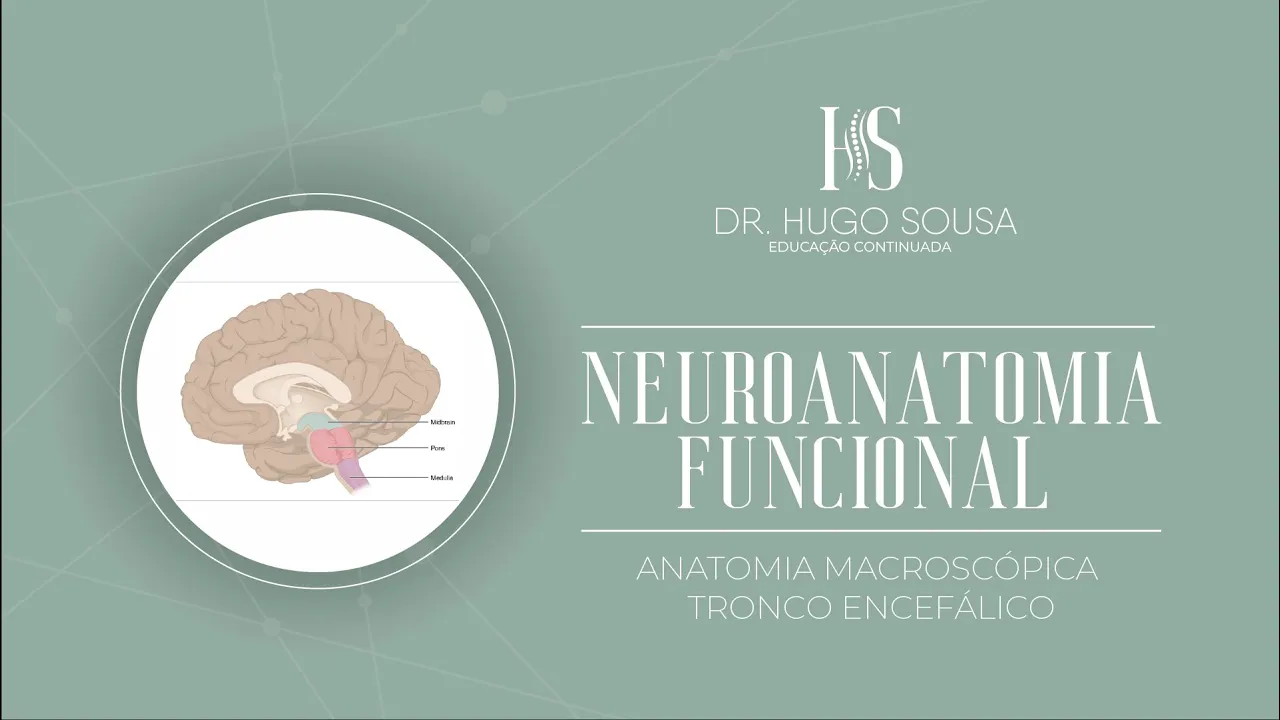
ANATOMIA MACROSCÓPICA DO TRONCO ENCEFÁLICO - PARTE 2
Understanding the Fourth Ventricle and Its Connections
Overview of the Central Nervous System Development
- The fourth ventricle is a crucial structure in the developing central nervous system, with spaces within it referred to as ventricles.
- The brain consists of two main parts: the telencephalon and diencephalon, which are essential in embryology discussions.
Structure of the Brain
- The telencephalon includes gyri and lobes, while the diencephalon comprises structures like the epithalamus and subthalamus.
- The encephalon also encompasses the brainstem (composed of midbrain, pons, and medulla oblongata) and cerebellum.
Ventricular System
- Within the brain, there are lateral ventricles (two), a third ventricle located in the diencephalon, and a fourth ventricle that connects through the mesencephalic aqueduct.
- The fourth ventricle is bordered by parts of the pons, medulla oblongata, and superiorly by the cerebellum.
Cerebrospinal Fluid Production
- All four ventricles produce cerebrospinal fluid (CSF), which drains from one ventricle to another; for instance, from lateral to third ventricle.
- CSF is ultimately drained into subarachnoid spaces surrounding the brain.
Drainage Pathways
- CSF flows into structures associated with arachnoid granulations before entering venous sinuses within dura mater.
- It is then drained via internal jugular veins; this process was discussed generally without delving into specifics.
Anatomy of the Fourth Ventricle
Boundaries of the Fourth Ventricle
- Superior boundary: Mesencephalic aqueduct; inferior boundary: central canal extending into spinal cord.
- Lateral recesses form part of its walls; these are significant anatomical features.
Floor Anatomy
- The floor or base of the fourth ventricle is formed by an open area between pons and medulla oblongata.
- Key features visible on this floor include median sulcus and medial eminences that help identify structural landmarks.
Important Structures in Context
- A notable feature on this floor is called "locus ceruleus," which plays a role in alertness due to its connection with reticular formation nuclei.
- This region contains noradrenergic nuclei critical for maintaining attention levels.
Understanding the Brainstem Structures
Facial and Abducens Nerves
- The facial colliculus is associated with the facial nerve, which curves around its nucleus. This area is crucial for understanding partial lesions affecting both the facial and abducens nerves.
- The abducens nerve, responsible for eye abduction, has its nuclei located superficially near the facial colliculus. Lesions in this region can lead to symptoms related to both nerves.
Vestibular Area
- The vestibular area is triangular and contains vestibular nuclei that are essential for balance. These nuclei connect with various brain regions, including the cerebellum and spinal cord.
- There are four groups of vestibular nuclei (superior, inferior, medial, lateral), all contributing to equilibrium regulation and motor activity.
Hypoglossal and Vagus Nerves
- The hypoglossal nerve's nuclei are found deep within the medulla oblongata. It plays a vital role in tongue movement and speech.
- The vagus nerve has multiple nuclei located deeper in the medulla; it influences numerous bodily functions such as digestion and heart rate.
Area Postrema
- The area postrema is involved in vomiting reflexes due to its chemoreceptor function. It detects chemical stimuli in cerebrospinal fluid that can trigger these reflexes.
Fourth Ventricle Structures
- The fourth ventricle's floor contains important structures like the rhomboid fossa. Understanding these structures helps clarify their roles within brain anatomy.
- The roof of the fourth ventricle features two medullary velums (superior and inferior), which are significant for cerebrospinal fluid production through choroid plexuses.
Choroid Plexus Functionality
- Choroid plexuses produce cerebrospinal fluid (CSF), filtering blood plasma through ependymal cells. This process is critical for maintaining CNS homeostasis.
- CSF circulates throughout ventricles before mixing with blood, playing a key role in nutrient transport and waste removal from neural tissues.
Overview of the Mesencephalon and Its Structures
Lateral Openings and Cerebrospinal Fluid Drainage
- The lateral openings, referred to as "aberturas de luz," consist of a right and left opening, along with a median opening that drains cerebrospinal fluid from the fourth ventricle into the subarachnoid space of the brain.
Structure of the Mesencephalon
- The mesencephalon is examined through a transverse section revealing two main parts: an anterior portion known as the cerebral peduncle and a posterior part called the tectum.
Tectum Features
- Within the tectum, notable structures include:
- The superior colliculi, which are involved in visual processing.
- The inferior colliculi, associated with auditory information.
- These structures are rounded and play crucial roles in sensory integration.
Connections Between Colliculi and Thalamus
- The superior colliculus connects to the lateral geniculate body while the inferior colliculus links to the medial geniculate body; both are thalamic projections essential for visual and auditory pathways respectively.
Aqueduct of Sylvius and Quadrigeminal Lamina
- Below the quadrigeminal lamina lies the aqueduct of Sylvius, which is not visible in this view but is significant for cerebrospinal fluid flow. The quadrigeminal lamina consists of four colliculi forming a structure reminiscent of a body known as "corpus quadrigeminum."
Detailed Anatomy of Peduncles
Interpeduncular Fossa
- The interpeduncular fossa is located between left and right peduncles, containing perforated substance indicative of vascular structures within this region. This area plays an important role in neuroanatomy due to its connections with cranial nerves.
Cranial Nerves Emerging from Mesencephalon
- Two cranial nerves emerge from this region:
- Oculomotor Nerve (CN III): Responsible for eye movement.
- Trochlear Nerve (CN IV): Also linked to ocular motility.
Anatomical Overview of Cranial Nerves
Cranial Nerve Pathways
- The roots and fibers of cranial nerves project posteriorly to the brainstem, while all other nerves emerge anteriorly from it.
- Mentioned cranial nerves include: motor oculomotor, trigeminal, abducens, facial, vestibulocochlear, glossopharyngeal, vagus, accessory, and hypoglossal.
- Notably, the facial nerve has a branch that connects to the vestibulocochlear nerve.
Turn any video into a summary like this
YouTube links, meetings, lectures. With transcripts, search, and chat.