¿Qué es la teoría de la GENERACIÓN ESPONTÁNEA? Autores y experimentos👨🔬🔬
Spontaneous Generation and its Origins
This section introduces the concept of spontaneous generation, which is the theory that living beings can arise spontaneously from non-living matter. It discusses how this theory was widely accepted for many centuries but has since been refuted through experiments.
The Theory of Spontaneous Generation
- Spontaneous generation proposes that life can originate from inanimate or decaying matter without the need for another living parent organism. Some believed it could occur from inorganic matter, while others thought an organic basis was necessary.
- This theory governed philosophical and scientific discussions for many years, with ideas about the spontaneous generation of organisms and phenomena like fermentation and putrefaction.
Aristotle's Contribution
- Aristotle, a Greek philosopher, outlined the foundations of what would later become the theory of spontaneous generation. He believed that life could arise from non-living matter as long as it had vital heat.
- Aristotle observed different life forms originating from various materials. For example, testaceans like snails and bivalves were generated from mud, clams arose from sand, oysters from silt, and barnacles from hollows in rocks.
- According to Aristotle's view, every living being arose from a combination of active and passive principles. Flies were believed to be born from dead meat (active principle) through the action of air and heat (passive principle).
Supporters of Spontaneous Generation
- Besides Aristotle, two scientists supported spontaneous generation based on their experiments:
- Jean Baptiste van Helmont proposed that mice could be generated spontaneously in ragged fabrics and on wheat grains left in open containers for three weeks. However, it was later discovered that these tissues provided suitable environments for mice to thrive.
- John Needham conducted an experiment involving boiling a broth made from plant or animal matter to kill existing microbes. However, he did not boil it enough to eliminate all microorganisms, leading him to mistakenly conclude that the microbes arose spontaneously.
Experiments that Ruled Out Spontaneous Generation
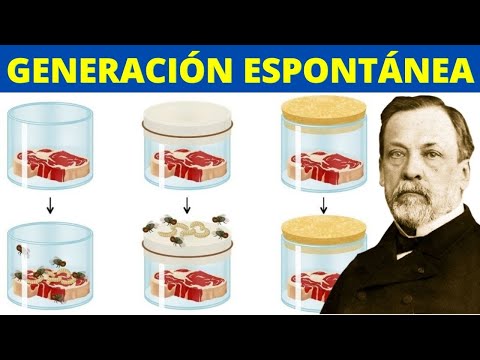
- Francesco Redi was the first scientist to experimentally reject spontaneous generation. He placed meat in three glass containers - two sealed and one open. Only the open container showed the presence of worms, while the others did not.
- Redi conducted further experiments using different setups involving cloth and cork to allow or prevent access for flies. These experiments demonstrated that preventing adult insects from laying eggs on rotting meat prevented larva formation.
Conclusion
This section concludes the discussion on spontaneous generation by highlighting how experiments by scientists like Francesco Redi refuted this theory and laid the groundwork for future detractors.
- Francesco Redi's experiments provided evidence against spontaneous generation by showing that larva formation on decomposing meat required the presence of adult insects laying eggs.
- The experiments conducted by Redi and other scientists paved the way for further investigations into the origins of life and contributed to our understanding of biogenesis, which states that living organisms arise from pre-existing living organisms.
- Spontaneous generation is no longer considered a valid explanation for the origin of life, thanks to these groundbreaking experiments.
The transcript is already in English, so there is no need to translate it.
New Section The Experiments of Louis Pasteur on Spontaneous Generation
In this section, we will explore the experiments conducted by Louis Pasteur to disprove the theory of spontaneous generation.
Louis Pasteur's Experiments (1861)
- Louis Pasteur conducted a series of experiments in 1861 to demonstrate that spontaneous generation does not occur.
- He observed that microorganisms could grow in meat broth in open containers, but if the broth was boiled for an hour in a closed container and remained sealed, no microorganisms could grow.
- Pasteur designed an experiment using two containers filled with nutrient broth. He bent the neck of one container into an "S" shape and left the other intact. Both containers were boiled to kill any existing microbes.
- In the container with the broken neck, rapid growth of microbes was observed. However, in the container with the intact neck, microorganisms could not reach the broth and accumulated in the "belly" of the neck.
By conducting these experiments, Pasteur concluded that without introducing external organisms into a sterile environment, no life forms could spontaneously generate.
The language used for this summary is English as per your request.