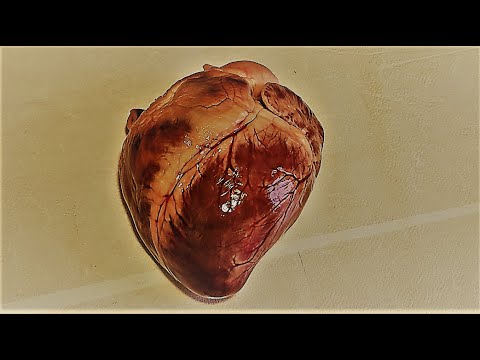
Disección corazón
Heart Dissection Overview
Introduction to Heart Dissection
- The session begins with a heart dissection using a pig's heart, which closely resembles a human heart in size and structure.
- The dimensions of the pig's heart are approximately 18 cm long and 14 cm wide, weighing around 753 grams, larger than an average human heart (200-400 grams).
Understanding Blood Vessels
- Two types of blood vessels are identified: thicker, elastic arteries (white color) that carry blood away from the heart and thinner veins (transparent) that bring blood into the heart.
Orientation of the Heart
- The speaker explains how to orient the heart by identifying grooves; one short vertical groove indicates the front side while a longer inclined groove marks the back side.
Internal Structure Examination
- Cutting through the interventricular septum reveals smooth muscle tissue; observations show that the left ventricle appears larger due to its thicker walls compared to the right ventricle.
Ventricles and Valves
Left Ventricle Insights
- The left ventricle has walls up to 3 cm thick, allowing it to pump blood forcefully through the aorta to all body parts.
- Aortic valves are visible within this chamber, regulating blood flow out of the left ventricle.
Right Ventricle Characteristics
- In contrast, the right ventricle has thinner walls (less than 1 cm), as it only pumps blood to nearby lungs for oxygenation.
Valve Functionality
- The speaker discusses various valves including:
- Tricuspid valve connecting right atrium and right ventricle,
- Mitral valve linking left atrium with left ventricle,
- Their roles in controlling blood flow between chambers.