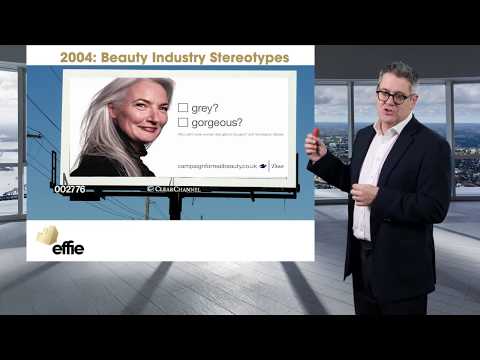
How Dove challenged beauty industry stereotypes
The Story of Dove
This transcript discusses the history and evolution of the Dove brand, including its founding principles and how it expanded into other categories. It also covers the discouraging data that led to the creation of Dove's "Campaign for Real Beauty" and how it challenged traditional beauty industry standards.
Founding Principles
- Dove was founded in 1957 with a principle that it was not just a soap but rather a cream.
- Its original advertising showed more naturalistic women at play, which resonated with consumers and made it successful.
Expansion into Other Categories
- In the 21st century, Unilever wanted to expand the brand into other categories beyond being just a creamy brand.
- Something in the natural portrayal of women led the team in charge of Dove to look for a new position for the brand.
Discouraging Data
- More than 3000 women around the world were asked to describe how they viewed themselves, and only 2% described themselves as beautiful.
- Only 5% described themselves as pretty, while over half used words like natural or average.
- When asked about media and advertising, 68% agreed that they set unrealistic standards of beauty, while 72% admitted feeling worse about themselves after reading women's magazines.
Campaign for Real Beauty
- To combat this discouraging data, Dove created one of the strongest purpose-based campaigns called "Campaign for Real Beauty."
- The campaign aimed to make women feel beautiful every day by broadening their definition of beauty and inspiring them to take great care of themselves.
Evolution Campaign
- Two years later came the "Evolution" campaign where Dove challenged not only the fact that women need to feel more confident about themselves but also the beauty industry that was dealing from the bottom of the deck.
Dual Communications Model
- The Dove team used a dual communications model, focusing on both the Dove MasterBrand and their products within the category.
- They aimed to make their point of view and mission famous while leveraging and applying it to their actual products.
The Synergy Between Brand Building and Sales Activation
This section discusses the synergy between brand building and sales activation, as demonstrated by Nielsen's analysis of Dove's MasterBrand campaign.
Long-Term Brand Building vs. Short-Term Sales Activation
- Peter Field and Les Binet have shown that there are two patterns in sales increases over time: short-term sales activation and longer-term incremental brand building.
- Short-term performance marketing can bump up sales, but as soon as the money is taken away, sales go back down.
- Longer-term incremental brand building comes over a much longer period of time.
- There is no long without short; both facets are necessary for a successful campaign.
The Problem with Short-Term Thinking
- Most marketers today work in a sub 12-month or sub six-month time horizon, which makes short-term performance marketing seem more appealing because it gives a better ROI.
- However, ROI is often a misleading statistic because the time variable on which it's calculated is often far too short.
Combining the Long and Short of It
- Dove has outgrown all other beauty brands in terms of actual brand equity over the last 10 years by combining emotional brand building with shorter, more rational product-based targeted communications.
- The 60/40 rule challenges marketers to put 60% of their budget on long-term multi-year emotional brand building and 40% on short-term sales activation focused on current sales target segments.
- There are dangers in looking just at ROI and short-term performance marketing.
The Power of Dove's Long-Term Campaign
This section highlights Dove's brilliant 20-year campaign as an example of the power of combining emotional brand building with shorter product-based targeted communications.
Lessons from Dove's Campaign
- Dove's campaign teaches us several important lessons, including the importance of combining the long and short of it together.
- The 60/40 rule holds out in most industries: 60% of your budget should be on long-term multi-year emotional brand building, while 40% should be on short-term sales activation focused on current sales target segments.
- Truly effective campaigns require both emotion and rationality.
Conclusion
This section concludes the transcript by encouraging viewers to visit EFI's website for more case studies and Marketing Week for more videos in this series.
Final Thoughts
- There is no better case study to illustrate the power of combining emotional brand building with shorter product-based targeted communications than Dove's brilliant 20-year campaign.
- Visit EFI's website for a database of all their amazing case studies.
- Visit Marketing Week for more videos in this series and information on the mini MBA in marketing.
Turn any video into a summary like this
YouTube links, meetings, lectures — with transcripts, search, and chat.