(2차년도) Korea and Korean Diaspora Through Food and Culture_3주차 1차시
Welcome and Introduction
In this section, the speaker introduces the topic of Korean food during the colonial period from 1910 to 1945, highlighting changes in Korean food culture influenced by Japanese colonialism.
Changes in Korean Food Culture
- The lecture will cover changes brought by Japanese colonialists such as new cultivations, technology, industrial food processing, and global market integration.
- Influence of Japanese lunchbox culture on Koreans during the colonial period due to increased education and introduction of portable food.
Impact of Colonial Rule on Korean Food Culture
This part discusses how Japanese policies affected traditional Korean alcoholic beverages and introduced new culinary practices during the colonial era.
Effects of Japanese Policies
- Control over alcohol production led to disappearance of traditional Korean alcoholic beverages.
- Audience understanding emphasized on new agricultural technologies, capitalistic practices, and impacts on Korean culinary life during this period.
Technological Advancements in Agriculture
Focuses on technological advancements introduced by Japan in Korea during the colonial period to increase rice production and diversify agriculture.
Agricultural Innovations
- Introduction of modern cultivation technology, irrigation methods, chemical fertilizers for rice production in Korea under Japanese rule.
- Diversification of Korean agriculture through policies aimed at economic development by Japan; entry of large Japanese agricultural companies into the market.
Rice Production Policies and Techniques
Explores Japan's strategies to boost rice production in Korea through new technologies and farming methods during colonization.
Rice Production Strategies
- Implementation of new rice varieties developed by Japanese scientists and adoption of advanced planting techniques like accurate row planting in Korea.
New Section
The impact of the colonial government in Korea on the fisheries industry and seaweed cultivation.
Colonial Government Influence on Fisheries Industry
- The colonial government in Korea introduced new laws to control the fisheries industry, requiring government permission for fishing and seaweed cultivation.
- Japanese cooperatives and fisheries companies implemented advanced cultivation technologies, leading to mass production of traditional Korean seaweed like Gim (Nori).
- Various types of seaweeds such as Kanten, Miyeok, Wakame, Dasima, and Kombu became crucial for food and industrial use due to increased production post-1920s.
Culinary Exchanges Between Korea and Japan
Reciprocal learning between Korean and Japanese fisheries industries.
Mutual Learning
- Koreans learned from Japan while Japan also gained insights from Korean fishermen, exemplified by the adoption of Myeongranjeot from the east coast of Korea.
- Bilateral culinary exchanges occurred; Koreans embraced Myeolchi dashi from Japan while introducing their own traditional foods like Myeongranjeot.
Impact on Wildlife and Food Processing Industry
Consequences of Japanese presence on wildlife and food processing in Korea.
Environmental Impact
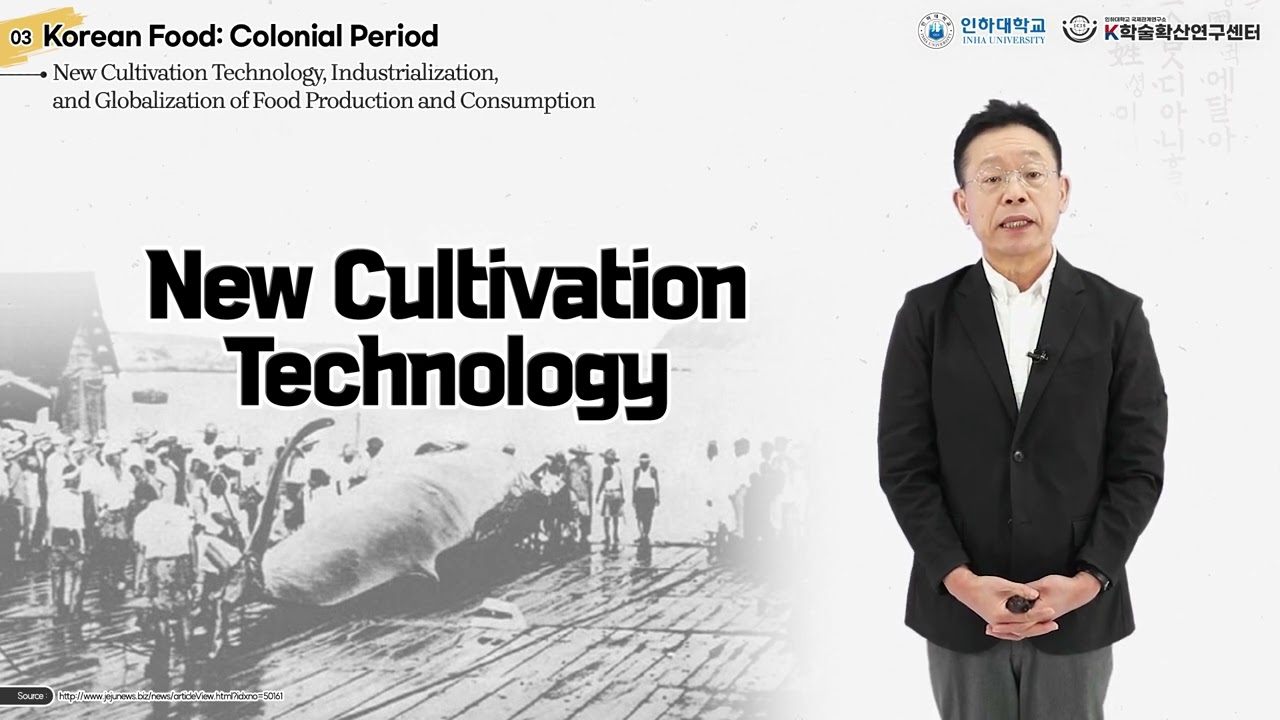
- Large Japanese fisheries companies depleted whale populations around Korea and led to the near-extinction of wild seals in Ulleung island.
Food Processing Industry Growth
- Introduction of food processing facilities by the Japanese in southern Korean islands facilitated mass production of canned fish, alcohol spirits, sugar, miso, shoyu, etc.
Economic Interactions During War Times
Economic dynamics during wartime connecting Japan, Taiwan, Manchuria, and Korea.
Trade Relationships
- Establishment of canned food factories in Korea during war times to supply Japanese soldiers highlighted economic interdependence among regions like Manchuria importing grains to Korea.
Cultural Exchange Through Food Production
Cultural exchange through shared food products like soybean-based items between regions.
Culinary Fusion