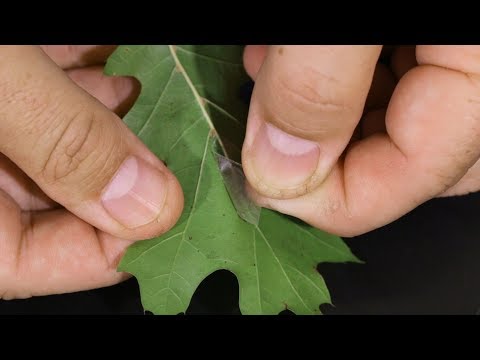
Stomatal peel
Understanding Stomata: Structure and Measurement Techniques
Introduction to Stomata
- Stomata are crucial microscopic structures on leaf surfaces, consisting of a pore surrounded by guard cells. Their number, size, and location vary among plant species and can be influenced by environmental factors.
Measuring Stomata: Preparation Steps
- To visualize stomata effectively, an indirect approach is necessary as they are not easily seen directly on leaves. The required materials include clear nail polish, packing tape, scissors, microscope slides, a writing instrument, and a microscope. A stage micrometer will also be briefly used for measurements.
Application of Nail Polish
- Apply a layer of clear nail polish on the upper or underside of the leaf while avoiding major veins to facilitate easier handling later. Allow the patch to dry for several hours; using a hood can reduce this time to about 15 minutes. After drying, cover it with tape and gently peel it off to create an impression of the stomata on the tape.
Observing Under Microscope
- Place the tape with the nail polish impression onto a microscope slide and label it with relevant identification details (species name, treatment group, specimen number). Use a microscope at 40x magnification to locate areas with high stomatal density while avoiding edges and damaged areas for accurate counting. Count all visible stomata consistently across multiple high-density areas for data collection.
Challenges in Observation
- Some leaves may have surface coverings like hairs or waxy coatings that obstruct visibility of stomata; chemical solvents in nail polish can damage sensitive plant species' leaves as well. Non-toxic water-based varnishes could be an alternative method for obtaining usable impressions from intact leaves in field studies.
Calculating Stomatal Density
- Since microscopes differ in field view sizes, convert counts from 40x magnification into numbers per square millimeter using a stage micrometer for accuracy. Measure your field's diameter by counting lines across its width (each line represents 1/100 mm). Calculate area using πr² formula before determining stomatal density per mm² by dividing total counts accordingly.