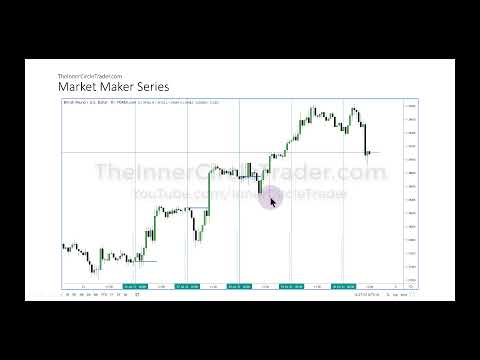
ICT Forex - Market Maker Series Vol. 4 of 5
Understanding Time and Price Theory in Forex Trading
Introduction to the Series
- The video is part four of a five-part series on the Inner Circle Trader's Market Maker series, focusing on time and price theory.
- Emphasizes the importance of watching previous parts (one, two, and three) for foundational knowledge before proceeding.
Current Market Analysis
- Discusses recent market conditions for GBP/USD, highlighting SMT diversions and cleared daily sell stops indicating a market maker buy model.
- Introduces the concept of aligning trading strategies with New York local time for better chart analysis.
Weekly Trading Insights
- Analyzes trading from July 26 to July 30, 2021, asserting that this week was bullish for GBP/USD based on prior analysis.
- Each day is viewed as one-fifth of the weekly range; specific characteristics repeat weekly but are not identical.
Bullish Expectations
- States there’s a 70% chance that the week's low will form by Wednesday if bullish sentiment prevails.
- Highlights that price movements often target opposing stop losses before moving in expected directions.
Daily Trading Patterns
- Describes daily trading patterns throughout the week: Monday establishes a low, followed by buying opportunities on Tuesday and Wednesday.
- Advises against buying on Thursdays and Fridays due to typical market behavior at these times; emphasizes risk management.
Opening Prices Strategy
- Discusses using opening prices each day as critical points for making trades; suggests buying near or below these prices during bullish weeks.
FMC Trade Insights and Strategies
Trading Strategy Overview
- The speaker discusses a recorded FMC trade shared on their Telegram channel, highlighting an exit point at 139.50 using a limit order.
- A model is suggested for entering trades on Tuesdays after confirming upward movement from Monday's trading, with strategies to manage positions based on market behavior.
Understanding Market Movements
- New traders may find it daunting to buy during declines; however, the speaker emphasizes that these movements often target sell stops before rallying.
- The week between Monday and Wednesday presents buying opportunities aimed at surpassing established weekly targets.
Analyzing Hourly Charts
- A closer look at hourly charts reveals significant price movements around short-term lows and FOMC announcements, which can create buying opportunities.
- The market's aggressive rise post-FOMC highlights the importance of understanding stop-loss placements and their impact on trader behavior.
Weekly Trading Patterns
- Observations indicate that smart money accumulates long positions below the opening price, particularly during specific times of the week.
- Price distribution occurs towards the end of the week as traders take profits, leading to potential retracements back into established ranges.
Time-Based Trading Analysis
- The concept of optimal trade entry (OTE) is introduced, emphasizing its correlation with time of day and specific trading sessions.
- Key trading windows are identified: London kill zone (2 AM - 5 AM NY time), New York kill zone (7 AM - 10 AM), and session times (8:30 AM - 11 AM).
Importance of Timing in Trading
- The relationship between time and price is crucial; traders should focus on setups occurring within defined time frames for better outcomes.
- Consolidation periods often occur outside key trading windows, underscoring the need for patience and strategic planning in execution.
Understanding Market Timing and Trading Strategies
The Importance of Time in Trading
- After running close, traders often experience periods of consolidation, referred to as "dead time." This is crucial for identifying bullish opportunities, particularly on specific days like Monday and Tuesday.
- On Wednesdays, there are notable buying opportunities; however, traders should be cautious with stop losses due to potential volatility from events like the FOMC.
- Developing traders are advised against trading during high-volatility events such as FOMC meetings to avoid confusion and fear stemming from short-term market fluctuations.
Key Concepts in Price Action
- Understanding price levels below the opening price is essential. The London open presents significant buying opportunities that can be identified through careful analysis of price action.
- ICT emphasizes that just because prices dip below certain lows does not guarantee a bullish reversal; context within a time window is critical for accurate predictions.
Anticipating Market Behavior
- The element of time plays a vital role in market behavior. Traders should recognize when the market is stagnant versus when it begins to move decisively in one direction.
- Consolidation patterns should be anticipated after daily closes unless influenced by major news events like FOMC releases. Awareness of these occurrences helps traders prepare effectively.
Weekly Trading Strategy Insights
- In bearish weeks, traders should expect highs to form early in the week (Monday-Wednesday). Post-Wednesday sessions typically see reduced probabilities for successful short trades.
- A bullish narrative was established for this week, supported by examples shared via Telegram. Events like FOMC releases significantly impact market volatility and behavior.
Analyzing Volatility and Price Movement
- Classic patterns observed during FOMC meetings resemble those seen during non-farm payroll announcements. Recognizing these patterns aids in anticipating market reactions based on underlying trends.
- Traders must focus on expected volatility rather than closing prices when analyzing weekly ranges. This approach allows for better alignment with market movements throughout the week.
Execution of Trades Based on Analysis
- For bullish strategies, key trading times include Monday through Wednesday when optimal setups are likely presented by algorithms favoring upward movement.
- Buying below the midnight opening price increases trade probability but does not guarantee success; understanding smart money's actions at these levels enhances decision-making processes.
Understanding Time and Price Dynamics in Trading
Key Concepts of Time and Price
- The importance of understanding the relationship between time, price, and market behavior is emphasized. Traders should focus on three critical elements: stops, order blocks, and optimal trade entries.
- A low forming in the market can signal potential trading opportunities. Traders may choose to wait for price action that runs below this low during specific times like London sessions.
- Observing bullish trends on certain days (like Tuesday or Wednesday) can help traders anticipate price movements towards key times such as London close.
Market Behavior Patterns
- If a bullish trend reaches a liquidity pool early in the week, it may lead to consolidation or retracement later. This highlights the need for traders to monitor weekly objectives closely.
- The analysis of price movement post-FMC shows that shallow runs above previous highs can indicate underlying market dynamics at play.
Creating a Trading Narrative
- Blending time and price theories allows traders to create narratives about expected market behavior. This involves analyzing daily patterns and aligning them with broader weekly trends.
- Consistent monitoring of liquidity pools helps traders validate their narratives against actual price movements throughout the week.
Market Manipulation Insights
- Historical teaching methods remain relevant; understanding how trading volume interacts with algorithms is crucial for effective trading strategies.
- The notion that retail buying pressure significantly influences prices is challenged; markets are primarily controlled by central banks rather than individual trader actions.
Weekly Trading Dynamics
- Central bank policies dictate currency value more than social media-driven hype. Traders must recognize that collective retail actions do not drive significant market changes.
- Observations from mid-week trading show how specific entry points align with established liquidity levels, reinforcing the importance of timing in executing trades effectively.
Daily Signatures in Trading
- Each day exhibits unique signatures that respond predictably to time and price factors. Recognizing these patterns aids traders in making informed decisions based on historical data.
Turn any video into a summary like this
YouTube links, meetings, lectures. With transcripts, search, and chat.