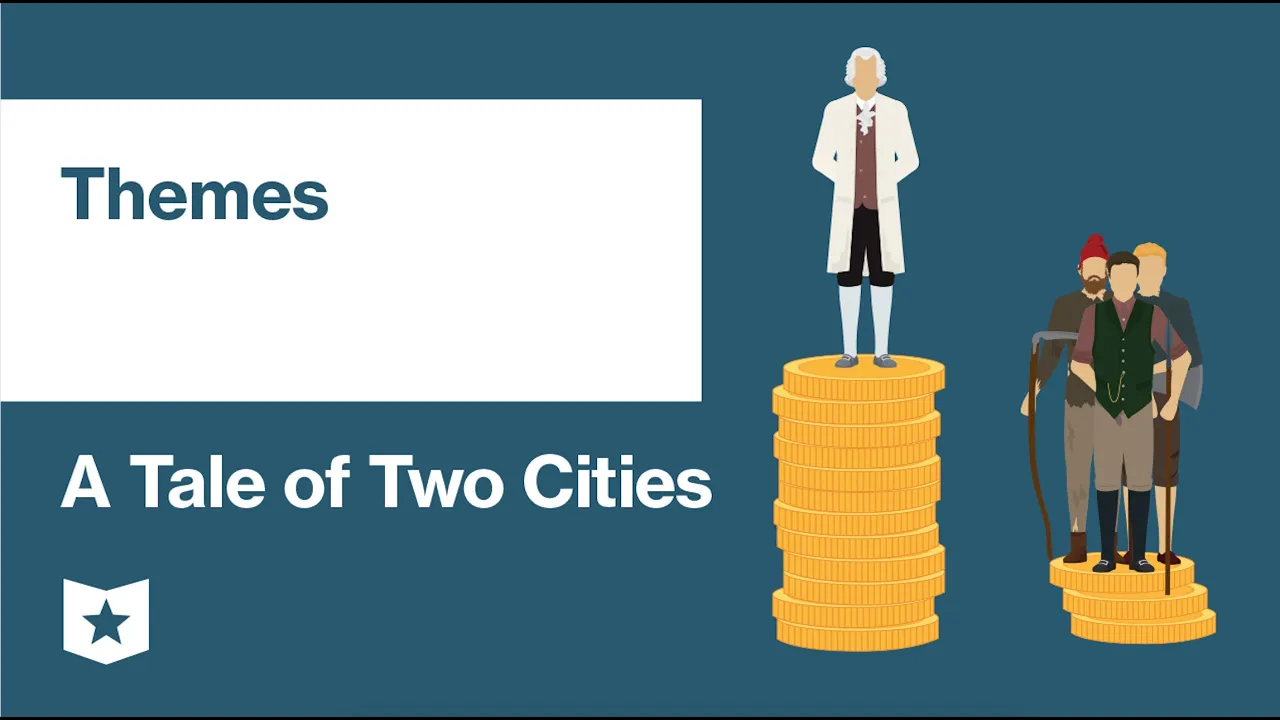
A Tale of Two Cities by Charles Dickens | Themes
Main Themes in "A Tale of Two Cities"
The main themes discussed include injustice, love, resurrection, self-sacrifice, vengeance, and violence in the novel "A Tale of Two Cities" by Charles Dickens.
Injustice
- Injustice is prevalent throughout the novel.
- Characters like Doctor Manette and Darnay face unjust situations due to their backgrounds.
- The theme of injustice extends to the treatment of nobles and common people during the revolution.
Love
- Various forms of love are explored in the book.
- Dickens delves into romantic love, familial love, friendship, and compassion for humanity.
- Love is depicted as a powerful force that can lead to acts of self-sacrifice.
Resurrection
- Resurrection symbolizes rebirth and renewal in the novel.
- Characters like Doctor Manette and Charles Darnay experience literal or metaphorical resurrections.
Themes of Self-Sacrifice, Vengeance, and Violence
The themes of self-sacrifice, vengeance, and violence play significant roles in shaping character actions and societal dynamics within "A Tale of Two Cities."
Self-Sacrifice
- Characters like Lucy and Sydney Carton demonstrate acts of selflessness for their loved ones.
- Self-sacrifice is portrayed through risking personal safety for others' well-being.
Vengeance
- Vengeance emerges as a driving force during the French Revolution.
- Different characters exhibit varying attitudes towards vengeance based on their experiences.
Violence
- Violence is a central theme reflecting the brutality of the French Revolution.