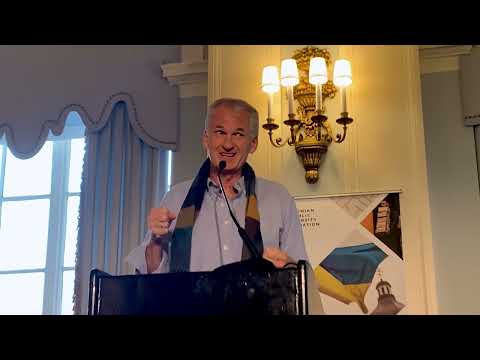
Timothy Snyder: Freedom of speech is about speaking the truth to power
Understanding the Current Situation in Ukraine
Characterizing the Crisis
- The speaker emphasizes that what Ukrainians are experiencing should be characterized as genocide, a term with precise legal implications defined in a 1948 convention.
- The importance of recognizing this genocide extends beyond Ukraine; it has significant implications for global ideas, ethics, and politics.
Legal and Ethical Implications
- The speaker argues that acknowledging genocide is crucial not only for historical memory but also for ethical responsibility during ongoing conflicts. If ignored, future generations may fail to recognize these atrocities.
- There is consensus on the genocidal actions committed by Russian forces against Ukrainians, including deliberate destruction and mass deportations. This includes the devastation of cities like Mariupol and the death toll associated with such actions.
Scale of Atrocities
- Approximately 4 million Ukrainians have been deported to Russia, representing about one-tenth of Ukraine's population—an event likened to depopulating entire regions in the U.S., highlighting its enormity.
- The systematic targeting of children and women for assimilation aligns with definitions of genocide under international law, particularly regarding attempts to prevent future births within a group.
Intentionality Behind Actions
- The speaker notes that proving intent in cases of genocide can be challenging; however, current events provide clear evidence as perpetrators openly express their intentions through speeches and state-controlled media outlets.
- Unlike past genocides where intentions were obscured or hidden, today's context features explicit declarations from Russian officials indicating genocidal intent towards Ukrainians. This transparency complicates any denial of these acts being classified as genocide.
Societal Response to Genocidal Intent
- There is concern that repeated exposure to expressions of genocidal intent may desensitize observers, leading them to demand increasingly stringent proof before accepting these actions as genocide—a dangerous shift in perception that could hinder accountability efforts.
Understanding Ukrainian Resistance and the Concept of Freedom
The Nature of Genocide and Resistance
- The speaker asserts that acts of genocide have been committed, emphasizing the clear intention behind these actions. This term helps frame the context of Ukrainian resistance.
Perspectives on Freedom in Ukraine
- Conversations with various individuals, including widows, soldiers, and volunteers, reveal a deeper understanding of freedom among Ukrainians. It transcends mere liberation from oppression.
- Ukrainians view freedom not just as an escape from Russian control but as a future-oriented concept—envisioning a better life for themselves and their children.
Civil Society's Role in Resistance
- The notion of civil society is highlighted as crucial to Ukraine's resilience. It involves groups working together horizontally to support one another amidst governmental shortcomings.
- Young men and women actively participating in humanitarian efforts exemplify how civil society contributes significantly to Ukraine's military success.
Redefining Freedom of Speech
- The speaker critiques common Western perceptions of freedom of speech, arguing it should be about taking risks rather than merely expressing provocative opinions.
- Historical perspectives on freedom of speech emphasize its role in speaking truth to power—a principle illustrated by President Zelensky’s public statements during wartime.
Lessons on Democracy and Risk-Taking
- Americans are reminded that democracy relies on an ethic of risk-taking; complacency can lead to misconceptions about the nature of freedom.
- The speaker reflects on past attitudes towards democracy, warning against assuming it will naturally persist without active struggle or engagement from individuals.
This structured summary encapsulates key themes regarding Ukrainian resistance, the multifaceted concept of freedom, and the importance of civil society while providing timestamps for easy reference.
The Impact of Ukrainian Resistance on American National Security
The Essence of Democracy and Its Implications
- The speaker emphasizes that democracy fundamentally means "the people should rule," a concept often diluted in discourse.
- The reminder of this principle is crucial, especially in the context of current global events, highlighting the importance of citizen governance.
Ukrainian Resistance and American Interests
- The speaker argues that Ukrainian resistance to Russia has significantly advanced bipartisan American national security interests more than any U.S. policy since the Cold War.
- This resistance showcases actions that Americans could not achieve alone, indicating a shift in how international relations are perceived.
Global Military Dynamics
- There is a recognition that Americans typically struggle to see how foreign nations can impact their security landscape.
- A consensus exists across political lines regarding China as the primary threat in the 21st century, with Taiwan identified as a critical flashpoint for potential conflict.
Consequences of Ukrainian Actions
- The resilience shown by Ukraine has made military confrontation over Taiwan appear less likely, altering perceptions within China about engaging in aggression.
- By demonstrating the challenges of war through their own struggle, Ukrainians have reduced the likelihood of major conflicts involving both America and China.
Broader Geopolitical Ramifications
- Ukraine's efforts have weakened Russia's position internationally, diminishing its role as a proxy for Chinese ambitions against the West.
- This exposure has led to a significant decline in Russia's credibility and effectiveness on the global stage.
Acknowledgment and Gratitude Towards Ukraine
- The speaker reiterates that Ukrainians have contributed more to U.S. national security than any policy could achieve since the Cold War.
- Beyond geopolitical strategies, there is an ethical obligation for Americans to recognize their debt to Ukraine for defending democracy and freedom.
Conclusion: Thanking Ukraine
- In closing remarks, gratitude is expressed towards Ukrainians for their sacrifices and contributions to global stability.
- A specific acknowledgment is made towards "uku," linking back to themes discussed throughout the speech.
War and the Role of Ukrainian Civil Society
The Context of War and Personal Involvement
- The speaker reflects on their experience during the onset of war, mentioning participation in a remote doctoral dissertation defense for a historian focused on the Urdnitsky family, an important Ukrainian lineage.
- Shortly after this event, the speaker notes that many dedicated young Ukrainians, including themselves, enlisted in territorial defense forces to respond to the crisis.
Themes of Identity and Personhood
- The discussion emphasizes that genocide aims at destroying a people; conversely, creating a people involves envisioning their future aspirations. This highlights the importance of identity amidst conflict.
- The concept of personhood is introduced as essential to understanding dignity within individuals. It suggests that each person possesses inherent worth beyond external circumstances or larger societal forces.
Civil Society's Role in Ukraine
- The speaker underscores civil society's significance in contemporary Ukraine, particularly its resilience against invasion. They view this as a manifestation of collective identity and moral responsibility.
- A notable example cited is the Ukrainian Catholic University (UCU), which embodies civil society values and serves as a focal point for support amid adversity.