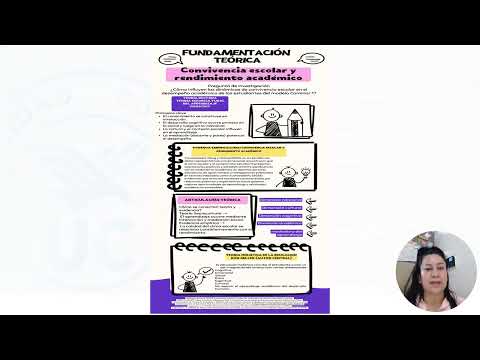
teoría educativa del fenómeno de estudio
Introduction to Research Framework
Overview of the Research Project
- Luz Eliana Motato González introduces herself as a doctoral student in education at Universidad Quatermo, outlining her focus on defining the theoretical framework for her research project.
- She emphasizes the importance of presenting her research questions before delving into theoretical references.
Key Research Questions
- The primary question investigates how school coexistence dynamics affect academic performance among secondary education students within a flexible educational model in Colombia.
- Understanding the context of flexible education models is crucial, particularly for students facing social and economic challenges or those with special educational needs.
Contextualizing Flexible Education Models
Target Student Demographics
- The flexible education model aims to support vulnerable students who struggle with traditional educational paths, including those with special educational needs.
- The research focuses on understanding how peer interactions influence academic outcomes for these students.
Theoretical Foundations
Sociocultural Theory by Vygotsky
- Vygotsky's sociocultural theory is highlighted as foundational due to its emphasis on social interaction as a precursor to cognitive development. This theory posits that learning occurs through social engagement before becoming an individual cognitive process.
- The role of mediation between teachers and parents is underscored as vital for enhancing academic potential within this methodology. Additionally, Vygotsky stresses the impact of culture and school context on academic performance.
Holistic Education Approach
- A holistic approach is discussed as essential, integrating cognitive, emotional, social, ethical, and spiritual dimensions to improve social interaction and learning outcomes. This perspective enriches the understanding of student experiences beyond mere academics.
Empirical Evidence and Social Interaction
Importance of Positive School Climate
- Empirical studies from Australian researchers emphasize that positive interpersonal relationships among students significantly contribute to better learning experiences and outcomes. This highlights the necessity for fostering good social relations in educational settings.
Conclusion on Research Focus
- The investigation will primarily utilize sociocultural learning theories while also incorporating holistic approaches to reinforce academic success through emotional well-being and a sense of belonging among students. Additionally, there will be an exploration into empirical evidence regarding positive school climates' effects on student engagement and achievement levels.