Missouri Compromise, 1820 | North & South sectionalism | Free states & slave states, Maine
The Missouri Compromise of 1820: An Overview
Introduction to the Missouri Compromise
- The presentation discusses the Missouri Compromise, which formalized state boundaries amid growing sectional divides between North and South leading to the Civil War.
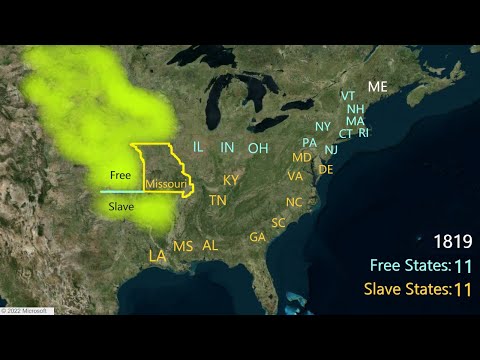
- By 1820, slavery was a contentious issue with states divided into free (blue) and slave (orange) categories. The tally stood at seven free states and six slave states in 1790.
Early State Admissions and Tally Dynamics
- Vermont became the 14th state in 1791 as a free state, giving free states an initial advantage that was later matched by Kentucky (1792) and Tennessee (1796), resulting in an even tally of eight each.
- Ohio's admission as a free state in 1803 restored the balance until Louisiana entered as a slave state in 1812, continuing the pattern of alternating admissions. Indiana (1816) and Mississippi (1817) further maintained this balance.
The Sectional Divide Intensifies
- By 1819, there were 22 states evenly split between free and slave states, with Maine seeking statehood alongside Missouri, raising debates about its status regarding slavery.
- Missouri's geographical position made it culturally ambiguous; it could align more with Northern or Southern economies based on agricultural practices. Its population included both enslaved individuals and those engaged in Northern-style agriculture like corn or wheat.
Strategic Importance of Missouri
- Missouri's location is critical due to its river systems: the Ohio River, Mississippi River, and Missouri River serve as vital transportation routes for trade and westward expansion. This strategic positioning heightened interest from both North and South regarding its status on slavery.
Legislative Developments Leading to Compromise
- In early discussions, Representative James Talmadge proposed an amendment to emancipate slaves in Missouri but faced opposition due to Senate deadlock over equal representation of states. Political pressure mounted for compromise solutions amidst fears of losing senatorial control by either side if one state entered without matching another’s status.
The Compromise Reached
- A compromise was reached where Missouri would enter as a slave state while Maine would be admitted as a free state; Jesse Thomas proposed establishing a boundary at latitude 36°30' N for future territories formed from the Louisiana Purchase concerning slavery laws. This effectively created a new line demarcating free versus slave territory moving forward.
Conclusion: Impact of the Compromise
- On March 6, 1820, Congress approved the compromise stipulating that all territory north of this line would prohibit slavery while allowing it southward; this set precedents for future legislation including fugitive slave laws ensuring escaped slaves could be reclaimed by their owners regardless of their location within these territories. Both Maine and Missouri entered the Union maintaining an equal balance between free and slave states at twelve each until further legislative changes occurred later on with acts like Kansas-Nebraska Act in 1854.