Cellular Respiration Part 2: The Citric Acid Cycle
Citric Acid Cycle Overview
Introduction to Citric Acid Cycle
- Professor Dave discusses the evolution of metabolic pathways from glycolysis to the citric acid cycle in higher organisms.
- Oxygen became abundant due to photosynthesis by plants, enabling aerobic respiration in mitochondria.
- Mitochondria, believed to be separate organisms, play a crucial role in aerobic respiration within eukaryotic cells.
Steps of the Citric Acid Cycle
- Pyruvate enters mitochondria and converts to acetyl CoA through decarboxylation and oxidation.
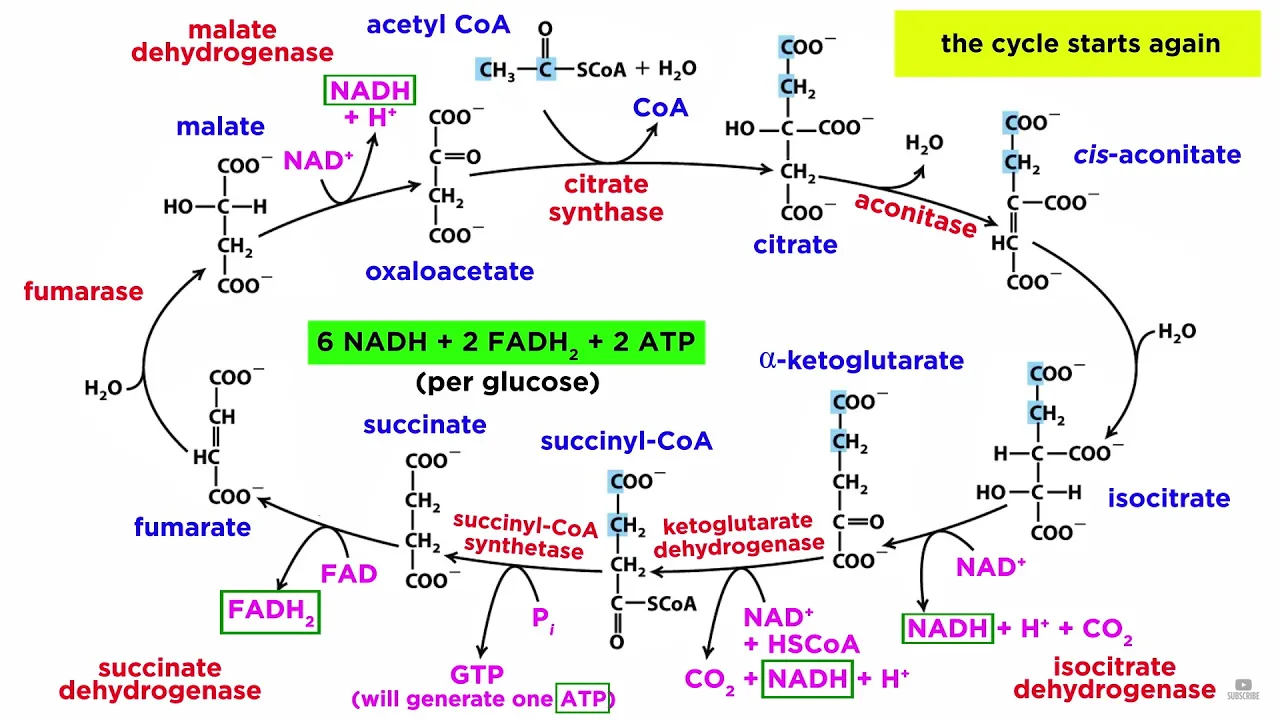
- Acetyl CoA initiates the citric acid cycle by forming citrate through enzyme catalysis.
- Successive reactions lead to the production of NADH, FADH2, and ATP per acetyl CoA molecule.
Overall Output of the Citric Acid Cycle