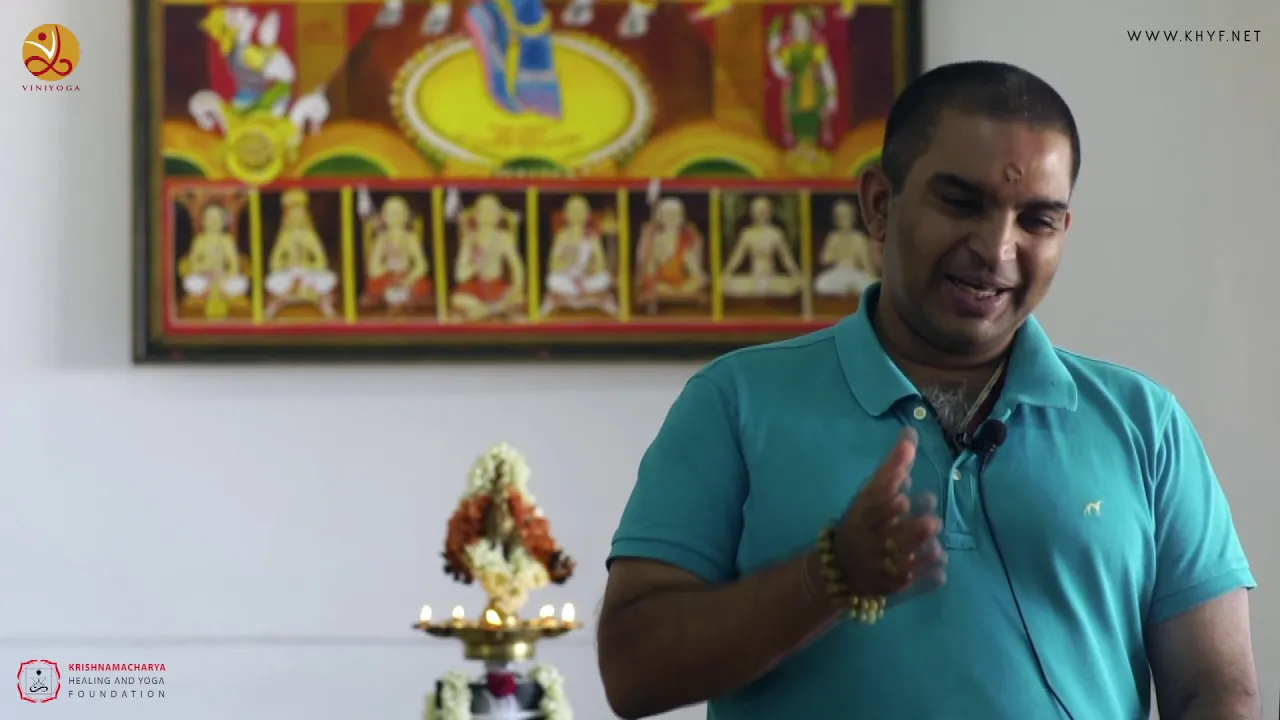
Patanjali's Yogasutra | Dr. Kausthub Desikachar | YS II.37 | 29 June 2019
Introduction and Testimony
The speaker mentions Obama and then transitions into discussing a testimony involving a vision of God.
Obama Mention and Testimony
- The speaker briefly mentions Obama.
- Transitioning to a testimony about a teenager's vision of God.
Discussion on Stealing and Karma
Exploring the concept of stealing, its implications on karma, and different forms of theft.
Concept of Stealing and Karma
- Introduction to the discussion on consequences and benefits of stealing.
- Explanation of "steya" in yoga as taking something that does not belong to you.
- Receiving gifts involves taking half the karma; stealing incurs all the karma plus theft itself.
Types of Theft and Examples
Delving into various types of theft, including material possessions, objects, people, and institutionalized theft.
Types of Theft
- Discussion on stealing objects or people leading to karmic consequences.
- Differentiating between stealing material items versus Dharma (duty/righteousness).
Stealing Time and Subtle Forms of Theft
Examining time theft as taking away others' time, along with subtle forms like gender inequality affecting work decisions post-marriage.
Time Theft and Subtle Forms
- Late arrival equated to stealing time from others; common practice in many countries.
Stealing Dharma and Responsibilities
The speaker discusses the concept of stealing someone's Dharma by imposing responsibilities that hinder their natural roles and rights.
Stealing Dharma
- Stealing someone's Dharma is akin to depriving them of fulfilling their potential by imposing inappropriate responsibilities.
- Children should be allowed to be children, not burdened with adult responsibilities prematurely.
- Imposing caregiving duties on children can rob them of their childhood and rightful experiences.
- Denying education to individuals is also a form of stealing their right to develop and contribute to society.
Importance of Sharing Knowledge
The speaker emphasizes the significance of sharing knowledge as a moral responsibility and a means to empower others.
Sharing Knowledge
- Failure to share acquired knowledge denies others the opportunity for growth and learning.
- Teaching should be directed towards sincere and dedicated individuals for effective dissemination.
- Controversial topics like interfering with reproductive choices can also constitute stealing someone's Dharma.
Interference with Actions
The discussion delves into how interfering with others' actions or emotions can disrupt their natural course, leading to negative consequences.
Interference Consequences
- Interfering with a child's actions or emotions can impede their development and self-expression.
Understanding Communication Dynamics
In this section, the speaker discusses how certain individuals are often interrupted or not given a chance to express themselves fully in conversations, leading to a lack of safe spaces for open communication.
Communication Challenges
- Some individuals from specific countries face challenges in being heard during discussions.
- Interruptions hinder the expression of feelings and thoughts, creating an unsafe environment for sharing.
- Actions like interrupting can prevent individuals from expressing their emotions and experiences freely.
- Kindness involves allowing others to act and express themselves without interference or judgment.
Impact of Internet on Expertise
The speaker delves into how the internet has led to everyone becoming an "expert," impacting the credibility of information shared online and hindering genuine expertise.
Internet Influence
- The internet has made everyone feel like an expert, affecting the value placed on information shared.
- Online platforms are flooded with self-proclaimed experts lacking true expertise.
- Difficulty in finding credible information due to popular content overshadowing reliable sources.
Cultural Communication Norms
Cultural norms play a significant role in communication dynamics, influencing how individuals express themselves within familial and societal contexts.
Cultural Influences
- In some cultures like India and China, there may be restrictions on expressing oneself openly within family settings.
- Cultural beliefs may impact how families perceive certain traits or conditions in children.
Ethical Considerations in Actions
The speaker explores ethical dilemmas related to actions such as murder and interference with destiny, emphasizing the importance of understanding consequences.
Ethical Reflection
- Differentiating between intentional and unintentional actions like murder is crucial for ethical decision-making.
Discussion on Knowledge and Integrity
The speaker discusses the issue of individuals presenting others' knowledge as their own, leading to a lack of integrity and ethical concerns in various contexts.
Delimited Indirect Treatment
- Individuals may present stolen intellectual property as their own due to frustration or anger with the system.
- Presenting others' knowledge as one's own is common nowadays, leading to unethical practices.
Pressure in Education System
- Intense competition among school children to achieve top marks can lead to unethical behaviors like sharing incorrect knowledge.
- Parents advising children not to share correct answers to prevent classmates from excelling reflects a concerning trend.
Impact of Dishonesty on Personal Growth
The consequences of unintentional sharing of incorrect information and the importance of maintaining integrity for personal growth are discussed.
Unintentional Mistakes
- Unintentional errors in sharing information differ from intentional deceit and should be avoided for ethical growth.
Long-Term Effects
- Consistent unethical practices hinder personal evolution and lead to negative consequences in one's life journey.
Karmic Consequences of Dishonesty
The discussion delves into the karmic implications of dishonest actions and their impact on spiritual growth.
Karmic Retribution
- Engaging in dishonest acts leads to karmic repercussions that impede spiritual progress and create stagnation.
Importance of Ethical Behavior
- Changing patterns of dishonesty is crucial for attracting positive outcomes and avoiding negative karmic cycles.
Value of Integrity and Authenticity
The significance of authenticity, integrity, and ethical behavior in personal development is emphasized through metaphorical references.
Metaphorical Representation
- Traditional metaphors equate jewels with virtues like consciousness, talents, traditions, emphasizing inner qualities over material possessions.
Spiritual Evolution