⚡ INSTALACIÓN ELÉCTRICA DE ACOMETIDA y tablero electrico
Overview of Electrical Installation for Residential Use
Connection Types and Requirements
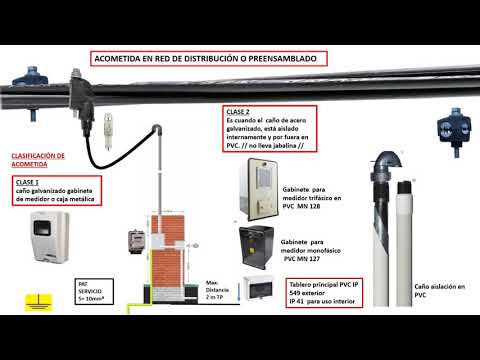
- The installation serves as a junction point between the distribution system and the assembly cable, where a fuse (neo sset) is connected, typically not exceeding 63 amps.
- Connections are classified into two classes: Class 1 requires metallic meter boxes and low supply pipes, necessitating the use of a javelin.
- Class 2 involves grounding with insulated PVC downpipes; it does not require grounding from the meter output if within 2 meters to the main board, which must comply with specific standards for outdoor (IP-41) and indoor use.
Diagram Explanation
- The diagram illustrates a distribution network where the fuse connects to the meter; it emphasizes that fuses should not exceed 63 amps.
- In scenarios where space is limited on municipal sidewalks, installations may utilize a single main board for general consumption.
Main Board Configurations
- Two configurations are discussed: one with a sectional board inside the house and another without due to space constraints.
- A dotted line in diagrams indicates responsibility separation: distributor's side versus user's side regarding installation responsibilities.
Grounding Responsibilities
- Grounding service responsibilities differ between distributor (class 1 conditions apply for metal components) and user sides; electricians must perform measurements and certifications accordingly.
Compliance with Regulations
- New supplies must adhere to current regulations, requiring main thermomagnetic protection and differential systems in sectional boards during installations.
- The final image highlights ongoing changes in connection standards that may take years to implement fully.