Adsorption vs Absorption (Difference between Adsorbing and Absorbing)
New Section
This section explains the difference between adsorption and absorption, focusing on their key characteristics and examples.
Adsorption
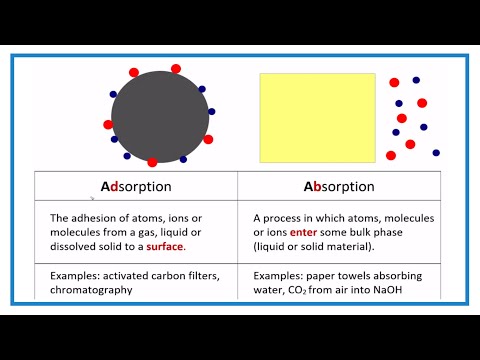
- Adsorption is a surface phenomenon that occurs on the surface of materials.
- Atoms, molecules, or ions stick to the surface of activated carbon or other materials.
- It can happen with gases, liquids, or substances dissolved in solids.
- An analogy to remember adsorption is thinking about advertisements stuck on the surface of things like buses or buildings.
Absorption
- Absorption involves atoms, molecules, or ions entering into the substance's bulk phase (solid or liquid).
- An example is food being absorbed into your bloodstream through your abdomen after digestion.
- Absorption can occur with everyday items like paper towels absorbing water or gases being absorbed into solutions.
New Section
This section discusses activated carbon as an example of adsorption and its applications in water filters and air filters.
Activated Carbon for Adsorption
- Activated carbon has a large surface area that allows it to capture particles through adsorption.
- It is used in water filters to remove contaminants like mercury and in air filters to eliminate toxins.
- Examples include Brita filters for filtering drinking water and masks for filtering out pollutants from the air.