Day 3 Earthquakes part 1
Earthquake Hazards: Understanding Risks and Impacts
Introduction to Earthquake Hazards
- The session begins with a light-hearted joke about animals' perception of earthquakes, highlighting their sensitivity compared to humans.
- The instructor outlines the agenda for the week, mentioning that this lecture will continue discussing earthquake hazards and introduce the Cascadia mega thrust.
Ground Collapse and Structural Integrity
- A reminder is given about upcoming assignments: a tsunami worksheet due Thursday and an earthquake hazards lab due Sunday.
- Discussion on ground collapse as a primary hazard; older structures (pre-1980) in Washington and Oregon are particularly vulnerable to damage during earthquakes.
Landslides as Secondary Hazards
- Introduction of landslides as a significant hazard often triggered by earthquakes; they will be discussed in detail over the next week.
- Small earthquakes can trigger landslides, especially in areas already prone to such events. Washington State has many weak rock formations susceptible to landslides.
Geological Factors Contributing to Landslides
- The combination of weathering, heavy rainfall, and changes in elevation creates ideal conditions for landslides in Washington State.
- Students will analyze lidar images of their properties to assess proximity to hillsides and past landslide occurrences.
Historical Context of Landslides
- Reference made to the Seattle fault, which has caused historical landslides; tree ring analysis helps date these geological events.
- Evidence from Lake Washington shows past earthquake-induced landslides through buried tree deposits dating back to previous seismic activity.
Current Landslide Risk Assessment
- Ongoing research aims at identifying active faults near populated areas by examining geological evidence like buried trees along riverbanks.
- Maps from the Washington State Department of Natural Resources indicate regions prone to landslides; current conditions show heightened risk during specific seasons.
Conclusion on Preparedness for Natural Disasters
- Emphasis on understanding local geology and proximity to active faults is crucial for disaster preparedness.
- The discussion concludes with a call for students to consider their living environments regarding potential natural hazards.
Understanding Liquefaction and Its Impacts
Introduction to Liquefaction
- The discussion begins with an overview of liquefaction, highlighting its significance as a geological hazard.
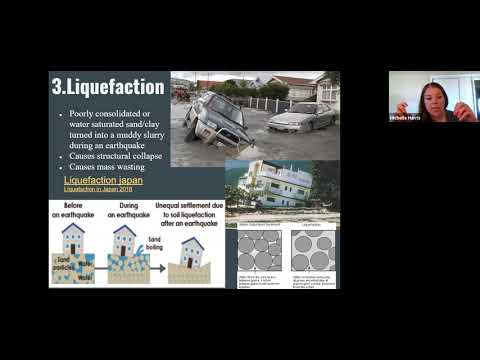
- Liquefaction occurs in poorly consolidated, water-saturated sediments, likened to shaking tennis balls in water, which leads to the redistribution of sand particles.
Mechanism of Liquefaction
- When sediment is shaken, the sand particles flatten out and water is pushed to the surface, causing the ground layer to behave like a liquid.
- This phenomenon can lead to structural failures and mass wasting events, similar to landslides.
Real-world Examples
- A notable case mentioned is the Oso landslide in Washington where liquefaction caused significant hillside failure due to saturation from water.
- An extreme example from Mexico illustrates how an entire building sank into the ground as a result of liquefaction during an earthquake.
Observations During Earthquakes
- Videos from Japan's 2011 earthquake showcase liquefaction effects such as ground movement and formation of "sand volcanoes" where water erupts through cracks.
- The speaker describes personal experiences during earthquakes that highlight disorientation caused by ground shaking and visible signs of liquefaction.
Urban Planning Considerations
- The discussion touches on urban development practices in Tokyo where parks are built on reclaimed land instead of residential buildings, mitigating risks associated with liquefied grounds.
- Further examples illustrate how cities often build on saturated sediments without adequate consideration for potential hazards like liquefaction.
Future Risks and Susceptibility Mapping
- The presentation shifts focus towards mapping areas susceptible to liquefaction, particularly emphasizing regions at risk during potential Cascadia magnitude 9 earthquakes.
- Specific locations such as downtown Centralia are highlighted as being built atop vulnerable water-saturated sediments, raising concerns about future structural integrity.
Earthquake Preparedness and Hazards
Impact of Earthquakes on Infrastructure
- After an earthquake, roads, bridges, and buildings that previously seemed stable may fail, highlighting the need for preparedness.
- Consideration of how to reunite with family during emergencies is crucial; for example, if parents work in Olympia while children are in Centralia, travel routes may be compromised.
- Centralia and Chehalis are highly susceptible to liquefaction during earthquakes, which can lead to significant ground instability.
Historical Context of Liquefaction
- Past earthquakes have demonstrated liquefaction effects even from distant epicenters; a 1949 Seattle earthquake caused liquefaction impacts in Centralia.
Fire Hazards Post-Earthquake
- Fires can result from damaged gas lines and electrical systems after an earthquake. Ground movement can rupture these lines, leading to natural gas leaks.
- Electrical sparks from broken lines can ignite free-flowing natural gas, exacerbating fire risks when water mains are also compromised.
Challenges in Fire Suppression
- The destruction of water mains alongside gas lines limits access to water for firefighting efforts during an earthquake.
- Tsunamis following earthquakes can further spread fires by carrying burning debris inland; historical examples include the San Francisco fire after the 1906 quake.
Lessons Learned from Historical Events
- The 1906 San Francisco earthquake led to widespread fires due to structural failures on saturated sediment; firefighters were unable to control the flames due to broken infrastructure.
- In response to such disasters, fire suppression strategies evolved post-1910 with initiatives like fire boats in harbor areas prone to seismic activity.
Local Hazard Awareness
- The Olympic Pipeline carries liquid petroleum products beneath Centralia; potential ruptures could lead to significant environmental hazards and fire risks.
- Electrical infrastructure also poses risks; past power outages highlight vulnerabilities within local energy supply systems.
Understanding Earthquake Preparedness and Natural Gas Safety
The Risks of Electrical Failures and Natural Gas Leaks
- Discussion begins on climate change, highlighting the reliance on dams for electricity from the Columbia River, which poses a risk of failure.
- Overview of Washington State's underground natural gas system along the I-5 corridor, emphasizing its vulnerability to leaks and fire hazards.
Emergency Preparedness Actions
- Importance of knowing how to shut off natural gas, electricity, and water heaters immediately after an earthquake to prevent fires in homes.
- Description of typical natural gas shut-off valves located outside homes; a wrench is often needed for operation.
Earthquake Shutoff Valves
- Introduction to earthquake shutoff valves (also known as California switches), which can be purchased at home improvement stores like Home Depot.
- Reference to a video segment explaining how these valves work; they automatically stop gas flow during seismic activity.
Understanding Gas Fire Risks
- Emphasis on the primary cause of damage during earthquakes being gas fires rather than structural damage; broken pipes can lead to uncontrolled gas flow into homes.
Installation and Functionality of Shutoff Valves
- Explanation of how an earthquake activated gas shutoff valve functions by dropping a ball that seals the pipe when shaking occurs.
- Mention that these valves are threaded onto existing gas lines between the meter and house; installation details provided in shared video resources.
Water Supply Management Post-Earthquake
- Advisement on shutting off water supply post-earthquake to preserve clean water in pipes and prevent potential contamination from natural gas leaks.
Additional Safety Measures
- Importance of knowing where your water shut-off valve is located; multiple options may exist depending on home layout.
- Instructions for turning off street-level water access using a wrench, crucial for emergency flooding situations or contamination prevention.
Safety Measures During Natural Disasters
Importance of Shutting Off Utilities
- In the event of a natural gas leak, shutting off electricity is crucial to prevent potential fires caused by sparks.
- Knowing how to turn off the main switch in your circuit breaker box can enhance safety during emergencies.
Early Warning Alert Systems
- Discussion on implementing an early warning alert system that sends text messages before earthquakes, allowing utility companies to shut down gas and electrical grids.
- The goal of this system is to significantly reduce hazards in communities by preemptively shutting down utilities.
Fire Safety Preparedness
- It’s recommended to have multiple fire extinguishers located throughout the home (e.g., kitchen, garage, living room) for quick access during a fire emergency.
Understanding Tsunamis
- Tsunamis are introduced as a significant hazard; while less likely in certain regions like Puget Sound, awareness remains important.
Causes and Characteristics of Tsunamis
- Tsunamis can be triggered by various events such as volcanic eruptions or earthquakes, often striking with little warning.
- Typical tsunami waves travel at speeds up to 600 miles per hour but slow down and increase in height as they approach shorelines.
Destructive Nature of Tsunamis
- Unlike regular waves, tsunami waves move forward like solid walls of water, causing extensive destruction upon landfall.
- After crashing ashore, tsunamis can recede and drag debris back into the ocean, leading to further damage.
Historical Context and Impact
- The 2011 Japan tsunami claimed nearly 16,000 lives; however, the deadliest recorded was the Indian Ocean tsunami in 2004 which killed over 220,000 people due to its massive energy release from an underwater earthquake.
Monitoring and Alerts for Tsunami Threats
- Global tsunami warning centers monitor seismic activity continuously to provide alerts for vulnerable coastlines so residents can evacuate safely before a tsunami strikes.