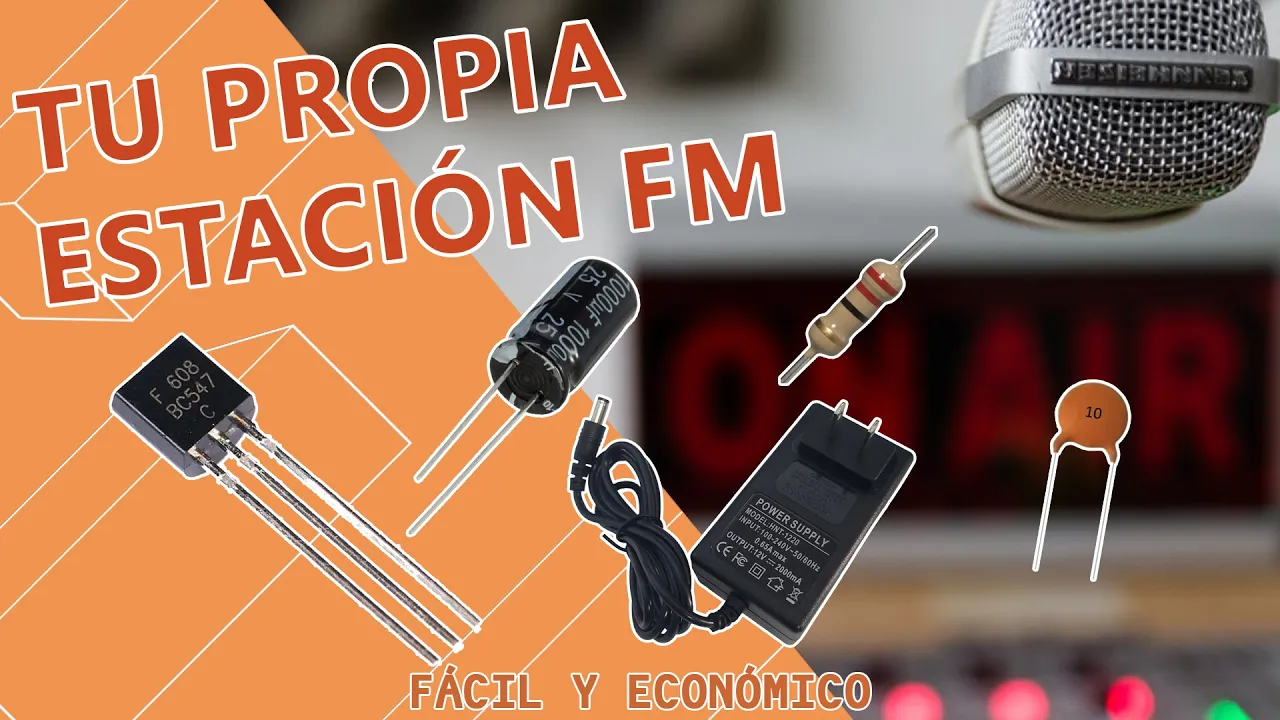
HAZ TU TRANSMISOR DE RADIO FM CASERO, FÁCIL Y ECONÓMICO (BUENA DISTANCIA)
Introduction and Background
The speaker introduces themselves as an electronics student fascinated by AM and FM transmission. They share their journey of wanting to build a radio station, leading them to construct an FM transmitter after previously working on an AM one.
Building the FM Transmitter
- The decision to focus on FM due to its popularity and ease of quality transmitter construction compared to AM.
- Description of the simple yet effective circuit used for the FM transmitter, emphasizing affordability and efficiency.
- Detailed list of components required for the transmitter, including capacitors, resistors, transistors, and inductors.
- Importance of the LC tank circuit in adjusting emission frequency and key specifications for capacitors and inductors used.
- Considerations for transistor selection based on power requirements and impact on circuit performance.
Circuit Assembly and Testing
The speaker elaborates on assembling the circuit using cost-effective methods while highlighting considerations for stability and functionality. Antenna connection is discussed along with testing the transmitter's range.
Circuit Assembly
- Various methods for constructing the circuit discussed, from basic setups with iron nails to more stable options like phenolic boards.
- Future improvements planned for a more sophisticated version mounted on a board for enhanced stability.
Antenna Connection and Testing
- Details about connecting an antenna using a telescopic radio antenna attached to a variable capacitor for emission adjustment.
- Testing the transmitter's range from different heights within a building to demonstrate signal strength up to 110 meters.
Transmitter Demonstration
The speaker showcases the operational effectiveness of the FM transmitter by tuning radios at varying distances from the source.
Range Demonstration
- Demonstrating signal reception at different distances from the transmitter: 8 meters on a rooftop, 12 meters below without signal loss or distortion.