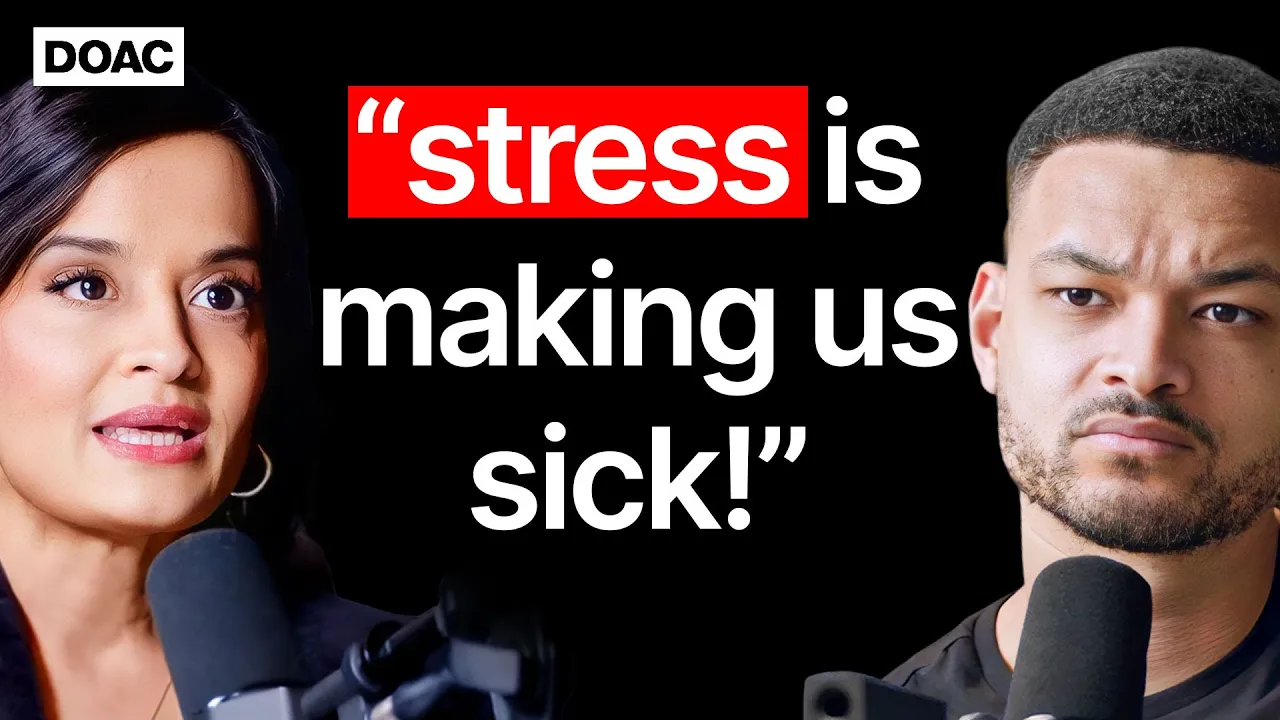
The Mental Health Doctor: Your Phone Screen & Sitting Is Destroying Your Brain!
The Impact of Stress and Burnout
In this section, Dr. Aditi Nar discusses the prevalence of stress and burnout in society and the rise in mental health problems.
Understanding the Scope of Stress and Burnout
- 72% of people are struggling with stress, while 70% have at least one feature of burnout.
- Mental health problems related to stress are on the rise.
- Studies show that 60 to 80% of patient visits have a stress-related component.
- Burnout is often caused by an inability to disconnect from work and being addicted to work.
- Checking your phone excessively (2,600 times a day) can be a sign of burnout.
The Isolation of Burnout
- Despite many people experiencing burnout, it can be isolating.
- On average, people go two weeks without speaking to anyone about their burnout.
The Five Resets for Surviving and Thriving
- Dr. Aditi Nar introduces five techniques or "resets" that can help individuals cope with stress and burnout.
A Favorable Request
Dr. Aditi Nar asks viewers for a favor related to subscribing to her YouTube channel.
Supporting the Channel
- Viewers are asked to subscribe to the YouTube channel as it helps with scaling production and improving content quality.
Dr. Aditi Nar's Origin Story
Dr. Aditi Nar shares her personal journey that led her to become an expert on stress and burnout.
Becoming the Doctor She Needed
- As a medical student facing her own stress struggles, Dr. Aditi Nar couldn't find a doctor who could help her.
- This inspired her to become the doctor she needed and uncover solutions for stress and burnout.
The State of Stress in the World
Dr. Aditi Nar discusses the current state of stress globally and its impact on various industries.
Unprecedented Levels of Stress
- Stress levels are at an all-time high, affecting every industry and demographic.
- Mental health, stress, and burnout are now being recognized and discussed more openly.
Rates of Burnout and Stress
Dr. Aditi Nar provides statistics on the prevalence of burnout and stress in society.
High Rates of Burnout and Stress
- Approximately 70% of people have at least one feature of burnout.
- 72% of people are struggling with stress.
- The past several years have been reported as the most stressful in many professionals' careers.
Understanding Delayed Stress Reactions
Dr. Aditi Nar explains delayed stress reactions and how they manifest after periods of acute stress.
Delayed Emotional Response
- Under acute periods of stress, individuals often keep it together at all costs.
- After the acute stressor is over, psychological defenses come down, leading to a delayed emotional response.
- This can result in increased rates of mental health issues such as anxiety, depression, sleep disorders, etc.
The Brain's Response to Stress
Dr. Aditi Nar discusses how our brains respond to periods of stress and why we may not feel like celebrating after challenging times.
Brains Built Like Dams
- During periods of stress, our brains shore up internal reserves to keep it together.
- When the acute stressor is over, psychological defenses come down, and true emotions emerge.
- This delayed response can manifest in various ways and may not align with expectations of celebration.
Increased Rates of Mental Health Issues
Dr. Aditi Nar highlights the increased rates of mental health issues due to stress.
Manifestations of Stress
- Increased rates of mental health issues such as anxiety, depression, sleep disorders, and stress-related disorders are observed.
- Stress is affecting all industries and demographics globally.
The transcript provided does not cover the entire video.
Difference between Acute Stress and Chronic Stress
This section explains the difference between acute stress and chronic stress. Under normal circumstances, our brain is governed by the prefrontal cortex, responsible for executive functions. However, under stress, the amygdala takes over as our emotional center, triggering the fight or flight response.
- Acute stress is managed by the prefrontal cortex.
- Chronic stress is governed by the amygdala.
- The amygdala triggers the fight or flight response.
- Our bodies are designed to handle acute stress effectively.
Managing Acute Stress vs. Chronic Stress
This section discusses how our bodies are built to manage acute stress but struggle with chronic stress in modern times.
- In ancient times, acute threats triggered the fight or flight response.
- Biological mechanisms like increased heart rate and dilated pupils occur during acute stress.
- Nowadays, chronic stressors like financial troubles and health issues create a constant low hum of stress.
- Chronic stress can lead to burnout when our brains don't get time to rest or recharge.
Symptoms of Burnout
This section explores the symptoms of burnout and how they have evolved over time.
- Classic symptoms of burnout include apathy, lethargy, and feeling unproductive.
- In 2019, burnout was designated as an occupational phenomenon and clinical syndrome by WHO.
- Atypical features of burnout are emerging, such as an inability to disconnect from work.
- Addiction to work can be a symptom of atypical burnout.
Recognizing Atypical Burnout
This section focuses on recognizing atypical burnout and the challenges in identifying it.
- Atypical burnout may involve being addicted to work and unable to unplug.
- Differentiating between healthy engagement in work and atypical burnout is crucial.
- Manifestations of atypical burnout include constantly checking emails and feeling trapped in a hamster wheel.
- Stigma and shame surrounding burnout often prevent people from recognizing their own experiences.
Prevalence of Burnout
This section discusses the prevalence of burnout, particularly in different sectors.
- Studies on parental burnout found that two-thirds of parents experience burnout.
- The rates of burnout vary across sectors, with estimates ranging from 60% to 70%.
- Self-reporting burnout can be challenging due to changing definitions and stigma.
The transcript provided does not mention any specific timestamps for the remaining content.
The Importance of Work-Life Balance
In this section, the speaker discusses the importance of work-life balance and reflects on their own experience of being consumed by work.
Finding Balance in Life
- Checking emails excessively and being solely focused on work can lead to a lack of balance in life.
- Despite being successful at work, feeling out of balance can have negative consequences.
- It is important to consider the long-term goals and endgame in life, rather than just focusing on short-term success.
The Cost of Burnout
- Maintaining an intense work schedule without breaks or rest can lead to burnout.
- Being constantly overwhelmed with work prevents individuals from enjoying other aspects of life such as relationships, family, and personal well-being.
- Over time, this imbalance can result in broken relationships and overall dissatisfaction with life.
Toxic Resilience: Understanding its Impact
This section explores the concept of toxic resilience and how it affects individuals' well-being.
The Misuse of Resilience
- Resilience is often praised in society as a positive trait but has been misused in recent years.
- Corporations and companies promote toxic resilience by encouraging excessive productivity at all costs.
- Toxic resilience disregards the need for rest, boundaries, and self-care.
True Resilience vs Toxic Resilience
- True resilience involves honoring boundaries, making time for rest, and practicing self-compassion.
- Toxic resilience focuses on productivity above all else and ignores the importance of rest and recovery.
- Many people have a negative reaction to the term resilience due to its association with toxic resilience.
The Role of Stress in Resilience
This section discusses the relationship between stress and resilience.
Stress as a Catalyst for Resilience
- Resilience requires experiencing stress and challenges in order to grow and adapt.
- Without stress, there can be no opportunity for resilience to manifest itself.
- Just like swimming, resilience keeps your head above water while facing difficulties.
Conclusion
The importance of work-life balance is emphasized, highlighting the need for long-term goals and overall well-being. The concept of toxic resilience is explored, distinguishing it from true resilience that incorporates rest and self-care. The role of stress in building resilience is discussed, emphasizing the necessity of challenges for growth.
Resilience of Different Generations
This section discusses the perception that older generations were more resilient compared to younger generations, and challenges this notion by highlighting the unique difficulties faced by the younger population.
Older Generations vs. Gen Z
- The idea that older generations were more resilient is questioned.
- The older generation had different challenges and less stimulation.
- Younger generations face a rise in mental health issues due to living in a hyperconnected world.
- It is important to validate and normalize the difficult experiences of young people.
The Canary and the Coal Mine
This section explores the concept of "the canary and the coal mine" as a metaphor for understanding physical manifestations of stress.
Understanding Stress Symptoms
- Stress manifests differently in individuals, with various physical symptoms such as palpitations, headaches, neck pain, etc.
- The phrase "the canary and the coal mine" refers to a historical practice where coal miners brought canaries into mines as an early warning system for air quality.
- Just like the canary stopped singing when there was bad air in the mine, our bodies have "canary symptoms" that indicate something is wrong with our stress levels.
- Identifying these symptoms requires paying attention to our body's signals and seeking medical advice if necessary.
Managing Stress Symptoms
This section emphasizes the importance of recognizing and managing stress symptoms effectively.
Recognizing Canary Symptoms
- Each individual has their own unique "canary symptom" that indicates high stress levels.
- While some medical conditions have obvious tells (e.g., stomach pain for peptic ulcer disease), stress-related symptoms may be subtler or go unnoticed.
- Headaches may not be directly caused by stress but are often worsened by it.
Seeking Medical Advice
- It is crucial to consult a doctor to rule out any organic problems and receive a proper diagnosis.
- The medical system plays an essential role in validating and addressing stress-related symptoms.
Conclusion and Book Introduction
This section concludes the discussion on stress symptoms and introduces the book "The Five Resets" by Dr. Darria Long Gillespie.
Importance of Understanding Stress Symptoms
- Recognizing and understanding our body's stress signals is vital for managing stress effectively.
- Everyone intuitively knows their own "canary symptom" that indicates high stress levels.
Introduction to "The Five Resets"
- Dr. Darria Long Gillespie has written a book called "The Five Resets," which focuses on managing stress and changing our responses to it.
- The book delves into the concept of neuroplasticity and provides strategies for dealing with stress.
Timestamps are provided at the beginning of each section, allowing easy navigation through the transcript.
Stress and its Impact on Mental Health
In this section, the speaker discusses their personal experience with stress and how it affects their mental health. They also touch upon the societal pressure to appear strong and resilient, as well as the mind-body connection in relation to stress.
Personal Experience with Stress
- The speaker mentions that they get a spot on their tongue when they are stressed.
- They also experience skin issues and colds when under stress.
- Despite managing stress well, they admit that they are not immune to it.
- The speaker reflects on pushing themselves too hard during their time as a CEO.
Resilience Myth
- The speaker talks about the myth of resilience, where people believe that resilient individuals don't get burned out.
- They mention how many people, including themselves, have denied being stressed due to pride and ego.
- Admitting to being stressed is often seen as a sign of weakness or inadequacy.
Mind-Body Connection
- The speaker emphasizes the importance of recognizing the mind-body connection in relation to stress.
- They compare it to gravity, stating that once you become aware of it, you cannot unsee its impact.
- Instead of viewing stress as evidence of brokenness or inadequacy, it should be seen as a normal human response.
Effects of Stress on the Brain
In this section, the discussion focuses on the effects of stress on the brain. The HPA axis (hypothalamus-pituitary-adrenal axis) is explained as the main highway for stress response in both the brain and body. Cortisol is highlighted as a key stress hormone.
HPA Axis and Stress Response
- The HPA axis is responsible for our stress response and involves various parts of the brain and adrenal glands.
- Acute stress triggers a cascade of hormones and bodily reactions, leading to the familiar feeling of stress.
- Chronic stress can cause the HPA axis to remain active, resulting in continuously elevated cortisol levels.
Cortisol and its Effects
- Cortisol is identified as a stress hormone that surges during periods of stress.
- Chronically elevated cortisol levels can have negative effects on the body.
Contagion of Stress
This section explores whether stress is contagious and discusses the concept of emotional contagion. The speaker explains that while stress itself may not be contagious like a virus, emotions can be transmitted between individuals.
Stress Contagion vs. Emotional Contagion
- Stress is not contagious in the same way as a virus or microbes.
- However, emotions can be contagious, creating a toxic environment or affecting interpersonal dynamics.
- The heart's electromagnetic field is mentioned as a possible factor in sensing vibes or emotional states.
Pheromones and Attraction
- Pheromones are briefly mentioned as chemical signals related to attraction and charisma.
- They differ from the contagion of stress and are more associated with interpersonal connections.
The transcript provided does not cover all aspects of the video.
New Section
In this section, the speaker discusses the concept of therapeutic presence and its impact on the doctor-patient relationship. They explore how cultivating a therapeutic encounter can lead to positive health outcomes.
Therapeutic Presence and Healing
- The speaker questions the existence of therapeutic presence as a scientifically proven concept but finds it fascinating to think about from a human lived experience perspective.
- Therapeutic presence refers to the idea of creating a healing experience during interactions with patients or in any form of communication. It is not about curing illnesses but rather providing a sense of healing.
- The speaker emphasizes that there is scientific evidence supporting the positive impact of therapeutic encounters on health outcomes, such as greater adherence to medication and improved control over conditions like asthma and glucose levels.
Cultivating Therapeutic Presence
- The speaker explains that cultivating therapeutic presence requires training, practice, and conscious effort. It is not solely dependent on the amount of time spent with someone but rather how that time is utilized.
- One trick to enhance therapeutic presence is maintaining eye level with the patient or being at a lower level than them, as it creates a sense of equality and empathy. This applies to both medical settings and other interpersonal interactions.
- Mirroring, where one person imitates another's body language or gestures, can also contribute to building rapport and enhancing therapeutic presence. However, authenticity remains crucial in establishing genuine connections with others.
New Section
In this section, the speaker discusses the importance of authenticity in creating meaningful connections with others and highlights how voice plays a significant role in human interaction.
Authenticity and Voice
- The speaker emphasizes that authenticity is key in establishing genuine connections, regardless of the techniques used to enhance therapeutic presence.
- Voice holds a primal instinctual significance for humans, especially during infancy when we are highly attuned to our caregivers' voices. Authenticity can be sensed through voice, and it plays a crucial role in building trust and connection.
Engagement and Eyeline
- The speaker shares insights from their experience in content creation, where maintaining eyeline with the camera significantly increases engagement. Shooting videos at eye level or slightly below enhances audience connection and interest.
- Similarly, in face-to-face interactions, being on eye level or adjusting one's position to match the other person's eye level can create a more engaging and therapeutic experience. This applies to various contexts, such as business meetings or conversations with children.
The transcript provided does not contain enough content for additional sections without repetition or mixing topics.
Recognizing the Power of Voice and Pheromones
In this section, the speaker discusses the unique power of voice and pheromones in human communication and attraction.
The Intimacy of Voice
- Recognizing and registering the human voice is different from physical appearance.
- Hearing someone's voice in your ear creates a deeply intimate experience.
- The authenticity of a voice is felt intuitively, even though we may not fully understand why we find it appealing.
- Voices have a primitive nature, forming connections in our brain from infancy.
- Similar to smell triggering memories, voices can evoke strong emotional responses.
Fascination with Pheromones
- Pheromones are chemicals that interact between individuals and can influence behavior.
- Initially skeptical about pheromones, but became intrigued by their effects on attraction and synchronization.
- Examples include menstrual cycle synchronization among women living together and t-shirt studies on attractiveness based on scent matching with pheromones.
- Genetic differences often make individuals more attractive due to the drive for genetic diversity.
The Resilience Rule of Two
This section explores the concept of resilience and how our brains handle change. The "Resilience Rule of Two" is introduced as a framework for understanding our brain's capacity for adapting to change.
Brain's Capacity for Change
- Our brains have limitations when it comes to making changes, even positive ones.
- Positive changes can also be stressors to our brain and body due to the need for adaptation.
- The Resilience Rule of Two states that our brains can effectively handle two new changes at a time.
- Based on a study by Holmes and Rahi in the 1960s, which examined common life events' impact on stress levels.
Impact of Life Events
- Holmes and Rahi's study involved 5,000 people and identified 43 common life events.
- Positive life changes were found to be stressors that could lead to illness later in life.
- The more life events a person experienced, the greater their stress levels and likelihood of developing an illness.
- Adaptation is necessary for stability when positive changes occur.
The transcript provided does not contain enough content for additional sections.
Managing Stress: Taking Small Steps
In this section, the speaker emphasizes the importance of taking small steps to manage stress effectively. Instead of trying to tackle everything at once, it is recommended to focus on two new things at a time and gradually incorporate them into one's life.
Taking Small Steps for Long-Term Change
- It is more effective to focus on two new things at a time rather than attempting to address all stressors simultaneously.
- By working with the biology of stress and making small changes over time, it becomes possible to create lasting change.
- The approach of focusing on two tangible goals allows for better engagement and habit-building.
- It takes approximately 8 weeks to build a habit, so once the initial goals have become ingrained, two new goals can be added.
Applying Clinical Practice Strategies
The speaker shares insights from clinical practice about how doctors prioritize patient care by focusing on two key areas at a time. This approach helps patients avoid feeling overwhelmed and increases their chances of success in managing their health.
Focusing on Two Key Areas
- When treating patients with multiple symptoms or medical conditions, doctors prioritize by focusing on two key areas at a time.
- This approach prevents overwhelming the patient's brain and increases the likelihood of successful outcomes.
- By addressing two specific areas, such as quitting smoking and lowering cholesterol, tangible progress can be made.
The Five Resets Approach
The speaker introduces the concept of "The Five Resets" as a framework for managing stress. The first reset involves getting clear on what matters most when experiencing stress.
Reset 1: Getting Clear on What Matters Most
- During times of stress, individuals are often in survival mode governed by their amygdala.
- To shift out of this mode, it is important to get clear on what matters most.
- The prefrontal cortex, responsible for forward thinking and planning, needs to take over from the amygdala.
- Three science-backed strategies are offered to help individuals shift out of fight or flight mode and create a roadmap towards their goals.
Building a Roadmap with MOST Goals
The speaker introduces the concept of MOST goals as part of the first reset. MOST stands for Motivating, Objective, Small, and Timely. These goals help individuals identify what truly matters to them and provide a roadmap for progress.
Setting MOST Goals
- MOST stands for Motivating, Objective, Small, and Timely.
- Individuals need to identify what truly matters to them rather than focusing on what's wrong with them.
- Having an external "why" helps provide motivation and direction.
- Examples of MOST goals include teaching a grandchild how to throw a baseball or going on a hike without knee pain.
- Having something to look forward to takes individuals out of the present moment and provides measurable progress.
Stress Score Assessment and Reset 1 Implementation
The speaker discusses the stress score assessment used in clinical practice and explains how implementing reset 1 can help individuals manage stress effectively.
Assessing Stress Score and Implementing Reset 1
- In clinical practice, doctors use a stress score assessment tool to determine the level of stress in patients.
- Reset 1 involves getting clear on what matters most by setting MOTS goals.
- MOTS goals should be motivating, objective, small enough to guarantee success, and time-sensitive (achievable within 3 months).
- Many patients struggle with feeling better because they focus on what's wrong with them instead of identifying what truly matters most.
Summary: Reset 1 - Getting Clear on What Matters Most
The speaker summarizes the key points of reset 1, which involves getting clear on what matters most and setting MOTS goals.
Key Points of Reset 1
- Reset 1 focuses on shifting from survival mode to forward thinking by getting clear on what matters most.
- MOTS goals (Motivating, Objective, Small, and Timely) provide a roadmap for progress.
- Having an external "why" helps individuals stay motivated.
- Examples of MOTS goals include teaching a grandchild how to throw a baseball or going on a hike without knee pain.
The transcript provided does not cover the entire video.
Setting Goals for Stress Management
In this section, the speaker emphasizes the importance of setting goals to manage stress and shares personal experiences. They also discuss the role of exercise in stress management.
Importance of Setting Goals
- Setting a goal post helps identify one's destination and current position in managing stress.
- Finding ways to reach that goal can help reduce stress levels.
Exercise and Fitness
- The speaker mentions a group within their company focused on exercise and fitness.
- Even small amounts of exercise can be beneficial for managing stress.
- Incorporating movement into daily routines, such as parking farther away or taking the stairs, can make a difference.
- Aim for a 20-minute walk each day as it has numerous health benefits and helps shift focus from the mind to the body.
- Starting with small steps like walking around the block gradually builds self-efficacy and increases confidence in maintaining an exercise routine.
Exercise as a Stress Management Tool
This section explores the evidence supporting exercise as a tool for stress management. The speaker explains how even low levels of physical activity can have positive effects on mental health.
Benefits of Movement
- Daily physical activity, even at low levels, can help decrease stress levels.
- Walking is a natural form of movement that offers various health benefits.
- Sitting for extended periods can increase anxiety levels, making movement essential for combating stress.
Longevity and Health Markers
- Engaging in regular physical activity, such as walking or running, has been linked to increased longevity and improved overall health.
- It is not about what specific type of exercise one does but rather finding something enjoyable that can be done consistently.
Popcorn Brain: Overstimulation from Technology
The concept of "popcorn brain" is introduced, which refers to the overstimulation caused by excessive use of technology. The speaker highlights the constant information stream and lack of mental rest in today's digital age.
Popcorn Brain Phenomenon
- Popcorn brain is a biological phenomenon coined by Dr. Levy.
- It describes the sensation of brain circuitry "popping" due to overstimulation from spending too much time online.
- People rarely give their brains a moment of rest, constantly engaging with their phones even during idle moments.
Impact on Mental Health
- Overuse of technology can contribute to anxiety and hinder offline engagement.
- Popcorn brain is distinct from internet addiction disorder, which has its own diagnostic criteria.
Constant Engagement with Technology
This section delves deeper into the pervasive nature of constant engagement with technology and its impact on daily life.
Lack of Mental Rest
- Waiting in line, at the bank, or during other idle moments, people tend to turn to their phones rather than allowing their minds to wander or reflect.
- Pedestrians' preoccupation with phones poses a public health hazard as it leads to near-miss accidents.
Need for Offline Engagement
- Living fully offline is challenging in today's fast-paced world but essential for mental well-being.
- Giving our brains moments of rest and disengaging from constant online stimulation is crucial.
The transcript ends here.
The Impact of Stress on Our Brain
In times of stress, our brain enters a state known as "popcorn brain," where we become prone to constant scrolling and scanning for danger. This behavior is driven by the amygdala, the part of our brain focused on survival and self-preservation. In modern times, we have all become like the night watch person in a tribe, constantly scanning for threats.
- When feeling stressed, we tend to scroll incessantly as a primal urge to feel safe.
- The rapid and constant stream of bad news contributes to our need to constantly scroll and scan for danger.
- It is important to note that limiting social media or media use altogether does not have a positive impact on mental health. Instead, decreasing reliance on phones and creating digital boundaries is more beneficial.
- On average, people check their phones about 2,600 times a day.
- Establishing boundaries with our phones is crucial just like in any other relationship in our lives.
The Relationship Between Stress and Diet
- Stress can lead to unhealthy eating habits due to the amygdala's focus on survival and self-preservation.
- Stress eating or emotional eating often involves cravings for high-fat and high-sugar foods.
- Rather than berating ourselves for indulging in these cravings, it's important to understand that they are biologically driven responses.
- Our diet may slip during periods of stress or difficulty in life.
Understanding Social Media Use During Stress
Social media usage can be influenced by stress levels. Emotional eating during stressful times can lead individuals to crave validation through social media engagement.
- Emotional eating during stress can contribute to seeking validation through social media engagement.
- It's common for individuals to beat themselves up when their diet goes off track during stressful periods.
- There are moments when individuals feel less in control and more reliant on autopilot behaviors, such as excessive social media use.
- Recognizing the need to regain control and establish healthier boundaries with social media is essential.
The transcript provided does not include timestamps for the remaining content.
Closing the Gap between Knowledge and Action
In this section, the speaker discusses the challenge of closing the gap between knowledge and action when it comes to implementing better habits in life.
Strategies for Closing the Gap
- It takes time for others without practice or knowledge to develop new habits.
- Falling off the wagon is a normal part of habit building.
- Having a sense of agency can be a struggle for some individuals.
- Following the five resets and 15 science-based strategies can help bridge the gap between knowledge and action.
- The brain and body are interconnected, so taking action can lead to positive changes in both.
Starting Small for Better Habits
This section emphasizes the importance of starting small when trying to implement better habits.
Benefits of Starting Small
- Starting with small actions helps overcome resistance caused by stress.
- Going to extremes, such as spending an hour at the gym daily, may not be sustainable during times of stress.
- Taking a 5-minute walk or engaging in other small activities can be more manageable and effective.
- Trusting the process and focusing on consistent small actions leads to long-term improvements.
Exercise for Mental Health
The speaker highlights that exercise is often motivated by mental health benefits rather than physical appearance or weight loss.
Exercise Motivation
- Many people start exercising because of its mental health benefits rather than physical health benefits.
- Even without significant weight loss, regular exercise improves cardiovascular and metabolic health.
- Stress management is a key aspect of exercise's impact on mental health.
Impact of Short Breaks on Stress Levels
This section discusses the importance of taking breaks and how even short breaks can have a positive impact on stress levels.
Breaks for Stress Management
- Taking short breaks throughout the day can cumulatively reduce stress levels.
- Microsoft Labs conducted a study showing that even a 10-second break can make a difference in stress levels.
- Breaks should be considered an essential part of the workday to manage stress and improve productivity.
Finding the Sweet Spot of Human Productivity
The speaker explains the concept of finding the sweet spot of human productivity by managing stress effectively.
Goldilocks Principle
- Human productivity follows a bell-shaped curve, with optimal productivity in the middle.
- When stressed, motivation and productivity decrease.
- By managing stress and finding balance, individuals can reach their optimal level of productivity.
- Taking breaks throughout the day helps maintain this balance.
Good Stress vs. Bad Stress
This section explores the distinction between good stress (adaptive) and bad stress (maladaptive).
Differentiating Good and Bad Stress
- Good stress is necessary for growth and achievement.
- Many positive aspects of life are outcomes of experiencing some level of stress.
- Bad stress refers to excessive or unhealthy levels that negatively impact well-being.
- Understanding this distinction helps reframe cultural perceptions about stress.
The transcript provided does not include any further sections or timestamps.
The Goal of Life and Managing Stress
In this section, the speaker discusses the goal of life and the importance of managing stress effectively.
Living a Life with Healthy Manageable Stress
- The goal of life is not to live a stress-free life, as our brains and bodies need stress to survive.
- The aim is to live a life with healthy manageable stress.
- Back-to-back meetings without breaks can lead to unhealthy stress levels.
- Taking short breaks between meetings can significantly reduce stress levels.
- A Microsoft study compared brain scans of people in back-to-back meetings with those who took short breaks and found that the group taking breaks experienced less stress.
- This concept aligns with the analogy of a kettle filling up with steam; taking breaks allows some of the built-up stress to be released.
Importance of Building in Breaks
- The speaker's calendar is usually filled with continuous meetings without any gaps, causing lateness and added pressure.
- Traveling between meetings or setting up virtual calls also takes time, making it difficult to be punctual.
- It is crucial to build in breaks throughout the day, even if they are as short as 10 seconds or 10 minutes.
- Neural consolidation refers to the process where information is cemented into knowledge in our brains. Taking breaks helps facilitate this process.
Neural Consolidation and Whoop Wearable
This section explores neural consolidation, its connection to learning, and introduces Whoop wearable as a tool for health monitoring.
Understanding Neural Consolidation
- Neural consolidation involves cementing new information into knowledge by allowing our brains time for processing and consolidating information learned on-the-go.
- Taking short pauses during activities like listening to podcasts can aid neural consolidation.
Introduction to Whoop Wearable
- The speaker highlights the benefits of using Whoop wearable for health monitoring.
- Whoop stands out due to its non-invasive design, unique analytics, and evolving membership model.
- The speaker emphasizes that Whoop has helped them become more aware of how daily activities impact sleep and stress levels.
- Features like the Whoop coach, journal, and weekly planner have been instrumental in maintaining health and fitness habits.
Gut-Brain Connection and Hu Products
This section delves into the gut-brain connection and introduces Hu products related to nutrition.
Understanding the Gut-Brain Connection
- Emerging science reveals the importance of the gut-brain connection in mental health.
- The microbiome, a collection of healthy bacteria in our gut, plays a significant role in this connection.
- A newer concept called psycho biome refers to a group of healthy bacteria dedicated to managing mood and mental health.
Introduction to Hu Products
- The speaker introduces Hu products related to nutrition.
- They mention their favorite products from Hu, including protein bars with high protein content and ready-to-drink options.
- The speaker shares their positive experience with Hu's new nutrition bars after initially not liking their previous version.
Timestamps are provided for each section.
The Role of the Microbiome in Regulating Blood Glucose
In this section, the speaker discusses the role of the microbiome in regulating blood glucose levels and explains what constitutes the microbiome.
Understanding the Microbiome
- The microbiome refers to trillions of healthy bacteria that make up our gut.
- Although we refer to it as a single entity, it is actually composed of numerous microorganisms.
Importance of Serotonin in the Gut
- Serotonin, commonly known as a brain chemical, plays a crucial role in mood and stress regulation.
- Surprisingly, there are three to five times more serotonin receptors in our gut than in our brain.
- This highlights the significance of the gut-brain connection and emphasizes how important our gut health is.
Resetting the Gut-Brain Connection
- To reset the gut-brain connection and improve overall well-being, various factors come into play:
- Adequate sleep
- Balanced diet
- Regular exercise
- Stress reduction techniques
Impact of Diet on Gut Health
- Consuming prebiotic and probiotic foods can positively influence gut health.
- Focusing on these types of foods can help support a thriving microbiome.
Maximizing Stress and Anxiety Levels
In this section, an ironic approach is taken to discuss how one could maximize stress and anxiety levels if desired.
Intentionally Increasing Stress Levels
- Engaging in activities such as scrolling through social media platforms with graphic content late at night can spike cortisol levels.
- Maintaining high brightness on electronic devices while continuously consuming distressing news content can contribute to heightened stress levels.
Disrupting Sleep Patterns
- Skimping on sleep by staying awake until early morning hours and waking up frequently throughout the night can exacerbate stress and anxiety.
- Keeping the TV on in the bedroom at full volume, especially tuned to news channels, can further contribute to stress.
Unhealthy Eating Habits
- Consuming processed foods with additives and disregarding regular meal times can disrupt brain function and increase stress levels.
- Erratic meal times without structure can hinder problem-solving abilities and create imbalances.
The Myth of Multitasking
- Multitasking is a misnomer as our brains are not capable of effectively multitasking.
- Task switching, which involves rapidly switching between different tasks, weakens the prefrontal cortex and impairs complex problem-solving abilities.
Impact of News Consumption on Stress Levels
This section highlights how excessive news consumption, particularly through television, can negatively impact stress levels.
Night Watchman Phenomenon
- Many individuals from older generations tend to watch news on TV for extended periods, even throughout the night.
- Continuous exposure to distressing news content without proper sleep can lead to significant mental distress.
Recommendations for Managing News Consumption
- Moving the TV out of the bedroom is suggested as an initial step to reduce excessive news exposure during sleep.
- Encouraging alternative sources of information and limiting TV news consumption can help alleviate stress levels.
Unhealthy Habits Contributing to Stress
This section discusses various unhealthy habits that contribute to increased stress levels.
Indiscriminate Eating Patterns
- Eating at all hours of the day without considering nutritional value or following a structured diet plan can worsen stress levels.
- Relying heavily on processed foods with minimal fruits, vegetables, or water intake intensifies stress.
Importance of Structure in Daily Routine
- Establishing regular meal times and maintaining a sense of structure throughout the day can promote balance and reduce stress.
- Having a structured routine helps the brain function better and improves problem-solving abilities.
The Myth of Multitasking
- Contrary to popular belief, multitasking is not effective for most individuals.
- Task switching, which occurs when attempting to multitask, weakens cognitive abilities and problem-solving skills.
By following these notes, you can gain insights into the role of the microbiome in regulating blood glucose levels, understand how certain habits can maximize stress and anxiety levels, recognize the impact of news consumption on stress, and learn about unhealthy habits that contribute to increased stress.
Monotasking and Time Blocking
In this section, the speaker discusses the concept of monotasking as an antidote to multitasking. They introduce time blocking as a technique to improve focus and productivity.
Monotasking vs Multitasking
- Multitasking is actually task switching, which is detrimental to the brain and prefrontal cortex.
- Monotasking, on the other hand, involves focusing on one task at a time.
- The speaker emphasizes that multitasking is a myth and encourages the use of monotasking instead.
Time Blocking Technique (Pomodoro Technique)
- Time blocking involves setting a timer for a specific duration, such as 30 minutes or 25 minutes initially.
- During each time block, you focus on one task without any distractions.
- After completing a time block, take a 5-minute break before starting the next task.
- Repeat this cycle of work and breaks to complete tasks efficiently while protecting your prefrontal cortex.
Benefits of Monotasking
- Monotasking strengthens the prefrontal cortex and improves attention, memory, concentration, etc.
- It reduces stress compared to multitasking because it gives a sense of accomplishment and completion.
Effects of Multitasking
In this section, the speaker explains how multitasking can lead to increased stress levels and decreased productivity.
Increased Stress from Multitasking
- Multitasking decreases self-efficacy and often leads to incomplete tasks.
- Attention becomes scattered when trying to juggle multiple tasks simultaneously.
- Slack channels or distractions further contribute to reduced focus and effectiveness.
Sense of Accomplishment with Monotasking
- By practicing monotasking through time blocking techniques, individuals experience a greater sense of accomplishment and completion.
- This sense of agency and self-efficacy reduces stress levels.
Diaphragmatic Breathing for Stress Reduction
The speaker discusses the importance of diaphragmatic breathing as a practical technique to reduce stress and anxiety.
Diaphragmatic Breathing Technique
- Diaphragmatic breathing, also known as belly breathing, is how babies naturally breathe.
- Place one hand on your belly and take a deep breath in, allowing your belly to expand.
- Exhale slowly through your mouth or nose, letting your belly fall.
- Focus on slow and controlled breathing, inhaling through the nose and exhaling through the mouth.
Benefits of Diaphragmatic Breathing
- Diaphragmatic breathing helps mitigate the stress response by activating the relaxation response.
- It is the only physiological mechanism in our body that can be voluntarily controlled.
- By consciously regulating our breath, we can reduce stress levels and promote relaxation.
Timestamps are provided for each section to help locate specific parts of the video.
The Sympathetic and Parasympathetic Systems
In this section, the speaker discusses the sympathetic and parasympathetic nervous systems and how deep belly breaths can switch the body into the parasympathetic system, also known as the rest and digest system. This helps to calm down the stress response.
Deep Belly Breaths Switch to Parasympathetic System
- Taking deep belly breaths switches the body into the parasympathetic system.
- The parasympathetic system is responsible for rest and digestion.
- This technique helps in calming down the stress response.
Stop Breathe Be Technique
The speaker introduces the stop breathe be technique as a way to tap into the mind-body connection and reduce stress. It involves taking a moment to pause, take a deep breath, and be present in the current moment.
Stop Breathe Be Technique
- Stop breathe be is a simple technique that can be done before or after various activities.
- It involves taking 3 seconds to pause, take a deep breath, and be present in the moment.
- This technique works best before or after Zoom meetings or mundane repetitive tasks.
- It helps switch from sympathetic to parasympathetic mode, reducing stress response.
- Practicing stop breathe be keeps you grounded and focused on the present moment.
Therapeutic Writing for Stress Reduction
The speaker discusses therapeutic writing as a tool for reducing stress. They explain that expressive writing about traumatic events or stressful situations can have numerous benefits for mood, sleep, anxiety, irritability, GPA improvement, and even hospital admissions reduction.
Expressive Writing Technique
- Therapeutic writing, also known as expressive writing, involves writing about a traumatic event or stressful situation for 20 to 25 minutes.
- This technique is done privately and no one else will see it.
- It can be helpful for various situations, from deep-seated trauma to everyday stressors.
- Writing for four consecutive days can lead to an uptick in distress initially, followed by a decrease over time.
- Therapeutic writing has been shown to be effective for improving mood, sleep, anxiety, irritability, and even GPA.
- The process of therapeutic writing allows for cognitive reframing and processing of emotions.
- It helps shift from amygdala activation to prefrontal cortex engagement and promotes self-efficacy and self-compassion.
Benefits of Therapeutic Writing
The speaker explains the potential reasons why therapeutic writing is beneficial. They mention cognitive reframing, emotional processing, expression of thoughts and feelings, and the development of self-efficacy and self-compassion.
Reasons Behind Therapeutic Writing's Effectiveness
- Cognitive reframing occurs as individuals progress through multiple days of therapeutic writing.
- Emotional processing takes place during the writing process, allowing for the expression of thoughts and feelings.
- Writing helps transform nebulous ideas into concrete words and thoughts.
- Therapeutic writing promotes a sense of agency and problem-solving skills in addressing personal issues or gaining new perspectives.
- Self-efficacy is enhanced through the process of solving one's own problems or finding alternative viewpoints with compassion.
Timestamps are provided in HH:MM:SS format.
The Impact of Stress on Email Communication
In this section, the speaker discusses how stress can affect email communication and provides advice on managing it effectively.
Managing Stress in Email Communication
- When people are stressed, they tend to send poorly written emails.
- It is important to take a moment and not rush when writing an email.
- The speaker suggests sleeping on it and sending the email the next day if possible.
- Taking time to reflect can lead to better ideas and improved communication.
Living a Lifetime in a Day
The speaker introduces the concept of "living a lifetime in a day" as an antidote to hustle culture.
Understanding "Living a Lifetime in a Day"
- "Living a lifetime in a day" is not about cramming everything into one day but rather bringing six key elements of a meaningful life into each day.
- These six elements include childhood wonder and play, meaningful work, solitude for reflection, enjoyable activities like vacations or hobbies, connection with loved ones or community, and taking stock of the day (retirement).
- By incorporating these elements even for just a few minutes each day, individuals can experience fulfillment and purpose.
Bringing Joy and Meaning into Daily Life
The speaker explains how individuals can bring joy and meaning into their daily lives by incorporating specific activities.
Incorporating Joyful Activities
- Childhood: Spend time every day experiencing wonder and play.
- Work: Engage in work that gives you a sense of meaning and accomplishment.
- Solitude: Take some time alone for reflection and mental well-being.
- Vacation: Dedicate even just a few minutes each day to doing something you love.
- Family/Community: Spend time with loved ones or engage in meaningful interactions.
- Retirement: Reflect on the day, evaluate what worked and what didn't.
Managing Phone Usage for Mental Well-being
The speaker discusses the negative impact of excessive phone usage and provides strategies for managing it.
Media Diet for Mental Well-being
- Excessive phone usage can lead to "popcorn brain" and "brain drain."
- To combat this, implement a media diet:
- Time limits: Set a timer for engaging with news or social media (e.g., 20 minutes per day).
- Geographical limits: Keep your phone away from your workstation during the day and off your nightstand at night.
- Logistical limits: Establish boundaries with technology to improve stress and mental health.
Coping with Overwhelming News
The speaker addresses the challenges of dealing with overwhelming news and traumatic content.
Dealing with Overwhelming News
- There is currently a lot of bad news in the world, which can be traumatizing.
- Limit exposure to distressing content by setting time, geographical, and logistical boundaries with technology.
- Protect mental well-being by being mindful of the impact of news consumption on emotions.
The transcript ends abruptly here.
The Impact of Consuming Graphic Images
This section discusses the research conducted by psychologist Roxan Silver, which shows that consuming graphic images increases the risk of PTSD, even if the events are happening far away. It explains how indirect trauma from consuming such content can lead to a cycle of increased consumption and heightened stress response.
Consuming Graphic Images and Risk of PTSD
- Research by psychologist Roxan Silver indicates that consuming graphic images increases the risk of PTSD, regardless of geographical distance.
- Indirect trauma from viewing graphic content triggers the amygdala and leads to increased scrolling behavior.
- Increased consumption of graphic content is linked to higher risks of PTSD and mental health conditions later in life.
Balancing Being Informed with Protecting Mental Health
This section emphasizes the importance of being an informed citizen while setting digital boundaries to protect mental health. It suggests alternative ways to stay informed without excessive exposure to graphic content.
Finding a Balance
- Being an informed citizen is crucial, but it is essential to establish digital boundaries for mental health protection.
- Limit engagement with graphic content by reading about events instead of watching videos or looking at images.
- Following trusted accounts and supporting causes can provide involvement without excessive exposure.
- Recognize the difference between censorship and protecting mental health; seek counseling if experiencing negative impacts from overconsuming news.
Hyperconnectivity and Loneliness Epidemic
This section explores the concept of hyperconnectivity in today's society, where people are more connected digitally but experience increasing levels of loneliness. It highlights the adverse effects of loneliness on physical and mental health.
Hyperconnectivity vs. Loneliness Epidemic
- Despite being hyperconnected through technology, global loneliness levels have reached epidemic proportions.
- Loneliness has significant health consequences, equivalent to smoking 15 cigarettes a day and increasing the risk of heart disease and stroke.
- Spending time with others and fostering a sense of connection and community is crucial for combating stress.
Question for the Next Guest
This section reveals the question left by the previous guest for the next guest. The question asks about an idea that was once believed to be true but turned out to be false.
Question for the Next Guest
- The question left for the next guest is: "What idea that you once held to be true turned out to be entirely false?"
Internal Experience vs. External Presentation
This section reflects on a personal realization regarding how people's internal experiences may differ from their external presentations. It highlights the importance of understanding that individuals may struggle internally despite appearing confident externally.
Internal Experience vs. External Presentation
- The speaker used to believe that people's internal experiences matched their external presentations.
- Through personal experiences as a doctor and speaker, it became evident that individuals can appear confident while struggling internally.
- Recognizing this disconnect helps foster empathy and understanding towards others' hidden struggles.
The Timeliness of the Book
The speaker discusses how the subject matter of stress, burnout, and resilience addressed in the book is timely. They mention reframing their perspective and terminology after reading the book.
Importance of Subject Matter
- The subject matter of stress, burnout, and resilience is relevant and timely.
- Reading the book helped reframe the speaker's perspective and terminology.
- Loaded terminology related to stress and resilience needs to be reconsidered.
Empathetic Approach to Subject Matter
The speaker praises the author for approaching the subject matter through an empathetic lens. They appreciate how both sides of the argument are presented, acknowledging different perspectives on stress and resilience.
Empathetic Lens
- The author approaches the subject matter with empathy.
- Both sides of the argument regarding stress and resilience are considered.
- One side believes all stress is great while another side avoids any stressful activities.
- A nuanced middle ground is advocated based on scientific research.
Chronic Stress as Unnatural
The importance of recognizing chronic stress as unnatural and not a sign of success is highlighted. The speaker acknowledges that chronic stress should not be glamorized but rather aims for happiness, fulfillment, and connection in life.
Recognizing Chronic Stress
- Chronic stress should not be seen as natural or glamorous.
- It is not a sign of success but rather something to be avoided.
- Happiness, fulfillment, and connection should be prioritized instead.
Appreciation for Author's Work
The speaker expresses gratitude towards the author for their important work in addressing chronic stress. They commend the book for guiding readers towards a happier and more fulfilling life.
Appreciation for Author
- The author's work on chronic stress is crucial.
- The book guides readers towards happiness, fulfillment, and connection.
- Chronic stress should not be glorified as a sign of success.
Understanding the Humanity in Work
The speaker praises the interviewer for their ability to delve into the heart of a person's work while also recognizing their humanity. They admire how the podcast brings out the humanity in both the interviewer and interviewees.
Recognizing Humanity in Work
- The interviewer effectively captures the essence of a person's work.
- The humanity of individuals involved in their work is acknowledged.
- The podcast successfully showcases both professional and personal aspects.
Impactful Feedback from Podcast
The speaker expresses gratitude for feedback received on their podcast. They emphasize that every feedback has been a learning experience, appreciating how it reinforces their beliefs and values.
Impactful Feedback
- Feedback received on the podcast is highly valued by the speaker.
- Each feedback provides an opportunity to learn something new.
- Feedback reinforces existing beliefs and values.
Greater Esteem for Podcast
The speaker reflects on being a fan of something and then having an even greater appreciation after participating in it. They express admiration for the interviewer and look forward to further engagement with them.
Greater Esteem through Participation
- Being a fan of something can lead to even greater esteem after participation.
- Admiration is expressed towards the interviewer.
- Further engagement with the interviewer is anticipated.
Sponsor Message - Zoe Company
A sponsor message is delivered, cautioning against getting caught up in diet culture and emphasizing the importance of listening to experts for sustainable health habits. A discount code for Zoe products is provided.
Caution Against Diet Culture
- The speaker warns against falling into fads of diet culture.
- Listening to experts is crucial for sustainable health habits.
- Zoe company offers personalized nutrition solutions.
- Discount code CEO10 provides a 10% discount on Zoe products.
Recommended Episode
The speaker recommends another episode that listeners may enjoy based on their interest in the current episode. They provide a link to the recommended episode in the description.
Recommended Episode
- Another recent episode is recommended for listeners who enjoyed the current one.
- A link to the recommended episode is provided in the description.
Turn any video into a summary like this
YouTube links, meetings, lectures — with transcripts, search, and chat.