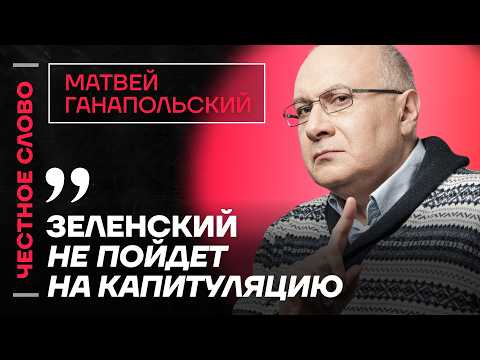
🎙 Честное слово с Матвеем Ганапольским
Introduction to the Discussion
Host and Guest Introduction
- The host, Alexander Makashenets, welcomes viewers to the program "Honest Word" on the Popular Politics channel.
- He introduces his guest, Matvey Gonopolsky, a journalist.
Current Situation in Ukraine
Energy Crisis and Heating Issues
- Discussion begins about the catastrophic heating situation in Ukraine due to Russian strikes on energy facilities during severe cold weather.
- The host asks for an update on how residents of Kyiv and other cities are coping with these challenges.
Resilience of Ukrainians
- Gonopolsky emphasizes that despite hardships, Ukrainians are not fleeing; they remain resilient and focused on recovery efforts.
- He critiques the use of the term "catastrophic," arguing it plays into Putin's narrative of creating chaos in Ukraine.
Putin's Strategy and Ukrainian Response
Avoiding Humanitarian Catastrophe
- Gonopolsky asserts that Putin aims to create a humanitarian disaster but has failed as people have not fled their homes.
- He mentions that Western support has been prompt, with equipment being sent to restore electricity production.
Future Energy Infrastructure Changes
- There is ongoing discussion about restructuring energy networks in Ukraine for better resilience against future attacks.
- Gonopolsky predicts a shift towards decentralized energy production as part of long-term strategies against Russian aggression.
Negotiations with Russia
Potential Territorial Concessions
- The conversation shifts to reports suggesting Ukraine may consider ceding control over parts of Donetsk region in negotiations with Russia.
- Gonopolsky describes this as a complex issue akin to negotiating prices at a store rather than simply giving away territory.
Importance of Public Sentiment
- He stresses that any agreement must be beneficial for Ukrainians; otherwise, there could be significant political repercussions for President Zelensky.
- The concept of an "unfavorable agreement" is introduced, highlighting public resistance against concessions without adequate compensation or guarantees from international partners.
Conclusion on Negotiation Dynamics
Zelensky's Position and International Guarantees
- Gonopolsky notes Zelensky’s strong position internationally but warns against agreements perceived as detrimental by the Ukrainian populace.
- A hypothetical scenario is presented where Zelensky would demand guarantees from Trump before making any territorial concessions.
Negotiations and Realities in Ukraine
Trump's Position on Agreements
- Trump expresses skepticism about signing guarantees from the U.S., emphasizing that he is not sharing a fairy tale but rather the harsh reality of negotiations.
- Zelensky's reluctance to agree to terms without clear benefits, highlighting the pressure from both internal and external forces regarding the situation in Donbass.
The Complexity of Peace Deals
- The discussion revolves around whether Zelensky can afford to concede territory like Donbass while awaiting potential agreements or ceasefires, which could be seen as disadvantageous.
- Trump’s aversion to war is noted; he empathizes with human suffering and recognizes the catastrophic loss of life during ongoing conflicts.
Understanding "Deals" in Negotiation Context
- Trump’s concept of a "deal" is framed as essential for any resolution, contrasting it with ineffective agreements that have failed historically (e.g., Budapest Memorandum).
- The term "deal" carries different connotations in Russian versus English; it implies mutual benefit rather than deceitful negotiation tactics.
Outcomes and Perceptions Post-Negotiation
- Both Russia and Ukraine must emerge from negotiations feeling they gained something significant; otherwise, public sentiment will lead to claims of betrayal.
- The inevitability of dissatisfaction post-agreement is acknowledged, where both sides may feel misled about their positions during negotiations.
Political Dynamics Surrounding Elections
- Discussion shifts towards upcoming presidential elections in Ukraine coinciding with peace referendum talks; Zelensky's surprise at this timing indicates political maneuvering.
- Observations suggest no significant political movements within Ukraine despite discussions about elections amidst wartime conditions.
Legislative Considerations for Elections
- Zelensky has tasked parliament with exploring legislative options for conducting elections under martial law, though little action appears to be taking place currently.
- Various factions advocate for elections, but practical challenges remain due to ongoing conflict and displacement affecting millions within Ukraine.
Putin's Strategy and Its Implications
- Putin's approach is characterized as manipulative yet subtle; his ultimate goal seems focused on destabilizing Ukraine beyond military actions.
- The broader implications of Putin’s strategy are discussed, suggesting that his actions aim at creating chaos rather than straightforward military victories.
Discussion on Legitimacy of Elections in Ukraine
Analysis of Election Legitimacy
- The speaker discusses the challenges surrounding elections in Ukraine, emphasizing that without Russian observers, any election results are deemed illegitimate by Vladimir Putin.
- There is a call for financial guarantees to ensure the legitimacy of elections conducted during wartime, highlighting the complexities involved in organizing such events.
- The speaker critiques both Trump and Putin's positions on recognizing Ukrainian elections, suggesting they lack genuine commitment to democratic processes.
Changing Dynamics in Ukraine
- A significant shift is noted regarding President Zelensky's leadership; he has matured and is now seen as a serious player on the international stage.
- The potential for Ukraine's acceptance into the European community by 2027 is discussed, but it’s clarified that this would not mean immediate membership due to ongoing conflict.
Challenges of Conducting Elections
- The speaker argues that there will be no elections until proper conditions are established, questioning whether Ukrainians have viable alternatives to Zelensky.
- Concerns are raised about the limited political options available to voters, with prominent figures like Poroshenko and Tymoshenko facing legal issues.
Transition to Olympic Discussions
Current Events Related to Olympics
- The conversation shifts towards recent Olympic news overshadowed by other global events.
- A specific incident involving Ukrainian skeleton athlete Vladislav Geraskevich is highlighted; he was disqualified for wearing a helmet adorned with photos of fallen athletes.
Perspectives on Athlete's Actions
- While supporting Geraskevich’s tribute, the speaker acknowledges the Olympic Committee's stance as justified given the potential implications for other athletes' expressions.
Implications of Symbolism in Sports
- Concerns arise over how allowing one athlete’s expression could lead others to use nationalistic symbols or images of leaders like Putin during competitions.
Reflection on War Impact on Sports
- The discussion emphasizes that athletes should remember their roots and honor those lost due to war while competing internationally.
Conclusion on Disqualification Incident
- Despite differing views between Geraskevich and the Olympic Committee, it’s acknowledged that strict rules must be maintained to prevent chaos at sporting events.
Discussion on Internet Freedom and Political Activism in Russia
The Role of Yulia Navalnaya
- Discussion begins with a mention of Yulia Navalnaya's commitment to fighting against internet censorship imposed by Putin, urging people to join the campaign for free internet.
- Critique of Navalnaya’s approach; skepticism about her ability to effect change given the current political climate in Russia.
Public Sentiment and Internet Access
- The speaker reflects on how the internet is now considered essential, akin to air, yet Putin's regime continues to restrict access, leading citizens to seek VPN solutions instead.
- Emphasis on the dire situation where daily casualties in Ukraine overshadow concerns about internet freedom; families are more focused on financial support than digital rights.
Revolution and Change
- The speaker argues that Navalnaya's efforts are futile as revolutions cannot be imported from abroad; true change must come from within Russia.
- Clarification that advocating for free internet does not equate to revolutionary action but rather a basic necessity recognized globally.
Ineffectiveness of External Appeals
- Asserts that appealing to anti-war Russians through campaigns is pointless; real change requires internal motivation among the populace without reliance on figures like Navalnaya.
- Reference made to Ukraine’s student-led protests as an example of grassroots activism that successfully influenced political outcomes.
Understanding Protest Dynamics
- Acknowledgment that protests do not necessarily indicate dictatorship; questioning why protests are often associated with oppressive regimes.
- Citing Dmitry Oreshkin’s insight: effective protest requires some democratic elements even within dictatorships, which are lacking in Russia today.
Consequences of Dissent in Russia
- Highlighting the severe repercussions faced by protesters in Russia—imprisonment or violence—which stifles public dissent entirely.
- Comparison made with other countries where protests occur despite authoritarian rule, emphasizing the unique severity of repression in Russia.
The Intersection of Sports and Politics
Olympic Committee Stance
- Transition into discussing the International Olympic Committee (IOC); criticism arises regarding claims that sports should remain apolitical.
Exclusion from Competitions
- The speaker believes countries under dictatorial regimes should be excluded from international competitions organized by bodies like the IOC due to their lack of democratic values.
Discussion on Politics and Sports
The Intersection of Politics and Sports
- The speaker argues that excessive political symbolism in sports fosters animosity among people, detracting from the essence of competition.
- They emphasize that sports should remain apolitical, criticizing those who intertwine politics with athletics as dishonest individuals.
Epstein Files Commentary
- The speaker expresses reluctance to comment on the Epstein files, humorously noting their absence from the island and questioning the relevance of such discussions.
- They assert that the Epstein case has no impact on Donald Trump's foreign policy or peace negotiations regarding Russia and Ukraine.
Media Sensationalism
- The speaker suggests that sensational media coverage surrounding Trump and Epstein distracts from serious investigations, advocating for a focus on legal authorities instead.
- They illustrate a hypothetical scenario involving fabricated evidence against Trump to highlight how easily misinformation can spread without credible sources.
Reflection on Public Perception
- The speaker dismisses any trust in manipulated videos or narratives about Trump, indicating a broader skepticism towards media portrayals.
- They draw parallels between Trump's public persona and other celebrities, suggesting that many seek validation through association rather than genuine connection.
Critique of Epstein's Legacy
- The discussion shifts to Epstein's social gatherings, where influential figures mingled under the guise of networking while engaging in questionable activities.
- The speaker critiques the portrayal of attendees at these events as solely seeking sexual encounters, arguing it oversimplifies complex social dynamics.
Conclusion on Epstein Case
- Ultimately, they conclude that the narrative surrounding Epstein ended with his death; ongoing speculation lacks substance or credibility.
- Acknowledging gratitude for participation in the discussion, they encourage audience engagement through likes and comments.
Discussion on the Principle of Sports and Politics
The Controversial Nature of Sports and Politics
- The principle of "sports outside politics" is a highly debated topic, often discussed in parliamentary and sports debates.
- This principle tends to polarize opinions, with many arguments both for and against it.
- Participants are encouraged to share their thoughts on whether they view this principle as hypocritical or sincere.
Support for the Program
- Viewers are reminded to support the program, with a list of supporters' names appearing on screen.
- Gratitude is expressed towards those who contribute, emphasizing the importance of community support.
- A call to action is made for viewers who may be hesitant about supporting to consider becoming patrons through a provided link.