Modelo de Shannon y Weaver I Teorías de la Comunicación
Understanding the Shannon and Weaver Model of Communication
Introduction to the Model
- The Shannon and Weaver model, developed by Claude Shannon and Warren Weaver, is a foundational framework in communication studies. It originated in electronics but laid the groundwork for modern communication theories.
Structure of the Model
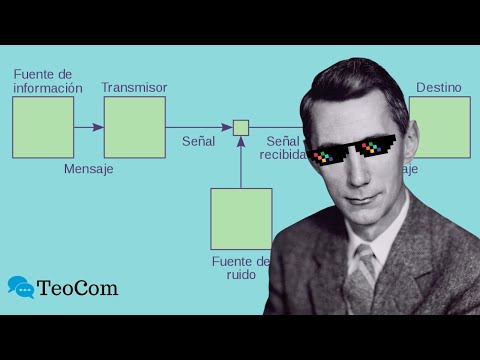
- The model consists of six key elements: source, transmitter, channel, receiver, destination, and noise. Each element plays a crucial role in the communication process.
Breakdown of Elements
- Source: This can be either human or mechanical and determines the type of message being transmitted.
- Transmitter: A technical component that converts messages into appropriate signals for transmission.
- Channel: The physical medium that carries signals through space; it mediates and transports information while potentially introducing noise (distortions).
- Receiver: Converts received signals back into a message as intended by the source.
- Destination: The final point where the message is intended to arrive.
Objectives of the Model
- Developed during early telecommunications advancements, this model aimed to enhance communication efficiency by measuring how much information can be accurately transmitted over various media. It emphasizes reducing ambiguity in messages through effective coding techniques.
Key Concepts Introduced
- The model introduced critical concepts such as encoding (preparing messages) and decoding (interpreting messages), which are essential for understanding information transfer processes today. Additionally, it proposed using binary systems (0 or 1) as fundamental units of data measurement known as bits.
Historical Context and Contributions
- Created shortly after World War II amid rising television technology demands, Shannon and Weaver's work focused on ensuring accurate message transmission while minimizing interference from noise during communication processes. Their contributions remain relevant today with terms like source, channel, receiver, and noise still widely used in communication studies.
Lasting Impact
- Shannon is recognized as the father of "bit," which remains a core unit of information in computing today—highlighting his significant influence on both telecommunications and computer science fields.
Summary Insights
- In summary:
- The Shannon-Weaver model is linear with six components.
- Its primary goal was to improve electronic communication efficiency.
- It established foundational concepts still utilized in modern communications.
- Recognized for introducing binary data representation through bits.