Historia de la Educación - Educación Siglo XVIII
The Enlightenment and Its Impact on Education
The Shift in Human Understanding
- The phrase by Immanuel Kant, "Only through education can man become man," encapsulates the essence of the Enlightenment era, particularly the 18th century.
- This period marked a transition from medieval views focused on divine design to an emphasis on human effort and qualities, leading to the concept of homo faber—the working man.
Emergence of Rationalism and Empiricism
- The Enlightenment began in England as an empiricist movement but soon spread to France and Germany, with notable figures like Newton and Bacon influencing its development.
- Despite a prevailing Christian worldview, many societal sectors turned away from medieval Christianity, paving the way for rationalism and empiricism as significant intellectual movements.
Kant's Influence on Education
- Immanuel Kant's theories significantly shaped educational concepts during this time; he emphasized positive action in education over strict discipline.
- His belief was that education cultivates prudence and civility in individuals, reflecting a broader socio-political context where monarchies maintained fragmented power structures.
Political Context: Despotism Enlightened
- The monarchy led the renewal program of the Enlightenment through despotismo ilustrado, which sought to balance tradition with modernity under absolute monarchical power.
- This approach aimed at reforming society from above rather than through popular revolution, involving merchants and intellectual professionals rather than traditional bourgeoisie.
Educational Reforms in Spain
- In Spain, 1766 is noted as a pivotal year for educational secularization influenced by reformists like Feijóo and Sarmiento who criticized theological studies.
- The Abreu Plan (1767), advocating for state responsibility in public instruction while reducing church influence, marked a significant shift towards secular education.
Key Figures in Spanish Educational Reform
- Francisco Cabarrús promoted national secular education with limited clerical involvement while Manuel José Narganes advocated for practical training within schools.
- These reformers highlighted the need for technical preparation among students amidst broader legislative changes affecting universities during this transformative period.
Legacy of Educational Thought
- Meléndez Valdés' 1785 letter called for urgent reforms in educational institutions, criticizing them as outdated relics needing modernization.
Influence of Jesuit Schools and Educational Reform in France
Historical Context of Education in France
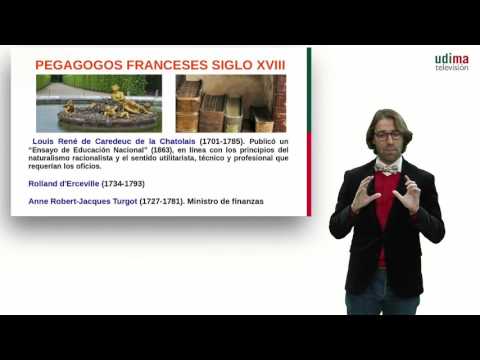
- The influence of Jesuit schools on secondary and university education in France was significant, alongside the contributions from Juan Bautista de la Salle and his Christian Brothers during the early 18th century.
- However, this educational heritage began to dissipate in the last four decades of the 18th century as Enlightenment principles permeated cultural and pedagogical environments, emphasizing rationalism, empiricism, and scientific naturalism.
Shift Towards Secular Education
- French Enlightenment thinkers and English empiricists rejected innate ideas; they posited that knowledge arises from sensory experience, leading to a behaviorist approach in education.
- The process of secularization in education gained momentum after the suppression of the Jesuits in 1762, paving the way for a secular, rationalist educational framework during the revolutionary period.
Revolutionary Changes in Education
- Following the outbreak of the French Revolution in July 1789, education transitioned from an intellectual despotism to a national system rooted in patriotism and civic responsibility.
- A commission led by Marquis de Condorcet aimed to ensure that state education did not replicate clerical doctrines but instead fostered individual reasoning within institutional contexts.
Structure of Educational Reform
- Condorcet's report proposed an educational structure divided into four sectors: primary school, two levels for pre-university teaching, and a national section focused on sciences and arts.
Educational Developments in Germany
Early Responsibility for Civil Education
- In Germany, early initiatives emphasized civil responsibility regarding schooling. The work of reformers combined theological movements with political decentralization to enhance municipal autonomy over education.
- By 1642, civil authorities increasingly intervened in educational matters. This led to a unique teaching model blending humanistic content with practical vocational training.
Prussian Educational Policies
- Frederick William I of Prussia implemented significant educational reforms inspired by religious pedagogy. His decree from 1717 laid foundational principles for future German pedagogy.
- Key figures like Christian Thomas Basedow promoted transformative pedagogical approaches focused on cosmopolitan values rather than rote memorization or abstract theories.
Emphasis on Active Learning
- Basedow stressed psychological study methods tailored to students' needs while advocating active participation through games and competitions linked to social realities.
Legacy of Philanthropic Pedagogy
Continuation Beyond Time
- The philanthropic ideals established by Basedow continued through his notable disciple who extended progressive educational concepts even into Russia's St. Petersburg.
State Intervention Under Frederick II
The Influence of Pestalozzi on Education
The Rationalist Spirit in German Universities
- The German university system exhibited a strong rationalist spirit, paving the way for experimental science and academic freedom.
- One notable model from 18th-century Prussia was the "real schools," which prioritized professional and technical training for students destined for industry and commerce.
Pestalozzi: A Pivotal European Educator
- Johann Heinrich Pestalozzi, a Swiss reformer, is recognized as one of the most influential educators between the late 18th and early 19th centuries.
- He viewed education as a remedy to societal issues, advocating for a logical method based on analytical teaching rather than rote memorization.
Core Principles of Pestalozzi's Educational Philosophy
- Pestalozzi emphasized moral development rooted in Christian values, encapsulated in his motto: learning through head, hand, and heart.
- His works highlighted the importance of self-development in children; he believed that vocational training was essential to combat poverty.
Practical Approaches to Education
- Pestalozzi argued for universal elementary education and was influenced by Kantian ideas about social discipline not being coercive.
- He posited that education should begin at home with love from mothers, promoting active learning over traditional verbal instruction.
Emphasis on Experience and Manual Skills
- Advocating experiential learning, he encouraged direct experiences such as excursions and hands-on lessons instead of theoretical knowledge alone.
- He noted disparities between rural children who contributed to family work versus urban bourgeois children lacking practical skills.
Artistic Education as Moral Foundation
- For Pestalozzi, aesthetic education fostered moral character; understanding art led to comprehending nature's essence.
Impact of Pestalozzi's Ideas in Spain
- The introduction of Pestalozzian principles into Spanish education began in the 19th century with Swiss educators opening schools based on his methods.
- Despite initial enthusiasm for these ideas, they faced challenges due to political tensions and were often limited to privileged social classes.
Conclusion: Legacy Amidst Challenges