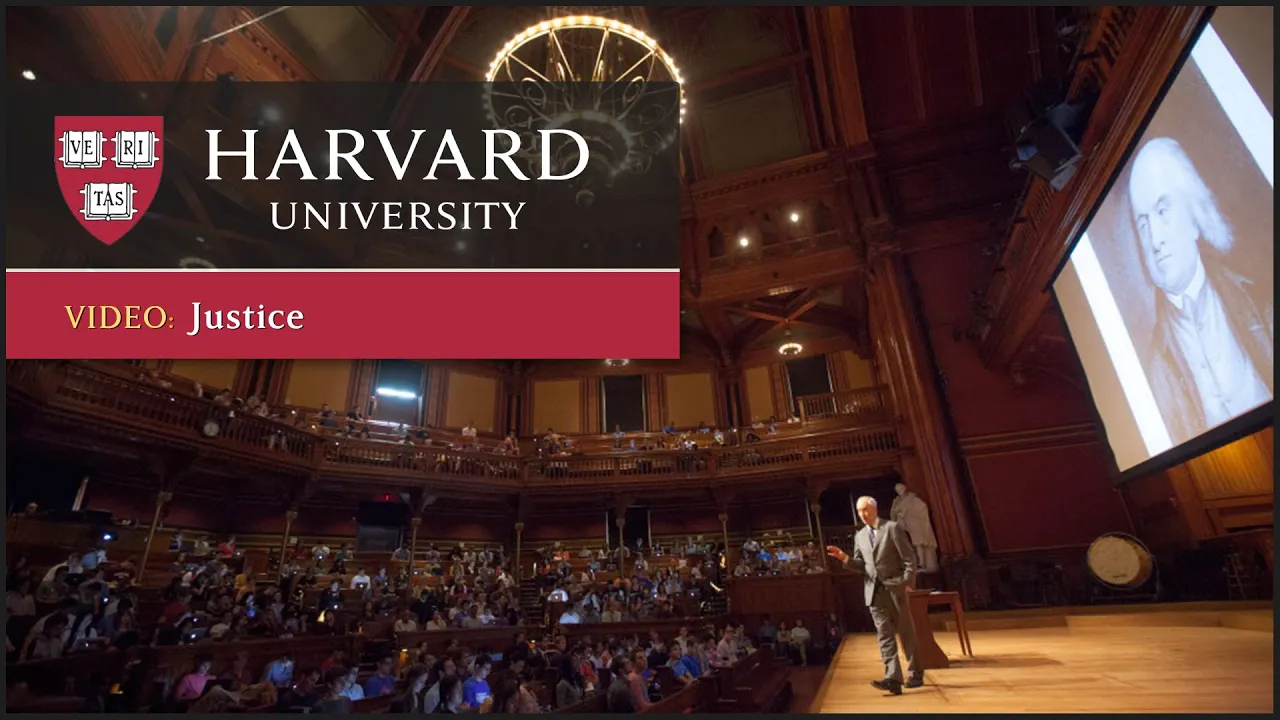
Justice: What's The Right Thing To Do? Episode 12: "DEBATING SAME-SEX MARRIAGE"
Funding for the Program
This section discusses the funding provided for the program.
Funding Details
- Additional funding is provided for this program.
Narrative Conception of the Self and Obligations of Solidarity
The discussion revolves around the narrative conception of the self and obligations of solidarity or membership.
Narrative Conception of the Self
- The concept of obligations of solidarity or membership that do not flow from consent is explored.
- Debates arise regarding whether there are any obligations of this kind or if all apparent obligations can be translated into consent or reciprocity.
Obligations, Loyalty, and Patriotism
This section focuses on loyalty, patriotism, and their relation to obligations.
Obligations and Loyalty
- The idea of loyalty, solidarity, and membership gains moral force in the discussion.
- The film depicting Southern segregationists in the 1950s serves as a counterexample to these ideas.
Defending Narrative Conception of Person and Obligations
An argument is presented to defend the narrative conception of a person and obligations.
Argument for Narrative Conception
- The argument aims to defend the narrative conception against voluntarist conceptions.
- It suggests that there are obligations of solidarity or membership which strengthen arguments about justice.
Justice Tied to Goodness
This section explores how justice can be tied to goodness.
Two Ways Justice Relates to Goodness
- Justice cannot be detached from questions about what is good.
- There are two ways in which justice can be tied to goodness, and one is argued for.
Virtue, Friendship, and Universal Disposition
The discussion delves into the concepts of virtue, friendship, and a universal disposition.
Virtuous Actions and Friendship
- A virtuous person would come to the aid of a distant stranger as quickly as their own friend.
- A world without friends but only a universal disposition to friendliness is difficult to imagine and may not be recognizable as a human world.
Limits of Moral Sympathy
This section explores the limits of moral sympathy and our love for humanity.
Smaller Solidarities
- Our lives are often guided by smaller solidarities rather than a general love for humanity.
- We learn to love humanity through its particular expressions.
Consequences for Justice
The consequences of the narrative conception of person and obligations on justice are examined.
Assessing the Narrative Conception
- One way to assess this conception is by considering its consequences for justice.
- The example of Southern segregationists raises questions about tying justice to the good.
Two Ways Justice Tied to Goodness
This section discusses two ways in which justice can be tied to goodness.
Relativist vs. Non-relativist Approach
- Justice can be tied to the good in either a relativist or non-relativist way.
- The relativist approach makes justice conventional while the non-relativist approach links it with moral worth or intrinsic good.
Justice and the Good
In this section, the speaker discusses the relationship between justice and the good. They argue that linking justice to the good in a non-relativist way presents a challenge because people hold different conceptions of the good in a pluralistic society.
Linking Justice to The Good
- The first way of linking justice to the good is insufficient as it leaves justice as a creature of convention.
- There is a need for moral resources to respond to those who invoke their own way of life or traditions.
- However, there is a challenge in reasoning about the good due to different conceptions of what social goods and human goods are worthy of honor and recognition.
Reasoning About Justice
In this section, the speaker explores whether it is necessary and unavoidable to argue about the good when discussing justice. They assert that reasoning about the good is an essential aspect of discussing justice.
Is It Necessary to Argue About The Good?
- It is necessary and unavoidable to argue about the good when discussing justice.
- People hold different conceptions of the good in a pluralist society, which creates an incentive to find principles of justice that do not depend on any particular ends or purposes.
- Reasoning about the good is an unavoidable feature of arguing about justice.
Same-Sex Marriage
This section focuses on same-sex marriage as a case study for exploring whether one's views on morality can be detached from questions regarding state recognition. The speaker invites arguments from those who believe there should be no same-sex marriage but only recognition between a man and a woman.
Arguments Against Same-Sex Marriage
- Mark argues that his Christian and Catholic beliefs shape his understanding of sex and marriage, emphasizing procreation and unity between opposite sexes.
- Ryan agrees with Mark's views and believes that the government should not encourage homosexual behavior by recognizing same-sex marriage.
Questioning the Arguments
- Hannah questions Mark's argument by asking if infertile couples should also be prohibited from engaging in sex if children will not result from it.
- Mark responds that sex has purposes beyond procreation, but Hannah further challenges his argument by bringing up the permissibility of masturbation.
Discussion on Masturbation
This section delves into a discussion about the permissibility of masturbation within the context of arguments against same-sex marriage. The speaker encourages a general argument rather than focusing on personal experiences.
Permissibility of Masturbation
- Hannah argues that biblically, masturbation is considered impermissible due to spilling seed without resulting in childbirth.
- She questions the inconsistency in allowing masturbation while arguing against same-sex marriage based on procreation and reinforcing marriage bonds.
The transcript provided does not include timestamps for all sections.
The Permissibility of Homosexual Marriage
In this section, the discussion revolves around the permissibility of homosexual marriage and the role of society in recognizing and allowing it.
Arguments Against Masturbation and Homosexual Marriage
- Steve argues that while masturbation is not permissible, it does not mean that homosexual sex should also be deemed impermissible.
- Society should not allow individuals to marry themselves if masturbation is considered unacceptable.
Moral Permissibility and State Recognition
- The conversation shifts to the moral permissibility of various practices and their fit with state recognition.
- Steve's counterargument highlights the distinction between moral permissibility and state recognition.
Human Sexuality and Same-Sex Marriage
- It is argued that human sexuality is inherent in most people, including homosexuals.
- The inability to understand why homosexuals cannot marry each other is expressed.
- While marrying oneself may not be legally possible, there should be no hindrance for same-sex couples to marry each other.
State Recognition of Solo Marriage and Polygamous Marriages
- Steve expresses willingness to confer state recognition on solo marriages or even consensual polygamous marriages.
- The focus shifts towards discussing whether the state should recognize same-sex marriage or limit it to civil unions.
Implications of Religious Views on Marriage
- Victoria emphasizes that theological reasoning for marriage varies across different religions and beliefs.
- The government should not impose a specific religious viewpoint on everyone by disallowing same-sex marriage.
State Recognition of Civil Unions vs. Marriage
- Victoria suggests that while the state should not recognize same-sex marriage within religious institutions, civil unions can be recognized without religious connotations.
Questioning State Recognition of Marriages
- A participant questions why the state should recognize marriages at all.
- They argue that marriage is a union between individuals, regardless of gender, and does not require permission or recognition from the state.
State Recognition and Binding Effect
- The potential binding effect of state recognition on marriages is questioned.
- It is argued that state recognition may not have a significant impact on the well-being of children or society as a whole.
Cesan's Perspective: State Non-recognition of Marriages
- Cesan shares their belief that the state should not recognize any marriages.
- They argue that marriage is a personal union and should not require approval or recognition from the state.
Reflecting on Critical Reflection and Political Improvement
- The session concludes with reflections on critical reflection, political improvement, and the moral life.
Concluding Thoughts
In this final section, the speaker reflects on the unease that arises when familiar concepts are examined critically. They address two questions: whether it is necessary to consider questions of the good life in thinking about justice, and whether it is possible to reason about justice.
Necessity of Considering Questions of the Good Life in Justice
- The speaker affirms that it is necessary to consider questions of the good life when discussing justice.
Possibility of Reasoning About Justice
- The speaker asserts that it is indeed possible to reason about justice.
Wrapping Up
- The participants are commended for their participation.
- The importance of tension in critical reflection, political improvement, and moral life is highlighted.
New Section
The discussion revolves around the idea of neutrality in the context of same-sex marriage and whether the state should make moral and religious judgments. Different perspectives are presented, including arguments for neutrality, getting out of recognizing any kind of marriage, and the role of personal beliefs in decision-making.
Victoria's Argument Against Deciding Moral Questions
- Victoria argues that in a pluralist society with diverse moral and religious convictions, it is not appropriate for the state to decide questions about the good or come to an agreement on them at a legal level.
- She suggests making laws and frameworks neutral with respect to competing moral and religious views.
Neutrality as a Third Possibility
- Some proponents of neutrality argue for a third possibility: government getting out of recognizing any kind of marriage.
- This perspective is based on the idea that neutrality should be maintained by not restricting marriage to a man and a woman or permitting same-sex marriage.
Andrea's View on State Neutrality
- Andrea believes it is impossible for the state to be neutral on moral and religious questions like same-sex marriage because people's lives are deeply embedded in their worldview.
- She agrees with Aristotle that government should help people live collectively with a shared understanding of what is right and wrong.
Moral Permissibility and Decision-Making
- Andrea highlights that deciding issues like abortion or same-sex marriage without considering their moral permissibility is challenging due to deeply held beliefs.
- Personal beliefs about whether a fetus is a living being or if homosexuality is sinful influence one's stance on these matters.
Personal Beliefs Shaping Views on Same-Sex Marriage
- Andrea shares her personal journey where she had to reconcile her Catholic beliefs with her support for same-sex marriage through introspection, prayer, and conversations with others.
- She emphasizes that many people draw their beliefs and views from religion.
Separating Moral Opinions from Legal Choices
- Dan argues that moral opinions can be separated from what the law should be. He uses the example of abortion, where he believes it is morally wrong but supports its legality to ensure safety for women.
- He applies a similar perspective to same-sex marriage, stating that if two consenting adults want to get married, there is no harm in permitting it.
Massachusetts Court's Conflict and Attempt at Neutrality
- The Massachusetts court in the Goodridge case grappled with conflicting positions on same-sex marriage.
- Chief Justice Margaret Marshall's opinion attempted liberal neutrality while acknowledging deep-seated religious, moral, and ethical convictions held by many people.
The transcript provided does not cover the entire discussion.
What is at Stake: Respect for Individual Autonomy and Equality under Law
This section discusses the importance of respect for individual autonomy and equality under the law in the context of same-sex marriage.
The Liberal Neutral Strand in Court Opinion
- The liberal neutral strand emphasizes autonomy and choice in recognizing same-sex marriage.
Government Neutrality on Moral Worth
- Recognizing same-sex marriage based solely on respect for individual autonomy does not fully address the issue.
- If government were truly neutral on moral worth, it should remove itself from recognizing certain unions altogether.
Proposal for Abolition of Marriage as a State Function
- Michael Kinsley proposes the disestablishment of marriage as a state function.
- This would allow churches and other religious institutions to offer marriage ceremonies, while removing government involvement.
Supreme Judicial Court's Position
- The Supreme Judicial Court of Massachusetts did not call for the abolition or disestablishment of marriage.
- The court expanded the definition of marriage to include partners of the same sex, emphasizing social recognition and honor.
Marriage as a Personal Commitment and Public Recognition
This section explores how marriage is both a personal commitment and a form of public recognition.
Three Partners to Every Civil Marriage
- Justice Marshall argues that there are three partners to every civil marriage: two willing spouses and an approving state.
- Marriage represents personal commitment, mutuality, companionship, intimacy, fidelity, and family.
Purpose of Marriage
- The court rejects the notion that procreation is the primary purpose of marriage.
- The essential point and purpose of marriage is the exclusive and permanent commitment between partners.
Neutrality in Same-Sex Marriage Debate
This section challenges the claim that one can remain neutral on same-sex marriage while favoring or opposing it.
Inevitability of Moral and Religious Questions
- Even when attempting to be neutral, moral and religious questions cannot be avoided in debates about same-sex marriage.
Reasoning About the Good Life and Justice
This section discusses reasoning about the good life and justice, highlighting that a single principle or rule is not necessary for moral reasoning.
Dialectical Approach to Moral Arguments
- Reasoning about the good life and justice involves moving back and forth between judgments about particular cases and general principles.
- Having a single principle or rule is not required for moral reasoning.
The transcript provided does not include timestamps for all sections.
New Section
This section discusses the method of reflective equilibrium as a way of reasoning about justice and moral principles. It explores how our considered judgments about particular cases interact with general principles to form a coherent view.
Method of Reflective Equilibrium
- The method of reflective equilibrium involves moving back and forth between our considered judgments about particular cases and the general principles we would articulate to make sense of those judgments.
- It allows for revising both our particular judgments and intuitions, as well as the principles, in light of each other.
- A conception of justice cannot be deduced from self-evident premises; its justification relies on the mutual support of many considerations that fit together into one coherent view.
- Reflective equilibrium is applied to questions of justice, not morality or the good life.
- Reasonable pluralism exists in modern societies regarding the good life, morality, and religion, leading to persisting disagreements among conscientious individuals.
New Section
This section examines whether there is a difference between reasonable pluralism in matters of justice compared to morality and religion. It explores how moral reasoning and disagreements occur in debates about justice, free speech, religious liberty, and Supreme Court appointments.
Reasonable Pluralism in Justice vs. Morality/Religion
- Disagreements about justice are similar to disagreements about morality and religion in terms of engaging with interlocutors through argumentation.
- Moral argumentation involves considering arguments provoked by particular cases, developing reasons for different perspectives, listening to others' reasons, and being open to revising one's views.
- There is no inherent difference between reasonable pluralism in matters of justice compared to morality and religion.
- Engaging with fellow citizens' moral and religious convictions through deliberation and engagement is a more suitable approach for a pluralist society.
- A politics of moral engagement does not guarantee agreement or appreciation for others' convictions but allows for a better understanding and appreciation of diverse human goods.
New Section
This section addresses the liberal concern about finding a way to respect fellow citizens with whom we disagree regarding morality, religion, and justice. It explores different conceptions of respect and how they relate to political purposes and engagement.
Respecting Fellow Citizens' Convictions
- The liberal conception of respect suggests ignoring fellow citizens' moral and religious convictions for political purposes.
- However, an alternative conception of respect involves engaging with those convictions, challenging them, listening, and learning from them.
- A politics of moral and religious attention and engagement may not always lead to agreement or appreciation but is more suitable for a pluralist society.
- Deliberation and engagement foster mutual respect by acknowledging the ultimate plurality of human goods expressed through different lives.
New Section
This section concludes the argument by reflecting on the nature of political philosophy, critical reflection, and moral improvement. It emphasizes how philosophical inquiry can unsettle our assumptions and lead to personal growth.
Conclusion
- Political philosophy works by estranging us from the familiar, unsettling our settled assumptions, and reflecting on our circumstances.
- Critical reflection animates political improvement as well as personal moral development.
- The argument comes to an end with an invitation to experience the unease that comes from reflecting on one's beliefs.
New Section
In this section, the speaker reflects on the concept of skepticism and its role in human reason. The aim of the course is to awaken the restlessness of reason and explore where it might lead.
The Restlessness of Reason
- Skepticism is a resting place for human reason, according to Kant.
- However, it is not a permanent dwelling place but rather a space for reflection on dogmatic wanderings.
- Simply accepting skepticism or complacency cannot satisfy the restlessness of reason.
- The goal of the course is to awaken this restlessness and see where it may lead.
- If the restlessness continues to afflict individuals in the future, then something significant has been achieved together.
New Section
The speaker expresses gratitude and provides information about further engagement with the topic.
Expressing Gratitude and Encouraging Engagement
- The speaker expresses thanks to the audience.
- Viewers are encouraged not to miss the opportunity to interact online with other Justice viewers.
- Online platforms offer various activities such as joining conversations, taking quizzes, watching missed lectures, and learning more about justice topics.
- Visiting justiceharvard.org is recommended for further engagement.
New Section
Information regarding funding for the program is provided.
Program Funding
- Additional funding for this program has been provided.