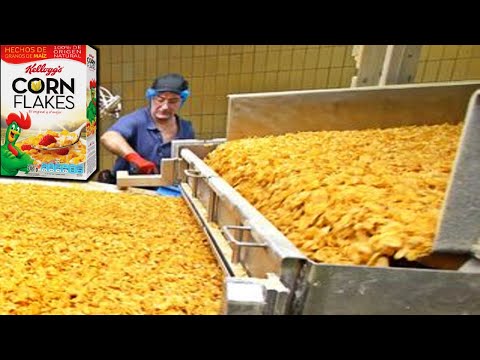
COMO se HACEN los CEREALES de MAÍZ CORN FLAKES🥣| Como se FABRICAN los CEREALES para el DESAYUNO
Desayuno Cereal Factory Tour
The transcript explores the process of cereal production, specifically focusing on corn flakes manufacturing at a factory.
Corn Flakes: From Corn to Crunch
- Corn flakes were created accidentally in the 1890s when wheat boiled for bread-making turned into corn flakes. This serendipitous discovery led to the birth of the first corn flakes.
- Initially sold in bulk as a healthy and easily digestible food, corn flakes gained popularity over time, expanding nationally and internationally.
- The production process starts with harvesting corn in Argentina from 390 farms, with up to 30,000 tons shipped to the UK for making 500 million bowls of corn flakes.
- Rigorous quality control ensures only high-quality and impurity-free corn grains are used. Additional conditioning processes may include controlled humidification to soften the husk for easier flake extraction.
Processing Corn Grains
- After thorough cleaning and selection, the corn grains undergo soaking and conditioning in hot water tanks to soften them for milling.
- Advanced cleaning methods involving gravity separators and vacuums remove finer impurities like stones or dust. Grains are then classified by size and density using specialized equipment.
Milling and Separation Process
- Following selection and cleaning, the soaked corn grains go through grinding between giant steel rollers in mills to create a fine maize dough essential for producing uniform corn flakes.
- The maize dough is further processed through extrusion after cooking and mixing with additional ingredients like sugar or salt to achieve expansion and malleability before cutting into desired shapes.
Continuation of Cereal Production Process
This section delves deeper into the processing stages post-milling, emphasizing soaking techniques, grinding procedures, and final steps leading to cereal formation.
Soaking Techniques & Grinding Procedures
- Soaked corn grains may undergo additional conditioning post-soaking involving steam or heat adjustment to enhance moisture levels for improved texture during milling.
- Further conditioning aids in better husk separation during grinding for more uniform maize flakes production through a meticulous milling process using specialized equipment.
Final Steps towards Cereal Formation
- Maize grains transition into large mills where they are crushed between rotating steel rollers at varying speeds to achieve an even maize dough consistency crucial for subsequent flake formation.
How Corn Flakes Are Made
This section details the process of manufacturing corn flakes, from extrusion to packaging, emphasizing the importance of quality control and freshness in the production.
Extrusion and Cutting Process
- The extruder uses adjustable blades to cut the flakes as they exit the machine.
Drying and Coating
- The flakes are dried to maintain their crispy texture and remove excess moisture.
- A drum mixes the flakes and coats them with a boiling sweet solution.
- Ensures readiness for subsequent manufacturing stages.
Drying, Cooling, and Packaging
- Essential steps post formation include drying, cooling, and packaging for quality assurance.
- Hot air is passed through the flakes during drying to eliminate residual moisture.
- Cooling involves exposure to cold air streams to prevent sticking before packaging.
- Rigorous quality inspection ensures adherence to taste, texture, and appearance standards.
Packaging Process
This section focuses on the meticulous packaging process that follows quality checks in corn flake production.
Precise Packaging
- Each specific combination of corn flakes drops directly into a bag sealed both below and above using heat to prevent defective bags from passing through.
- Bags undergo accurate measurement by sensors before finalizing the manufacturing process.
Labeling and Storage
- Labels containing product information, nutritional content, and expiry dates are applied to cereal packages post-packaging.
- Proper storage conditions maintain freshness until distribution to retailers ensuring optimal consumption within 24 hours.