How to write a thesis or capstone 10 minutes at a time | How I learn deeply and permanently
Jeremy's Research Process
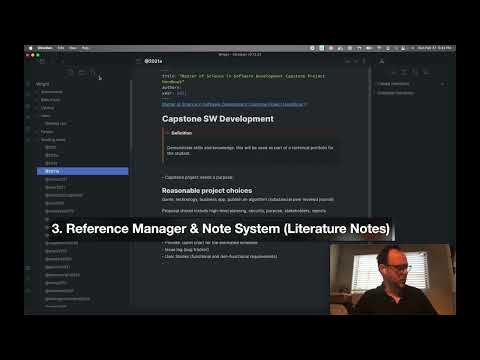
In this video, Jeremy explains his research process and how he consumes documents for professional and academic purposes. He shares his four-step process, which includes reading the document, taking fleeting notes, importing them into a tool called Obsidian, and elaborating on the notes.
Steps in Jeremy's Research Process
- Step 1: Read the document
- Step 2: Take fleeting notes using the Zettelkasten notetaking method
- Step 3: Import notes into Obsidian
- Step 4: Elaborate on the notes by writing a short one paragraph atomic note or permanent note
Tools Used in Jeremy's Research Process
- Physical notebook for capturing mental distractions
- Fountain pen and note cards for taking fleeting notes
- Zotero as a reference manager to import documents
Benefits of Jeremy's Research Process
- Breaking down research into smaller chunks can help manage time effectively.
- Starting with paper helps stay focused.
- Taking intentional breaks allows your mind to work on ideas subconsciously.
Introduction to Zettelkasten Note-Taking Technique
In this section, the speaker introduces a note-taking technique called Zettelkasten and recommends a book on the topic.
Zettelkasten Note-Taking Technique
- The Zettelkasten note-taking technique is introduced.
- The book "How to Take Smart Notes: One Simple Technique for Boosting Writing and Thinking" is recommended as a resource for learning more about the technique.
Importing Fleeting Notes
In this section, the speaker imports fleeting notes into a literature note and starts organizing them.
Organizing Fleeting Notes
- Fleeting notes are imported into a literature note.
- Definitions are added first when reading math papers.
- Spelling errors are ignored during the creative process of taking notes.
Microservices Architecture
In this section, the speaker discusses microservices architecture and its purpose.
Purpose of Microservices Architecture
- Microservices architecture is not about the architecture itself but rather facilitating change.
- Abraham Lincoln's quote "Whatever you choose to do, do well. Whatever you choose to be, be well" is mentioned.
Literature Notes Summary
In this section, the speaker summarizes literature notes and creates an atomic or permanent note.
Creating Atomic Note
- Literature notes are summarized by creating an atomic or permanent note.
- A link back to the original reference is included in order to refine it later if needed.
- The atomic note is written as if it's being explained to an external audience and with the intention of helping future self remember the content.
- The notes will eventually build a connection graph of all knowledge.
The Value of Personal Reflection
In this section, the speaker emphasizes the importance of personal reflection and how it can help individuals become better engineers and communicators.
Importance of Personal Reflection
- Personal reflection on deeply technical topics creates real value that compounds over time.
- Notes taken during personal reflection can be used for various purposes such as discussion posts, rough drafts, comparison documents or surveys.
- The notes taken during personal reflection can be used to provide opinions on specific topics when asked by colleagues or in a later class.
- Regular practice of taking notes and summarizing them back to oneself helps create a habit that leads to becoming a powerful engineer and clear communicator.
Facilitation through Regular Practice
- The system wins because regular practice makes note-taking a habit.
- Linking notes with other things facilitates research and helps fill in gaps in knowledge.