Clase 21 Fisiologia - Electrocardiograma Normal
New Section
In this section, the speaker introduces the topic of a normal electrocardiogram (ECG) and outlines the key areas to be covered in the lesson.
Generalities of Electrocardiogram
- The ECG reflects the heart's electrical activity.
- Understanding rhythmic excitation of the heart is crucial for interpreting ECG.
- ECG serves as a diagnostic tool without direct visual inspection of the heart.
New Section
This part delves into the physiological basis of ECG and its significance in assessing cardiac health.
Physiological Basis of ECG
- ECG captures changes in electrical activity during cardiac excitation.
- Polarization and depolarization processes influence cell charges within cardiac muscle.
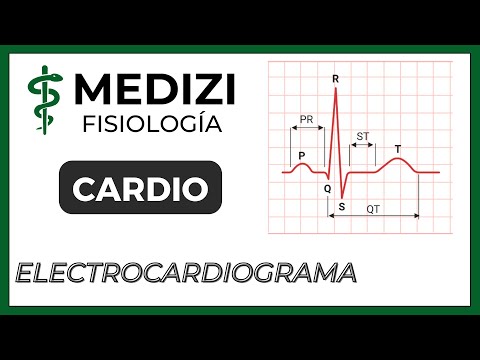
- Components of an ECG include P wave (atrial depolarization), QRS complex (ventricular depolarization), and T wave (ventricular repolarization).
New Section
Exploring how electrodes capture cardiac electrical activity and generate ECG waves based on polarity.
Electrode Functionality
- Electrodes record electrical activity by capturing positive or negative charges from cells.
- Directional movement towards or away from electrodes determines wave polarity in an ECG.
- Understanding electrode placement aids in interpreting positive, negative, or isoelectric waves on an ECG.
New Section
Discussing the importance of multiple derivations in obtaining a comprehensive view of cardiac electrical behavior through an analogy with cinematography.
Significance of Multiple Derivations
- Using multiple derivations provides varied angles to observe heart's electrical behavior simultaneously.
Understanding Electrocardiogram (ECG) Leads
In this section, the speaker explains the horizontal plane leads of an ECG and details the creation and significance of bipolar derivations.
Horizontal Plane Leads
- The first three bipolar derivations created by Willem Einthoven are derived from placing electrodes in specific positions on the body to record potential differences.
- These derivations, such as Lead I, II, and III, represent different electrical vectors in the heart's conduction system.
- By analyzing these leads, one can interpret the direction of electrical signals within the heart and understand how they manifest on an ECG.
Frontal Plane Leads Analysis
This part delves into interpreting frontal plane leads on an ECG and understanding the polarity of signals based on electrode placement.
Frontal Plane Interpretation
- Lead I shows a positive signal when moving towards its positive electrode and negative when moving away.
- Similarly, Lead II exhibits positivity when heading towards its positive electrode location.
- Lead III demonstrates a negative signal as it moves away from its positive electrode position.
Unipolar Frontal Leads Examination
Exploring unipolar frontal leads that provide additional insights into cardiac electrical activity beyond bipolar leads.
Unipolar Frontal Leads
- Unipolar frontal leads measure potential differences between each vertex of Einthoven's triangle and a neutral point at the heart's center.
- These leads offer valuable information about cardiac electrical orientation in different directions for comprehensive analysis.
Ex-Axial System Representation
Introducing the ex-axial system to represent all frontal plane leads systematically for enhanced interpretation.
Ex-Axial System Features
- The ex-axial system categorizes leads based on angles relative to 0 degrees, aiding in determining the heart's axis orientation.
Derivaciones del Plano Horizontal
In this section, the speaker discusses derivations of the horizontal plane or pre-cordial derivations, detailing the placement of electrodes for specific information about different parts of the heart.
Derivaciones Centrales y Septales
- The speaker explains derivations septal mentales and medias, highlighting their significance in providing information about specific areas of the heart.
- Details are provided on where to place electrodes for precordial derivations, emphasizing precise positioning for accurate readings.
Derivaciones Precordiales Derechas y Posteriores
- Discussion on less commonly used right precordial derivations for precise information on the right ventricle.
- Insights into posterior precordial derivations as a continuation of anterior ones, crucial for diagnosing posterior wall heart infarctions.
Derivaciones de las Paredes del Corazón
This segment focuses on derivations used to obtain specific information about different walls of the heart.
Información Precisa de las Paredes del Corazón
- Explanation on how specific derivations provide electrical information from various heart walls, aiding in diagnosing conditions like inferior wall infarctions.
- Detailed breakdown of electrode placements for obtaining precise information about different heart walls based on ECG readings.
Parámetros del Papel y Registro del Electrocardiograma
The discussion shifts towards parameters involved in recording an electrocardiogram and interpreting its results.
Voltaje y Tiempo en el Electrocardiograma
- Explanation of recording voltage and time in an electrocardiogram to represent changes in cardiac action potentials accurately.
- Breakdown of the paper grid used in ECG recordings, detailing voltage and time measurements within each square for precise analysis.
Calibración y Interpretación del Electrocardiograma
- Insight into calibrating ECG recordings with a standard pattern to ensure accurate wave representation and reliable data interpretation.
Segment Analysis in Electrocardiogram
This section delves into the analysis of segments in an electrocardiogram, focusing on segments, intervals, and wave combinations.
Segments and Intervals
- Segments represent moments without action potential differences, appearing as iso-electric lines.
- Intervals are specific combinations of waves and segments.
- The QT interval signifies the time from ventricular depolarization to repolarization.
Wave P Analysis
- The P wave corresponds to atrial depolarization.
- Morphology, duration, and amplitude are key properties of the P wave.
- The P wave consists of two components: right atrial depolarization (green) and left atrial depolarization (red).
Interpretation of Wave P
- The P wave amplitude should be less than 2 mV for normalcy.
- In lead I precordial derivations, changes in the P wave morphology can indicate atrial alterations.
Understanding ECG Intervals
This part focuses on the PR segment's role in conduction and ST segment variations.
PR Segment Significance
- The PR segment represents conduction through the sinoatrial node fibers.
ST Segment Examination
- Changes in the ST segment can aid in detecting conditions like pericarditis.
Understanding Electrocardiogram Intervals and Complexes
In this section, the speaker discusses the intervals and complexes observed in an electrocardiogram (ECG) and their significance in diagnosing cardiac conditions.
Segmentos los el intervalo pérez
- The Perez interval is the sum of the P wave and PR segment, typically lasting between 120 to 200 milliseconds.
- A PR interval exceeding 200 milliseconds may indicate atrioventricular blockage.
- A PR interval less than 120 milliseconds could suggest ventricular excitation or reentry.
Complejo Fuere
- The QRS complex represents ventricular depolarization with a normal duration of 80 milliseconds.
- The Q wave corresponds to interventricular septum depolarization, while the R wave signifies overall ventricular depolarization, predominantly by the left ventricle.
Onda S y Onda R
- The S wave indicates base depolarization, while the R wave denotes mass ventricular depolarization.
- Pathological cases may exhibit a second positive wave (R') following an initial R wave.
Interpreting ECG Morphologies
This section delves into various ECG morphologies and their implications for diagnosing heart conditions.
Bloqueo de Rap
- Different morphologies like qRs, rS, or QS patterns can signify specific conditions such as bundle branch blocks.
- Presence of only a negative wave indicates a q wave; a single positive wave suggests an rS pattern.
Complejo QR Se
- Normal QR complex duration ranges from 100 to 120 milliseconds; deviations may indicate heart pathologies.
- Amplitude criteria are crucial for diagnosis; deviations can signal pericardial effusion or thyroid issues.
Vector Analysis in ECG Interpretation
This part explores vector analysis in understanding ECG signals and their directional implications within the heart.
Vector Direction - Onda Q
- Vector analysis reveals how electrical impulses move through different parts of the heart chambers.
New Section
In this section, the discussion revolves around the interpretation of signals in relation to their direction and impact on electrocardiogram readings.
Interpreting Signal Direction
- When a signal moves away from lead F1, it appears negative.
- As a signal approaches lead F4, it becomes positive.
- Precordial derivations transition from negative to positive as signals move closer.
New Section
This part delves into the significance of the ST segment in electrocardiograms and its implications for identifying pathologies.
Understanding the ST Segment
- The ST segment marks ventricular repolarization post-depolarization phase.
- Pathological conditions like acute myocardial infarction and pericarditis manifest in ST segment alterations.
New Section
Exploring the complexities of ECG waveforms and their implications on cardiac health assessment.
Analyzing ECG Waveforms
- Discussion on why ventricular repolarization (T wave) is typically positive despite depolarization being negative.
- Illustration of how cells depolarize and repolarize in a logical sequence within ECG waveforms.
New Section
Investigating the relationship between signal direction changes and their impact on ECG waveform characteristics.
Signal Direction Impact
- Explanation of why T waves are positive despite moving away from depolarized areas due to logical cell behavior.
- Visual representation of endocardium, myocardium, coronary circulation, and their role in generating ECG patterns.
New Section
Examining how cardiac contractions affect blood flow leading to ischemia and subsequent electrical changes in ECG readings.
Cardiac Contractions & Ischemia
- Description of how ventricular contraction impacts coronary artery perfusion leading to ischemia.
Detailed Explanation of Electrocardiogram Concepts
In this section, the speaker explains key concepts related to electrocardiograms, focusing on intervals, waveforms, and heart rate calculations.
Understanding Intervals and Waveforms
- The distance between two consecutive waves in an electrocardiogram must be consistent throughout.
- Analyzing waveforms helps determine heart rate; a frequency of 75 beats per minute is illustrated.
Calculating Heart Rate
- Heart rate is calculated by counting R waves that align with specific gridlines on ECG paper.
- Example: An R wave aligning with every fifth large square indicates a heart rate of 75 beats per minute.
Alternative Heart Rate Calculation Method
- Another method involves dividing 1500 by the number of small squares between R waves to calculate heart rate accurately.
- Demonstrated calculation: Dividing 1500 by 21 small squares yields a heart rate of 71 beats per minute.
Understanding Cardiac Axis Determination
This segment delves into cardiac axis determination, explaining how vectors sum up to define the direction and deviation of the cardiac axis.
Defining Cardiac Axis
- The cardiac axis represents the resultant vector summing multiple vectors in the heart.
- Methods for determining cardiac axis include using lead II or examining S waves perpendicular to lead II.
Cardiac Axis Calculation Methods
- By finding the perpendicular direction to lead II, one can ascertain if the cardiac axis is normal or deviated.
New Section
In this section, the speaker discusses calculations involving squares and differences, emphasizing the importance of consistency in measurements for accurate results.
Calculations and Measurements
- The speaker mentions 33 squares of difference and engages in a calculation involving 'f1' and 'abs'.
- Emphasizes the need for precise measurements by using a ruler, suggesting centimeters as a suitable unit.
- Explains the process of tracing lines to establish consistency in measurements for accurate calculations.
New Section
This part delves into visual representations and axis alignment to aid in understanding mathematical concepts.
Visual Representations and Axis Alignment
- Discusses scenarios where values are positive or negative, illustrating how these impact directional representation.
- Demonstrates plotting points between lines to establish reference points for further calculations.
Turn any video into a summary like this
YouTube links, meetings, lectures. With transcripts, search, and chat.