Grounding and bonding
New Section
In this section, the speaker emphasizes the importance of using terms correctly to ensure effective communication and understanding. They provide a review of key terms discussed earlier.
Understanding Objectionable Currents
- Objectionable currents are discussed, and it is important to use these terms correctly for effective communication.
- Proper usage of terms ensures mutual understanding and accuracy in discussions related to electrical systems.
New Section
This section focuses on grounding and bonding considerations for electrical systems, specifically service entrance and separately derived systems.
Service Entrance and Separately Derived Systems
- Service entrance refers to the electrical equipment fed from the utility source, including transformers, service disconnects, and protective devices.
- National Electrical Code (NEC) provides specific rules for grounding and equipment requirements for service entrance.
- Separately derived systems are points downstream of service entrance where electrical isolation creates a new source, such as a new transformer or generator.
- Separate grounding and bonding schemes are required for separately derived systems.
New Section
This section provides an example of a separately derived system with Delta Y three-phase transformers. It also discusses grounding electrodes, grounding electrode conductors, and main bonding jumpers.
Example: Separately Derived System with Delta Y Transformers
- A separately derived system with Delta Y three-phase transformers requires proper grounding and bonding.
- Grounding electrode, grounding electrode conductor, and main bonding jumper establish the grounded conductor in this system.
New Section
This section explains how residential services and load centers are typically grounded and bonded. It also discusses solidly grounded systems with two hot wires and a grounded neutral conductor.
Residential Service Grounding
- Residential systems are solidly grounded with two hot wires and a grounded neutral conductor.
- The utility grounds the transformer, and the main load center is grounded without dividing the current going back to the source.
- NEC section 250.20b states that all premises wiring systems should be grounded when the voltage to ground on ungrounded conductors does not exceed 150 volts.
New Section
This section explores commercial power distribution systems and different grounding options based on applications.
Commercial Power Distribution Systems
- Commercial power distribution systems have various options based on specific applications.
- Data centers and systems requiring high service continuity may use high resistance grounded systems instead of solidly grounded systems.
- Many commercial and light industrial systems are solidly grounded.
New Section
This section provides an example of how a pad-mounted transformer and indoor switchboard might be grounded and bonded in a solidly grounded commercial power distribution system.
Example: Grounding and Bonding for Solidly Grounded Commercial Power Distribution System
- A pad-mounted transformer in a solidly grounded system would have the neutral-to-ground bonding jumper installed inside the switchboard or switchgear.
- The grounding electrode conductor would be connected to the service equipment, which is marked as suitable for use as service entrance equipment due to its capability to bond the neutral conductors inside.
New Section
This section discusses grounding and bonding considerations for larger systems like pad-mounted transformers or switchgear owned by utilities.
Grounding and Bonding for Larger Systems
- In larger systems, if the utility owns the transformer, the neutral-to-ground bonding jumper would be installed inside the switchboard or switchgear.
- The grounding electrode conductor would be brought into that service equipment, which is clearly marked as suitable for use as service entrance equipment due to its bonding capability.
- Proper grounding and bonding are crucial for larger systems using unit substations and switchgear.
New Section
This section highlights the importance of transformers in power distribution systems and mentions different winding types.
Transformers in Power Distribution Systems
- Transformers play a vital role in power distribution systems.
- The transformer connection may vary depending on the winding type, such as Delta Y or others.
- Grounding and bonding methods for these transformers can be found in related resources.
New Section
This section clarifies that power system grounding is separate from the bonding discussion. It emphasizes that equipment grounding remains critical and required.
Power System Grounding vs. Bonding
- Power system grounding is distinct from bonding discussions.
- Equipment grounding remains essential and mandatory.
- Differentiate between power system grounding and equipment bonding.
New Section
This section explains the need to insulate conductors from each other except at one point in the power distribution connection.
Insulation of Conductors
- Conductors should be insulated from each other, except at one point in the power distribution connection.
- The grounded conductor (typically neutral) should be connected to ground at one specific location.
New Section
This section discusses high resistance systems or ungrounded systems, highlighting that they do not require a neutral-to-ground connection.
High Resistance Systems or Ungrounded Systems
- In high resistance or ungrounded systems, there is no neutral-to-ground connection.
- Examples include Delta high resistance systems where current does not flow through a grounded conductor back to the source.
New Section
This section emphasizes the importance of considering quality when implementing surge protection and ensuring a proper path for effective surge protection.
Quality Considerations for Surge Protection
- Quality considerations are crucial when implementing surge protection.
- Surge protection will be ineffective if it does not have a proper path for diverting surges.
Grounding and Bonding
This section discusses the importance of grounding and bonding in electrical systems, addressing common confusion and misconceptions. It emphasizes the need for a low impedance path for stray or unwanted currents.
Understanding Grounding and Bonding
- Article 250 of the National Electrical Code covers grounding and bonding, which can be a source of confusion among engineers and installers.
- Electricians often encounter confusion regarding grounding and bonding, especially when it comes to transformers, earth ground, building steel, foundation grounds, etc.
- The theory behind grounding and bonding can be challenging to apply in practical applications. Hands-on experience is crucial for better understanding.
- Practical application of grounding and bonding according to the National Electrical Code is essential for ensuring electrical safety.
Importance of Ground Fault Path
- Establishing an effective ground fault current path is crucial. It involves constructing a low impedance conductive path to carry fault current back to the source.
- Opening overcurrent protective devices (such as GFCI protection) requires a low impedance ground fault path with high fault current flow.
- Grounding and bonding alone cannot prevent electrical hazards like shock. Touch potentials or step potentials must also be considered to reduce the likelihood of shock.
Grounding Transformers
- Properly grounding transformers is important for safety and power quality reasons.
- In single-phase transformers, one leg (typically X2) is connected to ground to establish a reference point.
- Incorrectly grounding the neutral downstream can lead to current flowing in the ground conductors, which is undesirable.
By understanding and implementing proper grounding and bonding practices, electrical systems can be made safer and more efficient.
Grounding and Bonding Basics
In this section, the speaker explains the concept of ground and introduces grounding electrodes and the grounding electrode system. The speaker also discusses the grounding electrode conductor and different types of conductors used in grounding.
Grounding
- Ground is defined as the earth according to the National Electrical Code. It is where electrical connections are made.
- Grounding electrodes are conducting objects used to establish a direct electrical connection to the earth.
- Common examples of grounding electrodes include ground rods, grounding grids, ufer grounds, structural steel, and water pipes.
- All grounding electrodes at a site must be connected together to form the grounding electrode system.
Grounding Electrode Conductor
- The grounding electrode conductor is used to connect the system neutral conductor or grounded phase conductor/equipment to the grounding electrode system.
- "Grounded" means connected to the earth or a conductive body that extends that connection.
- "Ungrounded" means not connected to ground or a conductive body that extends that connection.
Grounded Conductor
- The grounded conductor is intentionally connected to the earth at one point in a system or circuit. It is commonly referred to as the neutral conductor.
- The ungrounded conductor is not intentionally connected to the earth and usually refers to phase conductors.
Grounding Conductor
- The grounding conductor connects equipment or grounded circuits of a wiring system to a grounding electrode or the grounding electrode system.
Bonding and Jumper
- Bonding refers to establishing electrical continuity and conductivity between metal parts.
- Bonding conductors, also known as jumpers, ensure required electrical conductivity between metal parts that need to be electrically connected together.
- Main bonding jumper connects grounded circuit conductor with equipment grounding conductor/supply side bonding jumper at service equipment.
Transformers for Grounding and Bonding
In this section, the speaker discusses grounding and bonding inside transformers, particularly in separately derived systems. The importance of proper bonding in generators and its impact on transfer switches is also explained.
Separately Derived System
- A separately derived system is an electrical source that has no direct connections to circuit conductors of any other electrical source except through grounding and bonding connections.
- Transformers are commonly used in separately derived systems.
Grounding and Bonding in Transformers
- In a Delta Y grounded transformer, there is isolation between the primary and secondary windings, establishing a separately derived system on the secondary side.
- Generators can also create a separately derived system if the neutral is bonded to ground within the generator enclosure.
- Proper bonding in generators affects the selection of transfer switches. If the neutral is bonded to ground, a four-pole transfer switch is required to switch the neutral. If not properly switched, circulating currents and malfunctioning GFCIs can occur.
- Lifting the bond in the generator can resolve issues with transfer switch selection.
Conclusion
The transcript provides an overview of grounding and bonding concepts. It explains ground as defined by the National Electrical Code and introduces grounding electrodes and their connection through the grounding electrode system. The roles of different conductors such as grounding electrode conductor, grounded conductor (neutral), ungrounded conductor (phase), and grounding conductor are discussed. Additionally, it covers bonding and jumpers for establishing electrical continuity between metal parts. The section on transformers highlights their use in separately derived systems and emphasizes proper grounding and bonding practices. The impact of generator bonding on transfer switch selection is also addressed.
Grounding and Bonding in Electrical Systems
This section discusses the concepts of grounding and bonding in electrical systems, including the system bonding jumper, equipment bonding jumpers, and equipment grounding conductor.
System Bonding Jumper
- The system bonding jumper connects the grounded circuit conductor to the supply side bonding jumper.
- It ensures that the grounded circuit conductor and the ground are properly bonded together.
Equipment Bonding Jumpers
- Equipment bonding jumpers connect two or more portions of the equipment grounding conductors.
- They ensure that all necessary components are properly bonded together.
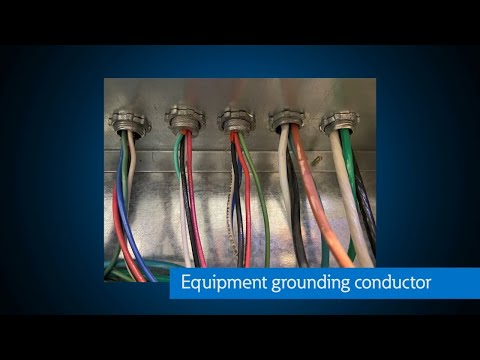
Equipment Grounding Conductor
- The equipment grounding conductor is a conductive path that connects metal parts of the equipment to the system neutral or grounded phase conductor.
- It is typically a bare copper conductor that carries fault current in case of a ground fault.
System Grounding
- Solidly grounded systems have a direct connection to earth without any impedance inserted.
- Ungrounded systems have no connection to ground or any conductive body.
- Impedance or resistive grounded systems are connected to ground through an impedance.
Objectionable Currents
- Objectionable currents refer to currents flowing on the effective ground fault current path during a non-faulted condition.
- An example is when power is obtained by connecting hot to ground instead of using a neutral conductor, resulting in objectionable current flow over the equipment grounding conductor.
Understanding Objectionable Currents
This section explains objectionable currents further and provides an example related to motion sensor switches. It also highlights changes made in recent code cycles regarding objectionable currents.
Definition of Objectionable Currents
- Objectionable currents are defined as current flowing on the effective ground fault current path during a non-faulted condition.
- This term is used in the National Electrical Code (NEC) without a specific definition.
Example: Motion Sensor Switches
- Motion sensor switches require a neutral conductor to power up the electronics.
- If a neutral conductor is not present, some individuals may connect hot to ground to power up the switch, resulting in objectionable current flow over the equipment grounding conductor.
Changes in Code Requirements
- The NEC has prohibited the use of certain products that could lead to objectionable currents.
- It now requires the pulling of a neutral conductor at switch locations where technology requiring power is installed.
Service Entrance and Separately Derived Systems
This section introduces two important terms - service entrance and separately derived systems - and explains their significance in grounding and bonding electrical systems.
Service Entrance
- The service entrance refers to the electrical equipment fed from the utility source.
- It includes components such as transformers, service disconnects, and protective devices.
- Specific rules in the NEC govern service entrance equipment and grounding.
Separately Derived Systems
- A separately derived system is located downstream of the service entrance equipment and creates a new source through electrical isolation.
- Examples include new transformer connections or generators.
- These systems require their own grounding and bonding scheme.
Example: Delta Y Three Phase Transformers
- In a separately derived system with Delta Y three phase transformers, there are specific components involved:
- Grounding electrode
- Grounding electrode conductor
- Main bonding jumper
Conclusion
This markdown file provides an overview of grounding and bonding concepts in electrical systems. It covers topics such as system bonding jumpers, equipment bonding jumpers, equipment grounding conductors, system grounding types, objectionable currents, motion sensor switches example, changes in code requirements, service entrance, and separately derived systems. Each section includes bullet points with timestamps to facilitate studying the transcript.
New Section
This section discusses the grounding of premises wiring systems and commercial power distribution systems.
Grounding of Premises Wiring Systems
- All premises wiring systems must be grounded when the voltage to ground on the ungrounded conductors does not exceed 150 volts. (NEC section 250.20b)
Commercial Power Distribution Systems
- In commercial and light industrial systems, solidly grounded systems are commonly used.
- High resistance grounded systems may be used in applications that require higher service continuity, such as data centers.
- Pad-mounted transformers and indoor switchboards in commercial power distribution systems are grounded and bonded for solid grounding.
- Larger systems using unit substations and switchgear also have specific grounding and bonding requirements.
Importance of Transformers in Power Systems
- Transformers establish voltage levels and the neutral point on the power distribution system. The winding type determines the configuration to be used.
- Proper grounding and bonding methods for different transformer connections can be found in consulting application guides.
Separation of Grounding from Bonding
- Grounding methods for power distribution systems are separate from equipment bonding requirements. Regardless of the grounding method, proper bonding is critical and required.
- The grounded conductor (usually neutral) and grounding conductor must be insulated from each other outside of one point in the power distribution system where they are bonded.
- Subpanels should not have a connection between the grounded conductor (neutral) and ground unless there is no grounded conductor present due to a Delta high resistance or ungrounded system configuration.
Power Quality Considerations
- Proper grounding is important for power quality. Lack of proper grounding can lead to equipment failure and ineffective surge protection.
- Improper wire size or type, painted surfaces, and other factors can affect power quality.
- Highly stranded and braided cables or bus bars are suitable for grounding high-frequency currents due to their surface area. Ground loops, isolated grounds, and single point grounding should be addressed using proven methods.
Transfer Switches and Neutral-to-Ground Connections
- When joining separately derived systems via a transfer scheme, only one neutral-to-ground connection should exist.
- A typical power system with a transfer switch includes the utility, service panel, grounding electrode, bonding strap between neutral bar and equipment grounding bar, feeder from panel board to transfer switch, generator connected to the transfer switch through overcurrent protective devices, and loads supplied by the transfer switch.
New Section
This section emphasizes that power quality problems related to ground can be handled like any other power quality problem.
Handling Power Quality Problems Related to Ground
- Power quality problems related to ground should be treated like any other power quality issue: identify symptoms, find the source of the problem, and determine the appropriate solution. Blaming all issues on grounding alone is not productive.
Grounding and Bonding in Electrical Systems
This section discusses the importance of grounding and bonding in electrical systems, particularly in generators. It explains the concept of a separately derived system and the need to switch the neutral in a transfer switch.
Grounding and Bonding in Generators
- Grounding occurs when there is a purposeful connection between the neutral conductor and the ground rod system.
- The grounding system on a generator can be established either intentionally or accidentally.
- When the neutral conductor is bonded and grounded in two separately derived systems, it is important to have only one place where this occurs.
- To achieve this, the neutral needs to be switched in the transfer switch using a four-pole transfer switch.
- A separately derived system implies having a grounding electrode system and bonding the neutral conductor with that system.
Accidental Bonding of Neutral
- If the neutral is accidentally bonded to ground in the generator and a three-pole transfer switch is used, there are options for fixing it.
- One option is to purchase a four-pole transfer switch.
- Another option is to un-bond the neutral in the generator, but caution must be exercised when operating such a system.
- The return current for the generator's neutral will flow back through other paths if not properly addressed.
Conclusion
In summary, proper grounding and bonding are crucial aspects of electrical systems, including generators. Understanding how to establish grounding connections correctly and ensuring that only one location has bonded neutrals are essential for safe operation. If accidental bonding occurs, appropriate measures should be taken to rectify it, such as using a four-pole transfer switch or un-bonding the neutral.