Come funziona una centrale idroelettrica | Edison
Hydroelectric Energy: Harnessing Water's Power
The Water Cycle and Hydroelectric Energy
- The water cycle, driven by evaporation, cloud formation, and precipitation, provides a renewable energy source known as hydroelectric power.
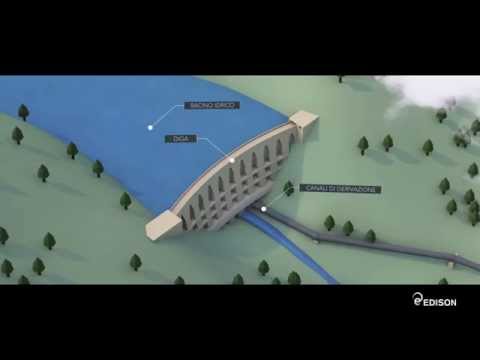
- Hydroelectric plants convert hydraulic energy into electrical energy, typically involving the construction of a dam or weir to accumulate water.
Types of Hydroelectric Plants
- Some hydroelectric plants operate without dams, utilizing the natural flow of rivers; these are referred to as run-of-the-river plants.
- Water is channeled through diversion canals and pipes connected to a piezometric well before reaching the turbine in the power plant.
Turbines and Energy Conversion
- The turbine is a crucial component that converts water flow into mechanical energy; it evolved from traditional watermill blades.
- An alternator is coupled with the turbine shaft to transform mechanical rotation into electrical energy for transmission.
Electrical Transmission and Environmental Impact
- Before electricity can be transmitted over long distances, it must pass through a transformer that adjusts current intensity while increasing voltage.
- Hydroelectric power not only meets daily electricity needs sustainably but also enhances land value and reduces environmental pollution.
Key Factors in Energy Generation
- The efficiency of turbines depends on two main factors: useful head (the height difference between water sources before collection and at the machine room) and flow rate (the volume of water passing through per second).