Contenido de un Estudio de Impacto Ambiental | 3/16 | UPV
Introduction and Overview
Inmaculada Romero Hill introduces herself as a professor in the Department of Hydraulic Engineering and Environment at the Technical School of Civil Engineers. She discusses the importance of environmental impact assessments for projects.
Understanding Environmental Impact Assessments
- In this learning objective, the focus is on distinguishing different sections of an environmental impact assessment.
- An environmental impact assessment is a document prepared by the developer to evaluate potential significant effects of a project on the environment.
- Key components of an environmental impact assessment include project details, examination of alternatives, justification of chosen solutions, environmental inventory, protective measures, corrective actions, environmental monitoring program, and a synthesis document.
Project Details and Actions
This section delves into detailing project actions within an environmental impact assessment.
Project Description and Actions
- Project details involve outlining general aspects such as materials used, land occupation, natural resources required for construction or operation phases.
- Actions during construction may include land occupations, clearing terrains, material stockpiling, heavy machinery operations. Operational phase actions could involve maintenance operations and traffic improvements.
Examination of Alternatives
Evaluating alternative options within an environmental impact assessment is crucial for minimizing adverse impacts on the environment.
Analyzing Alternatives
- Regulations mandate describing at least one alternative to the proposed project that is technically and economically viable.
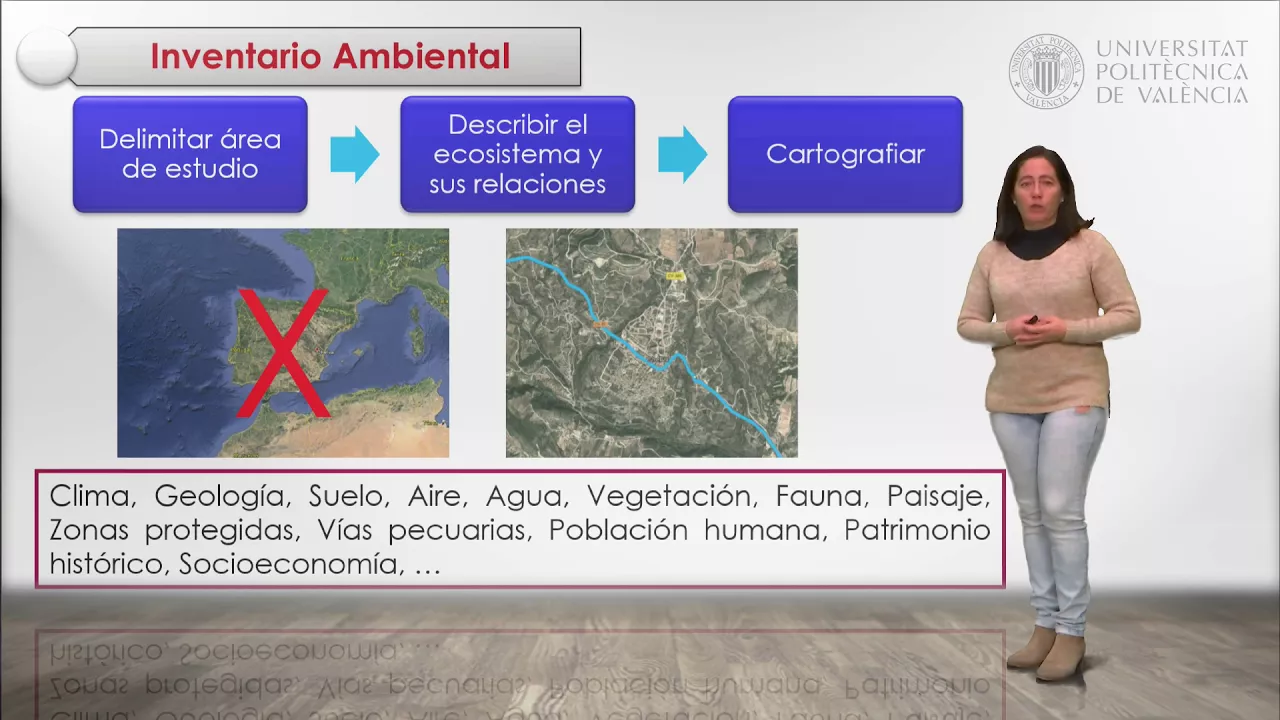
- The inventory phase involves defining the study area affected by the project and detailing ecosystem factors like climate, geology, soil quality, air quality, water bodies, flora/fauna diversity.
Environmental Impact Identification
Identifying potential environmental impacts forms a critical part of an environmental impact assessment process.
Impact Assessment Process
- It's essential to identify, describe & evaluate anticipated impacts for each project phase & alternative. Quantitative evaluation when possible aids in selecting environmentally friendly alternatives.
Environmental Impact Studies Overview
In this section, the speaker discusses the importance of environmental impact studies and outlines the key components involved in conducting such studies.
Measures in Environmental Impact Studies
- The speaker mentions that if no measures exist to address environmental impacts, restoration measures are proposed to restore any impact caused.
- Following restoration measures, compensatory measures are considered to offset potential environmental effects. These measures come with an economic cost that must be accounted for in the total budget.
Environmental Monitoring Program
- The speaker introduces the concept of an environmental monitoring program, emphasizing its role in ensuring project compliance with initial plans, assessing the effectiveness of implemented measures, and validating the accuracy of environmental evaluations.
- This program involves setting objectives, collecting and analyzing data, interpreting results which may lead to revisiting monitoring objectives.
Minimum Content of Environmental Impact Studies
This part delves into the essential components that constitute an environmental impact study and highlights the significance of each element within such a study.
Document of Synthesis
- The document of synthesis serves as a concise summary encompassing all crucial aspects covered in previous sections. It is limited to 25 pages by regulations and should be written in simple non-technical language for public participation and feedback.
Understanding Environmental Impact Studies