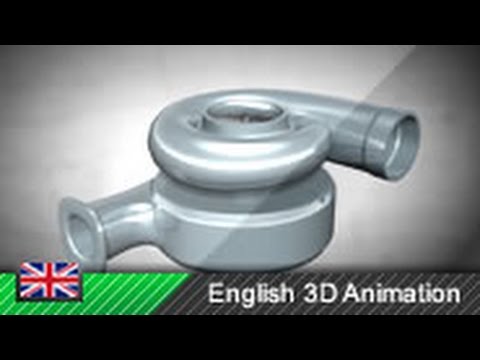
How a turbocharger works! (Animation)
What is a Turbocharger and How Does It Work?
Introduction to Turbochargers
- Alfrid Buki, an engineer from Switzerland, is recognized as the inventor of the turbocharger. The primary function of a turbocharger is to utilize exhaust gases produced by the engine.
- Turbochargers are commonly found in small airplanes and light aircraft, addressing issues related to low air pressure at higher altitudes.
Functionality of Diesel Engines
- In standard four-stroke diesel engines, air enters the cylinder through atmospheric pressure, classifying them as naturally aspirated engines.
- At high RPMs (e.g., on highways), these engines struggle with efficiency due to insufficient air intake; this is where turbochargers become essential.
Components of a Turbocharger
- A typical turbocharger consists of a shaft with a turbine wheel on one end and a compressor wheel on the other. Both components are housed together.
- Exhaust gases enter the turbine housing via an inlet port, converting thermal energy into kinetic energy that drives the turbine.
Operation Mechanism
- As the turbine spins due to kinetic energy, it drives the connected compressor wheel which draws in and compresses air before sending it to the engine.
- Turbocharged engines require additional components like intercoolers since compressed air heats up; intercoolers cool this air for better oxygen delivery to enhance engine efficiency.