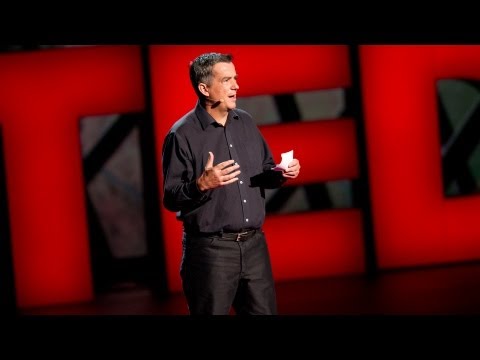
Paul Gilding: The Earth is full
The Earth is Full: Understanding Our Economic Limits
The Context of Overconsumption
- The speaker introduces the concept that "The Earth is full," emphasizing the overwhelming presence of human population, waste, and demands on the planet.
- Scientific analyses indicate that humanity requires 1.5 Earths to sustain current economic activities, highlighting unsustainable consumption patterns.
- The analogy of financial debt illustrates how we are depleting natural resources without a means to replenish them, leading to an unsustainable economy.
The Illusion of Infinite Growth
- Economic growth is portrayed as essential yet fundamentally flawed; it relies on the unrealistic notion of infinite growth on a finite planet.
- Despite technological advancements and innovation, plans for exponential economic growth (doubling in size within decades) are deemed impossible due to resource limitations.
- The speaker critiques society's belief in bending natural laws for human needs, asserting that nature imposes strict limits regardless of societal desires.
Consequences of Ignoring Limits
- While it's feasible to provide decent living conditions for all, expecting smooth transitions amidst growing demands is dangerously naive.
- Operating beyond ecological limits leads to systemic breakdown; continued acceleration will result in failure rather than sustainable solutions.
Urgency and Inaction
- Despite decades of warnings about environmental crises and their urgency, little action has been taken towards meaningful change.
- Current global emissions reached record highs last year, indicating a lack of progress in addressing climate issues despite available solutions.
Systemic Breakdown Ahead
- Acknowledging the interconnectedness of various crises (debt, inequality, resource constraints), the speaker argues these are symptoms of a failing system rather than isolated problems.
Understanding Our Response to Climate Crisis
The Inevitability of the Crisis
- The speaker emphasizes that the climate crisis is inevitable and questions how society will respond to it, highlighting the uncertainty of the future.
- Imagines a scenario where financial markets collapse as they recognize the end of oil and coal industries, leading to global conflicts over resources like food and water.
- Envisions societal breakdown with high unemployment rates in America, empty supermarket shelves, and increased personal insecurity due to civil unrest.
Emotional Responses to Crisis
- Reflects on what individuals might tell their children about living through unprecedented climate events and societal upheaval.
- Encourages listeners to consider their feelings when faced with potential economic collapse—suggesting emotions such as denial, anger, or fear.
- Discusses how fear can be a natural response to danger but stresses that this time the threat is not immediately visible; it's at civilization's door.
The Power of Fear as Motivation
- Urges people to acknowledge their fears now rather than waiting for a crisis moment when panic may set in.
- Posits that crises can catalyze extraordinary human responses; history shows that significant changes often occur under pressure (e.g., wartime mobilization).
- Highlights examples from history where urgent situations led to rapid adaptations in society and industry, demonstrating human resilience.
Opportunities for Change
- Suggests that while there are risks associated with climate change, there is also an opportunity for positive transformation if society responds correctly.
- Introduces "The One Degree War Plan," which outlines strategies for eliminating net CO2 emissions within two decades using existing technologies at manageable costs.
A Call for Action
- Emphasizes that overcoming the crisis requires a shift in mindset rather than just technological or economic solutions; collective action is essential.
- Calls on individuals to accept fear but use it as motivation for proactive measures regarding environmental sustainability.
- Challenges prevailing notions of growth by asserting that humanity has the capacity for more meaningful achievements beyond consumerism.
Rethinking Society’s Future
- Advocates for using this moment of crisis as an opportunity to redefine societal values and aspirations towards sustainable living.
War for Civilization
The Choice Between Life and Fear
- The speaker emphasizes that the current conflict is not a war between civilizations, but rather a struggle for civilization itself.
- There is an extraordinary opportunity to build a society that is stronger, happier, and sustainable into middle age.
- A call to action is made for collective effort from all sectors of society: entrepreneurs, artists, scientists, communicators, parents, and children.
- The message advocates choosing life over fear as a guiding principle in this endeavor.
Turn any video into a summary like this
YouTube links, meetings, lectures. With transcripts, search, and chat.