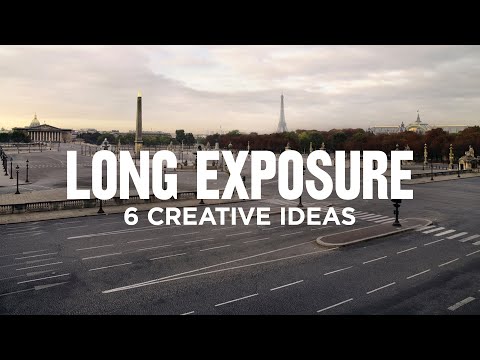
How to take CREATIVE LONG EXPOSURE photos
Silent World: Exploring Long Exposure Photography
Overview of Silent World Series
- The series "Silent World" by Lucie and Simon features images of busy locations in a state of quiet abandonment, evoking post-apocalyptic themes.
- These photographs predate the pandemic, showcasing how to capture empty scenes in typically crowded places.
Techniques in Long Exposure Photography
- Long exposure photography alters perception by compressing time into a single image, creating surreal and dreamlike visuals.
- This technique commands attention and encourages photographers to focus on details, enhancing their creative process.
Practical Application of Long Exposure
- Lucie and Simon utilized dark neutral density filters for long exposures, allowing moving subjects to vanish from the final image.
- A slower shutter speed blurs motion; an extremely long shutter speed can eliminate moving objects entirely from the frame.
Examples of Long Exposure Techniques
- Demonstrated with a busy street photo taken at different shutter speeds: 1/340th captures motion sharply while 1/8th shows blurred figures.
- Using a 10-stop filter for a 2-minute exposure results in disappearing figures, focusing on space rather than individuals.
Editing Techniques in Photography
- Compositing is used to enhance images; elements like flags or trees are added from faster shots to maintain clarity while removing movement blur.
Artistic Interpretations of Long Exposure
- British artist Darren Almond's work uses moonlight for long exposures, creating ethereal landscapes that appear almost like daytime but feel unsettling due to altered light perceptions.
Movement Representation through Long Exposures
Exploring the Emotional Depth in Photography
The Impact of Monochromatic Imagery
- The static and lifeless cityscape reflects a loss of individuality, enhanced by Titarenko's monochromatic style, which captures the mood influenced by economic conditions.
Vibrancy in Night Photography
- Henry Prestes employs minimal yet vibrant colors to evoke strong emotions, using long exposure techniques to enhance ambient light in night scenes, creating an otherworldly atmosphere.
Cinematic Quality through Color and Narrative
- Prestes' work features a soft, minimal quality with a cinematic feel due to selective color palettes and strong narratives behind each image that invite viewers to uncover stories.
Capturing Time in Film: Hiroshi Sugimoto's Approach
- Sugimoto’s project involves long exposures of entire films, resulting in images that erase the film's narrative while presenting haunting portraits of empty theaters.
Liminal Spaces and Viewer Experience
- The absence of people in once-busy locations evokes feelings of unease for viewers; Sugimoto’s deserted movie theater images exemplify this unsettling experience.
The Art of Long Exposure Photography
Experimentation Over Convention
- Photographers are encouraged to stray from conventional methods and experiment with unique messages through their use of time, movement, and light in photography.
Essential Equipment for Long Exposures
- To achieve good long exposures, essential equipment includes a sturdy tripod and a camera lens; these tools ensure stability during extended shooting times.
Understanding Neutral Density Filters
- An ND1000 filter is recommended for daylight shooting as it reduces light by ten stops. Different ND filters vary in darkness levels (e.g., ND2 cuts half the light).
Measuring Light Stops
- "Stops" measure relative changes in light; one stop brighter doubles the light while one stop darker halves it. This concept is crucial for understanding exposure settings.
Importance of Control During Long Exposures
Long Exposure Photography Techniques
Understanding ND Filters and Exposure Times
- The speaker demonstrates the effect of different exposure times on water texture, starting with a shot at 1/60 of a second without filters, showing significant surface texture.
- By using an ND1000 filter, the exposure time is extended to 240 seconds (4 minutes), resulting in a smooth water surface akin to glass. This highlights the transformative power of long exposures.
- Caution is advised against using low-quality ND filters due to potential color casts; however, there’s minimal noticeable difference between mid-range and high-end filters based on personal experience.
Setting Up for Long Exposures
- The speaker emphasizes that there are no strict rules for setting up long exposures as it depends on desired effects and camera type but suggests universal guidelines.
- A sturdy tripod is essential to avoid vibrations that can ruin shots; locations should be stable, avoiding areas like vibrating bridges or flexible wooden boards.
Camera Settings for Optimal Results
- Set ISO, aperture, and exposure time manually; if unfamiliar with manual mode, it's manageable. Some cameras may require switching to bulb mode for longer exposures beyond 30 seconds.
- Automatic features such as pop-up flashes and image stabilization should be disabled to prevent unintended adjustments during long exposures.
Managing Digital Noise
- Long exposure noise reduction can help eliminate digital noise by taking a duplicate exposure with the shutter closed but effectively doubles the total exposure time required.
- While useful, this feature drains battery life and may not be ideal when shooting in changing light conditions.
Finalizing Your Shot
- Set ISO to its lowest setting for cleaner images; choose aperture based on depth of field needs—typically f/11 or smaller if not using an ND filter.
- Be aware that very small apertures can create distracting starburst effects from light sources; use creatively but sparingly to maintain focus in your composition.
Composition Tips for Night Photography
- When shooting city lights at night, limit light sources in your frame to avoid visual confusion; one or two lights can enhance focus rather than overwhelm viewers.
- Consider using a Pro-Mist filter at no more than one-quarter strength to add atmosphere without overly softening the image quality.
Using Light Meters Effectively
- Utilize built-in light meters for determining proper exposure times; adjust until indicators show balanced exposure (neither under nor overexposed).
Understanding Long Exposure Photography
Calculating Exposure Times
- When your camera indicates a shutter speed of 1/125 seconds, the corresponding long exposure time should be approximately 8 seconds. This is derived from multiplying 1/125 by 1000.
- For a shutter speed of 1/8 seconds, the appropriate exposure time would be around 2 minutes (or about 125 seconds). If calculations seem complex, there are apps like Lee Stopper and NISI filters that can assist in determining exposure times based on your settings.
Adjusting Settings for Desired Effects
- The choice between aperture and shutter speed depends on the desired effect in your shot. A wide aperture with a faster shutter speed is ideal for shallow depth of field, while longer exposures are necessary for effects like smoothing water or creating light trails.
- To minimize vibrations during shooting, it's recommended to use a remote trigger or self-timer. This is particularly important for shorter exposures; however, its impact diminishes with longer exposure times.
Understanding Film vs. Digital Sensitivity
- Photographers using film must consider reciprocity failure—where film becomes less sensitive to light over extended exposure times—unlike digital sensors which do not experience this issue. Researching specific film stocks beforehand is crucial to compensate effectively.
Creative Opportunities in Long Exposure Photography