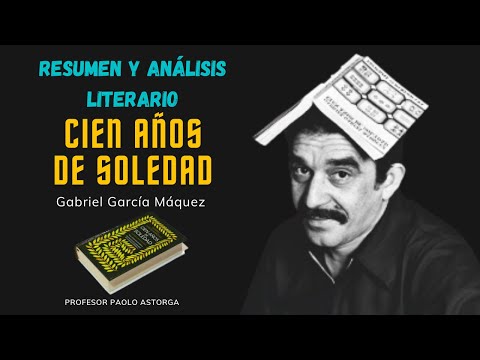
CIEN AÑOS DE SOLEDAD | EL MEJOR RESUMEN Y ANÁLISIS LITERARIO
The Story of the Buendía Family in Macondo
Introduction to the Buendía Family
- The novel narrates the history of the Buendía family over seven generations in the fictional town of Macondo.
- José Arcadio Buendía and Úrsula Iguarán, a young couple who are cousins, are filled with fears about their relationship due to a myth regarding potential deformities in their offspring.
Early Conflicts and Superstitions
- Their marriage remains unconsummated for a year as Úrsula wears a chastity belt to avoid having a child with physical deformities.
- A conflict arises during a cockfight where Prudencio Aguilar taunts José Arcadio, leading to an intense duel that results in Prudencio's death at José's hands.
The Haunting and Migration
- Following Prudencio's death, his ghost begins to haunt José Arcadio, prompting him and Úrsula to move away from their home.
- During their journey, José experiences a dream revealing the name "Macondo," which inspires them to establish their new home there.
Founding Macondo
- Macondo is founded by various families led by José and Úrsula; they have three children: José Arcadio, Aureliano, and Amaranta. Their names recur through future generations.
- José becomes fascinated with innovations brought by gypsies, particularly Melquíades, whose character plays a crucial role throughout the family's saga.
Decline of José Arcadio Buendía
- Over time, José's mental health deteriorates until he is found tied to a chestnut tree; he is haunted not only by Prudencio but also by profound loneliness.
Rise of Úrsula as Matriarch
- Úrsula emerges as the matriarch living over a century while caring for her family amidst growing commercial activity in Macondo due to new inhabitants arriving from across the swamp.
Plagues Affecting Memory
- Rebeca arrives in Macondo and brings with her plagues such as insomnia followed by forgetfulness that affects all residents' ability to remember essential things.
Melquíades' Return and Civil War
- Melquíades returns from death with a potion that restores memory; he stays with the Buendías while writing scrolls meant for deciphering 100 years later.
Civil War Impact on Macondo
- As civil war erupts in Macondo, Colonel Aureliano Buendía leads resistance against conservative forces while his cousin Arcadio becomes an oppressive leader before being executed when conservatives regain power.
Aftermath of War
- After signing peace treaties post-war struggles, Colonel Aureliano attempts suicide but survives; he retreats into solitude crafting gold fish instead of engaging politically again.
Progress Through Innovation
100 Years of Solitude: A Literary Analysis
The Decline of Macondo
- The narrative begins with the downfall of Macondo, marked by four years of relentless rain symbolizing tragedy and destruction. Úrsula, the matriarch of the Buendía family, awaits the end of the rains to die.
- Aureliano Babilonia emerges as the last descendant of the Buendía family, struggling to remember his lineage while deciphering Melquíades' scrolls. His encounter with his aunt Amaranta Úrsula leads to a forbidden romance.
- Their child is born with a pig's tail, seen as a curse for the Buendía family. Amaranta Úrsula dies during childbirth, leaving Aureliano in despair as he searches for help in an abandoned Macondo.
The Desolation of Macondo
- Upon waking from sleep, Aureliano discovers that ants are consuming his newborn son. This moment signifies both loss and decay within the once-thriving town.
- As he deciphers Melquíades' scrolls, Aureliano realizes that completing them will also conclude his own story and that of Macondo itself—doomed to be forgotten due to its cursed lineage.
Themes and Symbolism
- "One Hundred Years of Solitude," published in 1967 by Gabriel García Márquez, is considered a cornerstone of Latin American literature and embodies themes such as solitude and destiny.
- The novel employs magical realism—a blend of reality with fantastical elements—where characters perform impossible feats accepted as normal by readers.
Magical Realism Elements
- Examples include interactions between living characters and ghosts; Úrsula encounters Prudencio Aguilar's ghost while Remedios la Bella ascends into heaven on a sheet.
- These surreal occurrences are depicted naturally within the narrative framework, enhancing their impact on readers.
Cycles and Repetition
- The cyclical nature is evident through repeated events in Macondo’s history; this structure emphasizes themes like inevitability and fate throughout generations.
- Characters experience profound loneliness despite their desires for connection; solitude serves as a metaphor for unattainable perfection.
Conclusion: Complexity in Simplicity
- "One Hundred Years of Solitude" intricately weaves together various themes—love, death, magic—creating a rich tapestry that reflects human experiences across time.