Miniforedrag - Demokrati og demokratisering
Democracy's Introduction in Denmark: A Historical Overview
The End of Absolute Monarchy and the Constitution of 1848-49
- The discussion begins with the request to address the introduction of democracy in Denmark, focusing on the end of absolute monarchy and the establishment of a constitution in 1848-49.
- The concept of democracy is debated; while some view 1848-49 as a democratic shift, others argue it was more about constitutional governance than true democracy.
- National liberal circles emphasized a free constitution, prioritizing control over royal power rather than universal suffrage or equal voting rights for all citizens.
National Liberalism and Its Limitations
- National liberals viewed themselves as representatives of the people but did not advocate for direct political power for the uneducated masses. Instead, they believed that educated elites should guide public opinion.
- This elitist perspective shaped their approach to governance, where they saw themselves as above material interests and responsible for educating and leading the populace.
Parliamentary System Established in 1849
- The parliamentary system introduced in 1849 reflected an elitist attitude towards political influence, limiting participation primarily to educated men while excluding women entirely from voting rights.
- Restrictions were placed on male voters based on age and income, creating a two-chamber system with a lower house (Folketing) and an upper house (Landsting), partially appointed by the king to prevent radical changes.
Circumstances Leading to Constitutional Change
- The events surrounding the revolution in Paris inspired Danish opposition movements; however, local opposition lacked strength until external revolutionary pressures created opportunities for change in March 1848.
- King Frederik VII’s decision not to suppress opposition militarily marked a significant departure from other European responses during this period, allowing space for constitutional reform discussions.
Progression Towards True Democracy
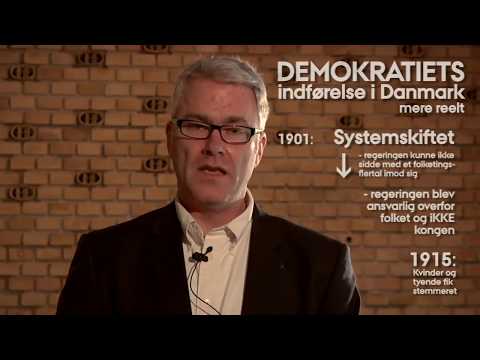
- While formal democratic structures began with the constitution in 1849, true democratization—where broader segments of society could participate meaningfully—did not occur until later developments like women's suffrage around 1901 and beyond.
- The transition from government accountability to parliament rather than monarchy occurred post-system shift in 1901; this marked a turning point where democracy became positively associated within Danish society despite challenges during interwar years.
Turn any video into a summary like this
YouTube links, meetings, lectures. With transcripts, search, and chat.