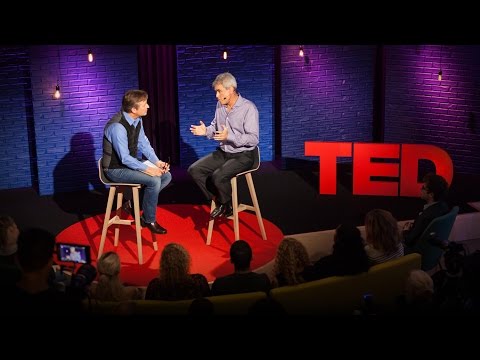
Can a divided America heal? | Jonathan Haidt
What is Causing the Current Political Divide?
The Nature of Current Disagreements
- Chris Anderson and Jonathan Haidt discuss a heightened sense of fear and division in society, noting that disagreements have evolved beyond traditional left-right politics.
- Pew Research indicates increasing animosity towards opposing political sides, with over 50% viewing each other as threats to the nation.
Understanding Human Tribalism
- Haidt emphasizes that humans are inherently tribal, which has shaped social interactions throughout history.
- He references a Bedouin proverb illustrating the layers of tribal loyalty: "Me against my brother; me and my brother against our cousin; me and my brother and cousins against the stranger."
- This tribal nature fosters conflict but can also be channeled into peaceful activities like sports or politics.
Expanding or Shrinking Tribes
- The concept of "us" versus "them" can change over time, affecting societal cohesion.
- Haidt suggests that while there was a period of expanding inclusivity, current trends indicate a shift back towards more parochial views.
New Left-Right Distinction
- A new divide is emerging between those who prioritize national identity versus those advocating for global governance.
- This distinction reflects deeper values regarding community attachment versus cosmopolitan ideals, illustrated by John Lennon’s song “Imagine.”
Immigration and Diversity Concerns
- Haidt identifies immigration as a critical issue fueling current tensions in both Europe and America.
- While diversity brings innovation and economic growth, it can also erode social capital and trust among communities.
- Citing Robert Putnam's research, he argues that homogeneity fosters trust necessary for effective welfare states.
The Complexity of Social Capital
- Scandinavian countries exemplify how ethnic homogeneity supports progressive welfare policies due to higher social trust levels.
Understanding Authoritarianism and Cultural Division
The Role of Culture in Authoritarianism
- JH discusses the distinction between race and culture, referencing Karen Stenner's work on authoritarian predispositions when people feel a sense of unity.
- He explains that individuals may not exhibit racism unless they perceive a threat to social order, leading to an authoritarian reaction when cultural differences are emphasized.
- JH argues that emphasizing cultural similarities can mitigate racial issues, suggesting an assimilationist approach to immigration as a solution.
Factors Contributing to Political Division
- CA prompts JH about other causes of division beyond immigration, leading into moral psychology principles where intuitions precede reasoning.
- JH introduces concepts like motivated reasoning and confirmation bias, explaining how intelligence may serve more for manipulation than truth-seeking.
- He highlights the challenge of winning political arguments due to inherent biases towards group interests rather than objective evidence.
The Impact of Social Media on Human Interaction
- CA notes the unexpected divisive effects of social media, contrasting techno-optimistic views with current realities.
- JH presents a yin-yang perspective on human nature, indicating both left and right have valid points but also blind spots regarding human behavior.
Historical Context Deepening Division
- JH identifies several historical threads contributing to division: World War II experiences fostering cooperation among generations.
- He mentions the generational shift post-WWII as leadership roles transitioned from cooperative leaders to baby boomers shaped by internal conflict during the 1960s.
Political Polarization and Internet Influence
- The purification of political parties is discussed as a factor in increasing division; previously mixed parties have become ideologically homogeneous.
- JH emphasizes how the internet exacerbates post-hoc reasoning and demonization between opposing groups.
Disgust vs. Anger in Political Discourse
- CA raises concerns about emotional responses online, particularly disgust which he believes deepens divisions beyond mere anger or disagreement.
Understanding Disgust and Political Division
The Role of Disgust in Relationships and Politics
- Research by John Gottman indicates that expressions of disgust or contempt in relationships are strong predictors of divorce, while anger does not carry the same predictive weight.
- Donald Trump's frequent use of the term "disgust" reflects his personal sensitivity to germs, highlighting how individual perceptions can shape political discourse.
- The increasing demonization of opposing political views leads to extreme labels such as "evil" or "satanic," fostering a culture where individuals seek to silence dissenting voices, particularly on college campuses.
Addressing Disgust in Political Engagement
- To counteract feelings of disgust, emotional engagement through personal relationships is essential; meeting individuals from opposing groups can challenge preconceived notions.
- Historically, Americans were more politically mixed within communities. Current trends show increased segregation based on political beliefs, making it harder for people to connect across divides.
Negative Partisanship and Its Implications
- Research by Alan Abramowitz reveals that American democracy is increasingly influenced by negative partisanship—voting against candidates rather than for them due to negative advertising and social media tactics.
- This phenomenon leads voters to generalize their disdain for one candidate onto an entire party, often overlooking the complexities within those groups.
Moral Matrices and Empathy
- Each political group operates within its own moral framework or "matrix," leading to vastly different interpretations of facts and threats facing the country.
- Understanding that both sides perceive legitimate threats can foster empathy; however, each side struggles to recognize the other's perspective fully.
Cultivating New Forms of Empathy
- Traditional empathy focuses on understanding suffering but often neglects those we view as 'other' or disgusting. A new form of empathy is needed that extends beyond comfort zones.
- While empathy is celebrated in certain contexts (e.g., supporting marginalized groups), it should also be applied when engaging with those who hold opposing views.
- The urgency of addressing left-right divides may surpass other societal issues like race or gender; institutional reforms are necessary for progress over the next decades.
Moving Forward: Strategies for Change
How to Overcome Prejudices and Foster Empathy
The Importance of Reframing Perspectives
- JH emphasizes the need to reframe our views, suggesting that seeing others as enemies hinders empathy. He notes that ancient wisdom offers guidance on fostering this understanding.
Steps Towards Healing and Connection
- JH discusses the challenge of overcoming deep-seated prejudices, particularly political ones, which he claims are often stronger than racial prejudices. He advocates for making an effort to connect with those who hold opposing views.
- He suggests reaching out to someone from the "other side" after a significant event (like an election), allowing time for emotions to settle before initiating a conversation.
Techniques for Effective Communication
- JH recommends reading Dale Carnegie's "How to Win Friends and Influence People" as a resource for improving interpersonal skills. He highlights starting conversations with appreciation, even when disagreements exist.
- By acknowledging something positive about the other person or their beliefs, individuals can create a more constructive dialogue that fosters mutual respect.
Personal Growth Through Acknowledgment
- JH shares his personal growth in relationships, noting his improved ability to apologize and recognize when others are right. This approach has led to more enjoyable and productive conversations.
Turn any video into a summary like this
YouTube links, meetings, lectures. With transcripts, search, and chat.