OTE Primer - Intro To ICT Optimal Trade Entry
Introduction
In this section, the speaker introduces his YouTube channel and explains what viewers can expect from his daily video logs.
The Speaker's YouTube Channel
- The speaker's YouTube channel is called Inner Circle Trader.
- He will be posting a Monday through Friday video log.
- Starting in October 2017, he will be doing a New York session live commentary where he talks about one particular pair per day based on personal choice and selection.
Optimal Trade Entry
In this section, the speaker discusses optimal trade entry (OTE) and why it is important to have a solid understanding of price action.
Discovering OTE
- The speaker discovered OTE as a particular pattern in price action that was easy to spot and understand.
- It is the one pattern that most people gravitate towards out of all the different trading patterns available.
Understanding Price Action
- The speaker emphasizes that having a solid understanding of price action is crucial for successful trading.
- He promises to provide viewers with a solid understanding of what he sees in terms of price action as it relates to OTE.
Trading Plan Simplification
- The speaker believes that once you understand the mechanics of trading, your trading plan only needs to be enough to fill the back of a business card.
- He suggests having a short list of things you know by heart such as your risk model, how to frame it, what makes your entry, what gives you bullish or bearish conditions in the market place, how do you execute and manage trades, and where do you take profits at.
Simplifying Trading Education
In this section, the speaker discusses simplifying trading education by focusing on specific scenarios rather than trying to learn everything at once.
Common Mistakes in Trading Education
- The speaker believes that a common mistake in trading education is trying to learn everything at once and applying it to every possible scenario.
- This creates a paralysis effect and can lead to frustration and walking away from the material.
Simplification of Trading Education
- The speaker's return to online teaching is focused on bringing trading education back to the scope of simplification.
- He promises that if viewers take this information and use it, they will have a greater understanding about price action than they have right now.
Hypothetical Scenarios
- The speaker emphasizes that everything he talks about is for informational purposes only.
- He cannot promise viewers that they will make money using his information, so everything he discusses will be referred to as hypothetical scenarios.
Defining Key Levels Using Timeframes
In this section, the speaker explains how to define key levels using timeframes and why it is important to use a higher timeframe chart.
Using Monthly Chart for High Probability Scenarios
- Use a monthly chart to define key levels.
- Look for key levels where price has moved away from it.
- Price moving up to a resistance level and repelling indicates institutional interest in being short there.
- Price bouncing off of a level and going higher indicates institutional sponsorship behind the price move.
Simplification of Processes
- The speaker emphasizes simplification in trading processes.
- No indicators or gimmicks are needed, just a simple understanding of price action.
- Looking for evidence of institutional sponsorship behind the price move means big entities with deep pockets and lots of orders coming in.
Optimal Trade Entry Based on Retracements
In this section, the speaker discusses optimal trade entry based on buying retracements.
Buying Retracements After Impulse Price Move Higher
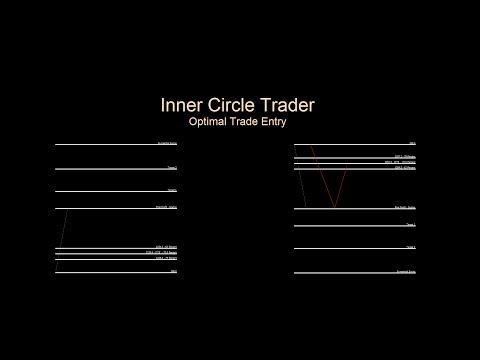
- Optimal trade entry is based on buying retracements after an impulse price move higher that incorporates a break in market structure.
- Buy the dips or any retracement lower after a price leg higher if bullish.
- Expectation is to capture the next leg higher.
Selling Rallies When Bearish
- When bearish, look for rallies in price and sell those rallies with the expectation that we're going to break to lower lows.
Setting Optimal Trade Entry
In this section, the speaker explains how to set up optimal trade entry using MT4 or equivalent. The zero level is first profit and scaling, 62% retracement level, and target levels are also discussed.
Optimal Trade Entry
- The sweet spot for optimal entry is at 0.705.
- Optimal trade entry is defined between 62% and 79% retracement level.
- Stop loss should be exactly at the low of the price swing.
- Fill should be around 1234.3.
Profit Scaling
- First profit scaling occurs at the zero level or just below it.
- First target is located above the high of the impulse leg.
- Second target is located at the 127 extension.
- Third target is located at the 162 extension.
Bearish Market Analysis
In this section, the speaker discusses bearish market analysis and how to identify an impulse leg lower in price.
Impulse Leg Lower
- Specific price levels are used instead of supply and demand zones.
- Risk is limited to the actual high between entry and exit.
Determining Risk and Reward
In this section, the speaker discusses how to determine risk and reward when trading. He emphasizes the importance of knowing where to get out and having a reasonable objective for profit.
Calculating Risk-to-Reward Ratios
- Determine your risk and potential earnings on a position.
- The first profit should be at least two times the initial risk.
- First scaling should be done based on a reasonable amount of range that justifies the risk.
- Look for trades that will give around 2-to-1 reward to risk ratio from entry to first profit.
Scaling Out Profits
In this section, the speaker explains why it's important to take profits early in trading and how it can lead to more significant gains later on.
Taking First Profit
- Take first profit or scaling out profits because your initial risk is X, and then you've taken a small profit.
- The last portion ends up being way more than what was done in the first scaling.
Examples of Trading Setups
In this section, the speaker provides examples of trading setups using TradingView.com as a medium for teaching.
Analyzing Price Movement
- Recent price movement has pushed above old highs.
- Draw horizontal lines at key levels to identify potential trade setups.
- Look for trades that will give around 2-to-1 reward to risk ratio from entry to first profit.
Overall, the speaker emphasizes the importance of determining risk and reward when trading and taking profits early. He provides examples of trading setups using TradingView.com as a medium for teaching.
Understanding Algorithmic Trading
In this section, the speaker explains how markets trade in an algorithmic format and how price engines generate runs on price and stops. They also discuss how to understand this concept by looking at a chart.
Algorithmic Format of Markets
- Markets trade in an algorithmic format.
- Price engines generate runs on price and stops.
- Understanding this concept can be done by looking at a chart.
Gravitating Price from Full Figure
- Price gravitates from a full figure.
- A full penny move is broken down algorithmically to different levels such as mid-figure, big figure, etc.
Institutional Level from an Algorithmic Standpoint
- The institutional level is defined by some pricing model.
- The institutional level for the current situation is 11720.
- Smart money has buy limits to pair up with cell stops below the market place.
Finding Support Levels
- When the market trades above the institutional level, it should find support when it comes back down into it.
- The market will pick up orders just below or above that level.
- We want to see price trade-off of that and give us a pattern so we have a support level defined by some pricing model.
Lower Timeframe Charts
- Dropping down into lower timeframe charts can help analyze patterns more closely.
English Short Term High and Optimal Trade Entry
In this section, the speaker discusses market structure breaks and how they affect price retracements. They also explain the concept of short term high and intermediate term high, and how they can be used to identify potential running prices higher. The speaker then goes on to discuss optimal trade entry points.
Market Structure Breaks
- A short term high is a market structure break.
- Once it retraces, it will pick up more orders and rally again.
- Another break above the short term high indicates an intermediate term high.
- This creates a solid setup for a potential running price higher.
Optimal Trade Entry
- Look for an area of accumulation or distribution redistribution smart money reversal low-risk buy.
- Enter at another area to buy or accumulate that takes us above the consolidation.
- The optimal trade entry is when the impulse leg rallies away and then comes back down picking up more orders.
- This is what it looks like in price, which is the executable price level you can trade on.
Wyckoff vs. Market Maker Buy Model
- The speaker's approach is similar to Wyckoff's general market profile process of markup and discounts.
- However, there are differences in definitions and approaches.
- The run above the impulse leg creates a buy profile or model that would take us above the consolidation.
Smart Money Exit Strategy
- Smart money buys down at 20 levels before selling at institutional levels (118 20).
- Running buy stops helps them sell at higher prices by creating liquidity.
- There are likely to be buy stops above this height as people who have not trailed stop-loss lower make a run on that liquidity.
Example Using MT4
- Price was coming down from higher levels towards an old monthly high (117 14).
- A short-term low was followed by a little rally.
- This creates an opportunity to capture old lows or any advancement higher.
Understanding Market Structure
In this section, the speaker discusses market structure and how to identify a market structure break.
Identifying Market Structure Break
- A market structure break occurs when the term structure retraces lower after making a high with two lower highs on either side of it.
- The first time this happens, there may be a loss of low-risk buy for a market maker by model.
- The consolidation here is followed by a runaway that comes back to the consolidation distribution smart money.
Reversal and Accumulation
- Look for reversal low-risk buys in reaccumulation after identifying an intermediate-term high.
- A higher high than the previous one indicates an intermediate-term high.
- Larry Williams' concept of two lower highs on either side of an intermediate-term high makes it significant and gives us a market structure model.
Understanding Price Moves
In this section, the speaker explains how to analyze price moves and why it's essential to look at the bodies of candles.
Analyzing Price Moves
- When analyzing price moves, focus on the bodies of candles rather than wicks as they are always thinner in price action.
- Brokers have some flexibility in spreading prices, which can cause discrepancies between interbank feeds and broker prices.
- It's crucial to give price freedom to trade from where you're trying to get in at your stop-loss level while protecting yourself with a full stop-loss order.
Fibonacci Settings
- Use Fibonacci settings when trading up to or just below 117.99, the highest body of the candle.
- Scale off your first profit at 62% treatment level after seeing two of that one - and put your stop to break-even.
- Trade up to symmetrical price swing and then look at the reaction after that all the way back down.
Optimal Trade Entries
In this section, the speaker discusses how to identify optimal trade entries using stops and trending models.
Using Stops for Optimal Trade Entries
- Traders use stops to trail their trades.
- Retail traders tend to jam up their stops above recent highs when they are bearish.
- Longer-term trending models have their stops farther back.
Identifying Optimal Trade Entries
- Look for symmetrical price swings that overlap with other indicators.
- The 100% measured move of a swing can be used as a precision-based trading strategy.
- Institutions like specific levels because it makes it easy for them to price their models in.
Understanding Price Levels
In this section, the speaker explains how institutions use specific price levels and how traders can use this information to make high probability trades.
Sensitivity Around Price Levels
- The market is sensitive around certain price levels, such as the 20 level or the 50 level.
- Institutions reach for these levels because they have orders that are close proximity to these specific levels.
Trading Models Based on Price Levels
- Use an intermediate term high broken with market structure as confirmation for high probability trades.
- Look for a little high to run through if you're buying low and want to sell high.
Completing Your Trading Model
In this section, the speaker completes the discussion on optimal trade entries by providing an example of what it looks like on a chart.
Example of Optimal Trade Entry
- Buy at the dynamic reaction point after an impulse leg up rallies again near the 50 level.
- Use hourly setups because they are much cleaner than lower timeframes.
- Look for the body to respect the FIB level, not that there is any magic in a FIB level.
Conclusion
- Forex provides opportunities because it gives a sentiment and molds a trader's mind or sentiment about a market.
Introduction to Institutional Price Moves
In this section, the speaker introduces the concept of institutional price moves and mentions that he will not be teaching another mentorship.
Understanding Institutional Price Moves
- The speaker explains how institutions work inside the model of how price is being delivered and why it should go where it's going.
- He talks about how algorithms make the price engines drive up and down, allowing traders to pick up orders at very low pricing and then rallies up to allow traders to get out at high prices.
- The speaker emphasizes that what he has explained is exactly how bank level traders trade, and anyone who says different simply doesn't know anything for what they're talking about.
Conclusion
The speaker concludes by wishing good luck in trading and promising to catch up with his audience next week.
Turn any video into a summary like this
YouTube links, meetings, lectures. With transcripts, search, and chat.