Lecture 22: America during World War II
World War II and the Four Freedoms
Introduction to World War II
- The lecture introduces Chapter 22, focusing on World War II and its cultural impact, particularly through Norman Rockwell's paintings titled "The Four Freedoms."
- President Franklin Roosevelt emphasized four essential human freedoms in his 1941 State of the Union address: freedom of speech, freedom of worship, freedom from want, and freedom from fear.
Rockwell's Depiction of Freedoms
- Rockwell illustrated ordinary Americans exercising these freedoms in various scenarios: a citizen at a town hall meeting, diverse religious groups praying, a family enjoying Thanksgiving dinner, and parents tucking their children into bed.
Social Changes During WWII
- The war significantly transformed American society; many post-war trends originated during this period. Wartime mobilization expanded government size and reach while stimulating economic growth.
- Industrial output surged as unemployment vanished due to labor demands that drew women into the workforce and migrants to industrial cities.
Economic Development and Military Industrial Complex
- WWII established a lasting international role for the U.S., reinforcing the belief that national security depended on global dominance of American values.
- Increased military spending led to rapid economic development in the South and West, laying foundations for what would become known as the Sun Belt. This era also marked the beginning of the military-industrial complex.
National Unity vs. Real Divisions
- WWII reshaped American nationality perceptions; contributions from ethnic groups were recognized as patriotic. However, racial tensions persisted with Black Americans facing second-class status.
- Over 100,000 Japanese Americans were forcibly interned during WWII despite America's proclaimed freedoms.
Pre-War Context: The Great Depression
Economic Crisis Impacting Foreign Policy
- In response to the Great Depression in the 1930s, public attention towards international affairs waned until FDR innovated foreign policy by recognizing Soviet Russia in 1933.
Good Neighbor Policy
- FDR's Good Neighbor Policy aimed at non-interventionism in Latin America by withdrawing troops from Haiti and Nicaragua while accepting Cuba’s repeal of intervention rights under the Platt Amendment.
Global Tensions Leading to War
Rise of Aggression in Asia and Europe
- As global tensions escalated with Japan invading Manchuria in 1931 and committing atrocities like the Rape of Nanking in 1937, European powers faced similar threats with Hitler's aggressive expansionist policies.
Failure to Contain Aggression
- Hitler violated treaties by rearming Germany and sending troops into demilitarized zones. The failure of Britain, France, and even America to confront him emboldened his ambitions across Europe.
The Rise of Fascism and Its Impact on Europe
The Spanish Civil War and International Involvement
- The rise of fascism in Italy coincided with General Francisco Franco's rebellion against Spain's democratically elected government in 1936, supported by Hitler and Mussolini.
- Nazi Germany's Luftwaffe and the Italian Air Force conducted bombing raids in Spain, testing their military strategies for future European conflicts.
- The town of Guernica was specifically targeted during these raids, resulting in significant civilian casualties as bombs were dropped to intimidate rather than destroy military targets.
- Pablo Picasso created his famous painting "Guernica" to depict the horrors experienced during the Spanish Civil War, highlighting the brutality of war.
- Franco's victory in 1939 established another fascist regime in Europe, joining Italy and Germany under authoritarian rule.
Expansion of Nazi Germany
- Following Franco’s victory, Hitler quickly annexed Sudetenland from Czechoslovakia and later invaded Austria and all of Czechoslovakia.
- President Roosevelt expressed concern over Hitler’s aggressive actions but initially called for a quarantine of aggressive nations instead of direct intervention.
- In 1938, British Prime Minister Neville Chamberlain returned from Munich after conceding Sudetenland to Hitler, mistakenly believing it would ensure peace.
Understanding Fascism
- Fascism is defined as radical authoritarian nationalism that emerged prominently in early 20th-century Europe, originating in Italy during World War I.
- It opposes liberal democracy and promotes totalitarian governance led by a strong leader or dictator who fosters national unity through a cult of personality.
- Fascists view political violence as a legitimate means for achieving national rejuvenation rather than inherently negative; they embrace war and imperialism as tools for state strength.
Symbolism and Art
- The term "fascism" derives from the Italian word "fascismo," linked to the Latin "fascio," symbolizing strength through unity—illustrated by a bundle of sticks being harder to break than individual ones.
- Picasso's "Guernica," displayed prominently in museums today, serves as an enduring representation of the impact of war on society.
American Perceptions During This Era
- Many Americans viewed threats from Germany and Japan as distant; some admired Hitler for his anti-communist stance while businesses profited from dealings with Nazi Germany.
- Trade continued between America and Japan despite rising tensions; notably, the U.S. supplied Japan with 80% of its oil at this time.
- A growing pacifist movement emerged across America post-WWI among various communities who believed involvement had only benefited bankers and arms manufacturers.
The Rise of Isolationism and the Prelude to World War II
American Sentiment and Neutrality Acts
- Many Irish Americans sympathized with fascist governments while remaining anti-British, reflecting a broader isolationist sentiment in the U.S. during the 1930s.
- In response to global conflicts, Congress enacted neutrality acts starting in 1935, banning travel on belligerent ships and arms shipments to warring nations to keep America out of foreign entanglements.
- Despite witnessing a democratically elected government struggle against a fascist dictator in Spain, the U.S. imposed arms embargoes on both sides instead of intervening.
The Munich Agreement and Soviet Relations
- At the 1938 Munich Conference, Britain and France capitulated to Hitler's demands, failing to oppose his expansionist policies.
- The Soviet Union proposed an international agreement to counter German territorial ambitions but was met with distrust from Britain and France due to their suspicions of Stalin.
- Unable to secure an alliance with Western powers, Stalin signed a non-aggression pact with Hitler, which allowed Germany to invade Poland shortly thereafter.
The Outbreak of War
- Following Poland's invasion in 1939 by Germany using blitzkrieg tactics, Britain and France declared war on Germany as allies of Poland.
- The Axis Powers were formally established between Germany, Italy, and Japan as they sought dominance over Europe and beyond.
Britain's Resistance
- For an entire year under Prime Minister Winston Churchill's leadership, Britain stood alone against German aggression while enduring relentless bombing raids known as the Blitz.
- Despite significant destruction across cities like London during these air raids, Britain's defense efforts ultimately thwarted Germany’s plans for invasion.
American Military Policy Shift
- President Franklin Roosevelt viewed Hitler as a direct threat but faced public resistance against entering another war; thus he focused on military rearmament discussions in Congress.
- In 1940, Congress approved selling arms to Britain on a cash-and-carry basis—Britain would pay upfront for weapons without risking U.S. ships being attacked during transport.
American Intervention in World War II
Opposition to American Intervention
- Prominent figures like Henry Ford and Father Coughlin opposed U.S. intervention, with Ford motivated by profit from Nazi dealings.
- Charles Lindbergh, a celebrated aviator, also advocated for non-interventionism during this period.
The 1940 Presidential Election
- Franklin D. Roosevelt (FDR) broke tradition by running for a third term against Republican Wendell Wilkie; both candidates supported the peacetime draft and New Deal policies.
- FDR won decisively, becoming the only U.S. president to serve more than two terms.
Shift Towards War
- In 1941, FDR declared America would be the "great arsenal of democracy," indicating support for nations fighting Germany and Japan.
- The Lend-Lease Act was passed to provide military aid to allies like Great Britain as they struggled financially.
Pearl Harbor Attack
- On December 7, 1941, Japan launched a surprise attack on Pearl Harbor, killing over 2,000 Americans and damaging much of the Pacific fleet.
- Crucially, all U.S. aircraft carriers were out on patrol during the attack and remained intact.
America's Entry into WWII
- Following the attack on Pearl Harbor, Congress declared war on Japan unanimously; Germany subsequently declared war on the U.S., marking America's full entry into WWII.
Initial Military Challenges
- Despite robust industrial capacity suggesting eventual victory over Axis powers, initial military efforts faced significant setbacks in Asia and the Pacific.
- The Bataan Death March exemplified early American losses in the Philippines where thousands of troops suffered under harsh conditions.
Turning Points in Warfare
- By late spring of 1942, victories at Coral Sea and Midway shifted momentum towards America’s favor in the Pacific theater.
Allied Campaign Strategies
- In November 1942, British and American forces invaded North Africa; by May 1943 they forced German surrender there.
European Front Developments
- In July 1943, Allied forces invaded Sicily as part of Italy's liberation effort following Mussolini's overthrow amidst popular revolt.
D-Day and the Eastern Front: Key Events of World War II
The Invasion of Normandy
- On June 6, 1944, known as D-Day, nearly 200,000 American, British, and Canadian soldiers led by General Dwight D. Eisenhower invaded Normandy in northern France.
- This operation marked the largest land-sea invasion in history, with over a million troops following the initial landing.
- By August 1944, Paris was liberated from German occupation after significant clashes.
The Eastern Front Battles
- Major confrontations occurred on the Eastern Front between German and Soviet forces; notably at Stalingrad where Germany faced a decisive defeat.
- Approximately 10 million of Germany's nearly 14 million casualties during WWII were incurred on the Eastern Front against the Soviet Union.
- Civilian casualties among Poles and Russians were substantial but exact numbers remain unknown.
Visual Insights into Warfare
- A photograph depicts post-D-Day efforts with U.S. Marines and Coast Guard members unloading supplies to support landed forces.
Recruitment and Human Cost
- As Germany's situation worsened, children were recruited to fight for the Nazis; images show young prisoners of war captured by American soldiers.
The Holocaust: Systematic Genocide
Overview of Nazi Oppression
- From 1941 to 1945, Jewish people faced systematic murder in what is considered one of history's deadliest genocides.
- The genocide was coordinated by special military groups (SS), involving all levels of German bureaucracy.
Victims Beyond Jewish People
- Other targeted groups included ethnic Poles, Soviets (including POW), Romani people, communists, homosexual individuals, Jehovah’s Witnesses, and those with disabilities.
Scale of Atrocities
- An estimated network of about 42,500 facilities was used for concentration camps across occupied territories for forced labor or mass murder.
Impact on America During WWII
Transformation of Federal Government Role
- President Roosevelt established wartime agencies like the War Production Board to manage labor distribution and manufacturing quotas effectively.
Economic Changes
- Federal employment surged from one million to over four million workers during the war; unemployment dropped significantly by 1943.
War Efforts Financing
- The U.S. government initiated housing projects for war workers while converting civilian factories to produce military vehicles like tanks and jeeps.
World War II and Economic Changes
Economic Concentration in the U.S.
- During World War II, business executives took key roles in federal agencies overseeing war industries, leading to increased production incentives from Roosevelt.
- By the end of the war, 200 major industrial firms controlled about 50% of all corporate assets in the U.S., highlighting a significant trend towards economic concentration.
Innovations and Industrial Growth
- The war spurred massive production of military equipment and scientific innovations such as radar, jet engines, and early personal computers.
- Federal funds revitalized old manufacturing areas and created new ones, particularly in Southern California for steel and aircraft production.
Labor Dynamics During the War
- Organized labor viewed WWII as a chance to expand economic democracy; unions aimed to secure their influence amidst wartime conditions.
- A tripartite agreement between labor unions, government, and businesses allowed union membership to rise significantly during the war.
Union Power and Political Landscape
- Unions agreed not to strike during WWII while recognizing employers' rights; this cooperation was crucial for maintaining industrial peace.
- By the end of WWII, nearly 15 million workers were union members—about one-third of non-farm labor—marking a peak in union representation.
Decline of New Deal Programs
- The conservative Congress retained some New Deal elements but dismantled others perceived as leftist or communist influences.
- Programs like the Civilian Conservation Corps (CCC) and Works Progress Administration (WPA) were shut down under this conservative regime.
Worker Protests Amidst Corporate Profits
- Workers protested against wage freezes imposed by the government despite soaring corporate profits during wartime.
Mobilization for Public Opinion
Transformation of Industries
- Factories adapted from civilian products to military needs; for example, Cadillac shifted from cars to tanks during WWII.
Themes of Freedom in Wartime Propaganda
- WWII is often remembered as a "good war," with public support driven by noble aims such as freedom.
Roosevelt's Four Freedoms
- President Roosevelt articulated four essential freedoms: speech, worship, want, and fear—aimed at universalizing American values globally.
Importance of Constitutional Rights
- The emphasis on freedom underscored First Amendment protections; contrasting American liberty with Nazi tyranny became prominent during wartime discussions.
Coercive Patriotism and the Four Freedoms
The Concept of Freedom from Want
- Coercive patriotism during World War I impacted minority groups, leading to a lesson learned about freedom from want. Initially linked to trade barriers, FDR later associated it with ensuring a basic standard of living for American workers and farmers to prevent a return to the Great Depression.
FDR's Vision of Freedom
- FDR articulated four freedoms: freedom from want, fear, worship, and speech, claiming they would provide "real freedom" for the common man. The Office of War Information (OWI), established in 1942, aimed to garner public support for WWII.
Political Divisions and Public Support
- Political divisions stemming from the New Deal influenced efforts to promote the four freedoms during WWII. The liberal staff at OWI framed the war as a people's fight against fascism while attempting to avoid nationalist hysteria.
Criticism of FDR's Freedoms
- Critics argued that FDR promoted freedoms primarily through his New Deal social programs rather than universal American values. Consequently, Congress cut most funding for OWI shortly after its establishment.
Shift in Mobilizing Public Opinion
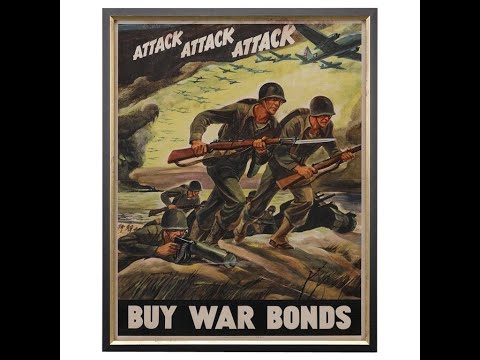
- With OWI's decline, private advertising firms took over mobilizing public opinion by encouraging Americans to buy war bonds and engage in patriotic actions. These firms suggested that Roosevelt overlooked a fifth freedom: enterprise.
The Role of Women During WWII
Women's Employment Growth
- WWII led to unprecedented growth in women's employment as they filled industrial jobs left vacant by men who went off to war. Advertisements celebrated women workers like Rosie the Riveter as symbols of independence.
Changes in Workforce Dynamics
- By 1944, women constituted over one-third of the American civilian workforce; many entered previously male-dominated fields such as aircraft manufacturing and shipbuilding. This shift forced labor unions like UAW to address issues like equal pay.
Temporary Nature of Women's Work
- Despite gaining work experience and higher wages during the war, women faced challenges post-war as employers viewed their roles as temporary necessities rather than permanent positions.
Post-War Expectations vs. Reality
- Advertisements framed women's factory work as contributing to victory rather than advocating for women's rights or independence. After WWII ended, many female workers lost their jobs when men returned home.
Post-War Prosperity Ideals
Hopes for Economic Improvement
- Many Americans anticipated that not only would fascist regimes be defeated but also that America itself would improve economically after WWII. This hope united various political factions around post-war prosperity ideals.
The American Century Concept
- Henry Luce’s "American Century," published in 1941, called on Americans to become dominant global powers while spreading democracy and freedom through economic enterprise—an idea rooted back in America's revolutionary origins.
The Diverging Visions of American Freedom
Henry Luce vs. Henry Wallace
- Henry Luce's perspective was criticized by leftist critics as advocating for a new American empire, contrasting sharply with the views of liberal figures like Henry Wallace.
- In May 1942, Wallace presented his vision in "The Price of Free World Victory," predicting that an Allied victory would usher in a "century of the common man" governed by international cooperation rather than dominance by any single power.
- While Luce envisioned a world driven by free enterprise, Wallace proposed a global version of the New Deal focused on humanizing capitalism and addressing issues like hunger and poverty.
Post-War Economic Planning
- As Congress dismantled parts of the New Deal, liberal Democrats and allies sought to create a post-war economy ensuring freedom from want for all Americans.
- The National Resources Planning Board (NPRB) outlined plans for a peacetime economy emphasizing full employment, welfare state expansion, and basic living standards through economic security.
- The NPRB's proposal included a "new bill of rights" guaranteeing social security, education, healthcare, housing, and employment for all Americans.
Shifts in Economic Ideology
- Liberals began shifting focus from reforming capitalism to achieving full employment and social welfare without extensive government intervention in the economy.
- Influenced by economist John Maynard Keynes, they believed government spending was essential for economic growth; however, this approach faced opposition from conservative factions in Congress.
Women's Role During WWII
- Despite women working extensively in wartime factories during WWII, advertisements portrayed them glamorously rather than realistically reflecting their labor conditions.
FDR's Economic Bill of Rights
- In 1944, FDR called for an economic bill of rights aimed at expanding government powers to ensure full employment and basic needs but faced political challenges after his vice president replacement with Harry Truman.
- Although Congress did not enact the economic bill of rights proposed by FDR due to lack of support for social policies advocated by Wallace.
Impact of the GI Bill
- The Servicemen’s Readjustment Act (GI Bill), enacted in 1944, provided returning veterans with benefits such as unemployment insurance and educational scholarships which significantly shaped post-war America.
- This legislation helped prevent economic disruption post-war while sparking booms in education and housing industries leading to widespread suburbanization.
Political Stalemate on Employment Policies
- A proposed full employment bill intended to guarantee jobs for non-veterans was diluted before passing in 1946; it failed to mandate 100% employment confirming political stalemate since 1938 elections.
The Impact of Serfdom and Government Planning on Individual Liberty
Hayek's Critique of Government Planning
- Hayek argued that government planning poses a threat to individual liberty, potentially leading to dictatorship. He highlighted the dangers of combining economic and political power, particularly in the context of war production restoring capitalism.
- He claimed that no individual or group of experts could effectively manage a complex modern economy, emphasizing the limitations of centralized planning.
Establishing Modern Conservatism
- Hayek contributed to modern conservatism by equating fascism, socialism, and New Deal policies with economic planning, associating them with a loss of freedom—an idea still prevalent in American conservative thought today.
World War II: A Shift in American Identity
Cultural Pluralism vs. Racial Inequality
- The fight against Nazi ideology discredited ethnic and racial inequalities within America temporarily. The government promoted cultural pluralism as a defining characteristic separating Americans from their enemies.
- The U.S. government asserted that all Americans should enjoy freedoms regardless of race or religion, contrasting this with the racism exhibited by enemy nations.
Assimilation and Changing Perceptions
- By the end of World War II, new immigrants from Eastern and Southern Europe were increasingly accepted as loyal Americans rather than viewed as inferior races.
- The war fostered patriotic assimilation among diverse groups, contrasting sharply with previous coercive definitions of American identity during World War I.
Racial Barriers During WWII
Historical Revisionism and Racial Tolerance
- Public officials often rewrote history to portray American identity as free from racial considerations despite its complexities. This was partly motivated by opposition to Nazi racial ideologies.
- Scientists worked to debunk myths linking race with culture and intelligence; Hollywood began depicting soldiers from various backgrounds united under national loyalty.
Continued Bigotry Despite Progress
- Anti-Semitism persisted during this period; many Jewish refugees fleeing Nazis were turned away by America, leading to tragic outcomes for those sent back.
Post-War Changes for Ethnic Groups
Shifts in Ethnic Identity Post-WWII
- While millions felt more integrated into American society post-war, non-white ethnic groups faced ongoing challenges. Segregation remained entrenched for African Americans while Asian immigration was heavily restricted.
Labor Programs and Cultural Developments
- WWII initiated changes impacting future societal dynamics; programs like Bracero brought Mexican laborers into the U.S., creating opportunities but also maintaining their non-citizen status.
- These labor programs contributed to the emergence of Chicano culture—a blend of Mexican heritage with American experiences—despite ongoing racial intolerance exemplified by events like the Zoot Suit Riots in 1943.
Zoot Suit Riots and Racial Tensions During WWII
The Context of the Zoot Suit Riots
- The Zoot Suit Riots highlighted wartime racial tolerance issues, showcasing how fashion became a target for racial discrimination.
- Cloth rationing during WWII made zoot suits, which required more fabric, symbols of excess and targets for resentment against Mexican-American youths.
Discrimination Against Mexican-Americans
- Wearing a zoot suit was often misinterpreted as an association with criminality, leading to violence against Mexican-American youth by off-duty sailors and police.
- Despite the discrimination faced, the contrast between civil rights rhetoric and actual treatment inspired activism among Mexican-Americans.
Military Service and Legal Changes
- Approximately half a million Mexican-Americans served in the military during WWII; Texas even passed laws recognizing them as legally white.
- However, these laws were vague regarding non-white classifications, leaving many questions about racial identity unresolved.
Native American Experiences During WWII
- Many Native Americans left reservations for war work or military service; some did not return post-war but instead utilized GI Bill benefits for education and business opportunities.
Asian-American Experiences: A Paradox
- Over 50,000 children of Asian immigrants fought in the war; however, their experiences varied significantly based on ethnicity.
- The Chinese Exclusion Act was partially repealed in 1943 allowing limited immigration; many Chinese moved out of ghettos into mainstream jobs.
Japanese American Internment
- The perception of Japan as racially inferior led to widespread prejudice against Japanese Americans during the Pacific War.
- Most Japanese Americans were Nisei (American-born citizens), yet they faced suspicion despite their loyalty to America.
Government Actions Against Japanese Americans
- In early 1942, President Roosevelt authorized the internment of all individuals with perceived Japanese descent from the West Coast due to fears of espionage.
- This resulted in over 110,000 people being forcibly relocated to internment camps without due process or legal recourse.
Civil Liberties Erosion During Wartime
- Internment exemplified how wartime conditions can erode civil liberties; there were no court hearings or protections for those interned.
- Despite their confinement, internees were still asked to volunteer for military service while facing severe restrictions on their freedoms.
Japanese American Internment and Racial Discrimination During WWII
Japanese American Internment
- The U.S. government used propaganda to depict Japanese soldiers as monstrous and sub-human, contributing to the justification for internment.
- Over 110,000 individuals of Japanese ancestry were forcibly relocated to internment camps across the United States, authorized by President Roosevelt's Executive Order 9066.
- This executive order, issued on February 19, 1942, allowed military commanders to exclude any or all persons from designated areas, effectively removing all people of Japanese descent from the West Coast.
- Approximately 5,000 Japanese Americans voluntarily relocated before March 1942; however, most were forcibly moved to heavily guarded internment camps beginning in spring 1942.
- Images from this period show families being treated like cargo while waiting for transport to these camps, highlighting the dehumanizing conditions they faced.
African American Experiences During WWII
- Despite wartime rhetoric promoting freedom, racial segregation and violence persisted against African Americans during WWII; significant migration occurred from rural South to Northern cities.
- In Detroit in 1943, a race riot erupted due to tensions between white and black workers at wartime production plants resulting in numerous fatalities.
- More than one million African Americans served in segregated military units during the war but were often relegated to non-combat roles such as construction and transportation jobs.
- Black draftees experienced Jim Crow racism during training in the South and resented better treatment afforded to Nazi POWs compared with their own experiences.
- The GI Bill promised benefits but local administrators often discriminated against black veterans when distributing educational and housing opportunities.
Emergence of Civil Rights Movement
- Racism was pervasive even within medical practices; blood banks separated donations based on race despite no scientific basis for such distinctions.
- The modern civil rights movement began taking shape during WWII as African Americans protested exclusion from job opportunities in booming war industries.
- Labor leader A. Philip Randolph called for a march on Washington in July 1941 demanding access to defense jobs and an anti-lynching law amidst widespread discrimination.
- In response to potential unrest from the planned march, Roosevelt issued an executive order banning discrimination in defense jobs and established the Fair Employment Practices Commission (FEPC).
- Although limited by its lack of enforcement power, the FEPC marked a significant shift towards addressing racial inequality within federal employment policies.
Opportunities and Challenges for Black Americans During WWII
Impact of World War II on Employment
- By 1944, over one million African Americans were employed in manufacturing due to wartime opportunities, significantly increasing job access.
- The NAACP's membership surged from 50,000 to over 500,000 as the organization advocated for civil rights during this period.
Activism and Civil Rights Movements
- The Congress of Racial Equality (CORE), founded in 1942, initiated sit-in protests aimed at integrating public spaces like restaurants and theaters.
- The phrase "Double V" emerged, symbolizing the fight for victory against fascism abroad and racial discrimination at home.
Critique of American Ideals
- Propaganda highlighted the hypocrisy of American racism compared to Nazi ideology, despite ongoing lynching in America during WWII.
- A broad coalition called for an end to racial inequality; African-American and Jewish groups campaigned against discrimination in employment and housing.
Labor Movement Dynamics
- CIO unions were more racially integrated than AFL-affiliated unions, which continued discriminatory practices against black workers.
- In 1944, a collection of essays titled "What the Negro Wants," featuring prominent African-American voices, called for an end to segregation.
Shifts in Race Relations Post-War
- The publication of these essays set the agenda for the upcoming civil rights movement in the 1950s and 60s.
- White moderates felt threatened by rising black militancy as they stood between protesting blacks and white supremacist politicians.
Legislative Changes and Social Awareness
- By WWII's end, some progress was made: racial wage differences were banned by the National War Labor Board; all-white primaries were outlawed by the Supreme Court.
- Gunner Myrdal’s book "An American Dilemma" illustrated America's struggle with racism while advocating adherence to its foundational ideals of equality.
Liberal Agenda Emergence
- By 1945, demands arose for anti-lynching laws and desegregation efforts within a broader liberal left-wing agenda focused on civil liberties.
Global Perspectives on Racism
- Early 20th-century global connections among black radicals revived international consciousness regarding colonialism's impact on race relations.
Pan-African Connections
- Leaders like W.E.B. Du Bois engaged with future independence leaders from Africa at Pan-African congresses to discuss shared struggles against racism.
The Battle of the Bulge and the End of World War II
The Battle of the Bulge
- The Battle of the Bulge was a significant surprise counter-attack by German forces that pushed back Allied lines in France, resulting in a massive bulge in their front lines.
- This battle became the largest single engagement fought by the U.S. Army during World War II, leading to over 70,000 American casualties.
- Despite initial successes, the German assault ultimately failed, with American troops crossing into Germany by March 1945.
Transition to Victory in Europe
- Following Hitler's suicide and Soviet capture of Berlin, May 8 is recognized as VE Day (Victory in Europe), marking the official end of war against Germany.
- In 1944, Franklin D. Roosevelt won an unprecedented fourth term as President but died on April 12, 1945, before victory in Japan was secured.
Truman's Decision on Atomic Bomb
- Harry S. Truman faced a monumental decision regarding whether to use atomic bombs against Japan; he was unaware of this weapon's existence until he assumed presidency.
- The atomic bomb stemmed from Albert Einstein’s theory of relativity and involved uranium or plutonium for creating powerful chain reactions.
Development and Use of Atomic Bomb
- Einstein warned FDR about Nazi efforts to develop atomic weapons; this led to launching the Manhattan Project—a secret program aimed at developing an atomic bomb.
- The first successful test occurred in July 1945; subsequently, on August 6, an atomic bomb was dropped on Hiroshima, killing over 70,000 instantly and many more due to radiation exposure.
Aftermath and Controversy
- A second bomb was dropped on Nagasaki three days later with similar immediate fatalities; these events prompted Japan's surrender amid fears of further devastation.
- The catastrophic civilian casualties caused by these bombs have sparked ongoing controversy regarding their use outside the United States.
Strategic Considerations for Ending War
- Truman’s advisers warned that a traditional land invasion could cost over 250,000 American lives; thus using atomic bombs seemed a quicker resolution.
- Japan indicated willingness to surrender if Emperor Hirohito retained his throne; however, this did not meet Allied demands for unconditional surrender.
Ethical Implications and Civilian Casualties
- Some scientists suggested using the bomb merely as a demonstration of power rather than for actual combat purposes; Truman decisively chose its deployment.
- World War II saw approximately 20 million civilian deaths out of over 50 million total casualties—contrasting sharply with World War I where most deaths were military personnel.
Dehumanization and Public Perception
- Both Axis powers committed atrocities against civilians; Allies also engaged in bombing campaigns that resulted in high civilian casualties (e.g., Dresden).
- While wartime propaganda dehumanized Japanese enemies leading to minimal criticism at first regarding bomb usage, public sentiment shifted post-war towards questioning these actions.
The Aftermath of Atomic Bombs and Post-War Agreements
Civilian Suffering from Atomic Bombs
- Graphic images depict the severe suffering of civilians post-atomic bomb, highlighting a woman's skin marked by a grid pattern caused by intense light during the explosion.
- The crisscross pattern on her skin represents the fabric of her dress, seared into her body at the moment of detonation, illustrating the horrific impact of nuclear warfare.
Destruction in Hiroshima and Nagasaki
- Before-and-after images show Hiroshima's transformation; virtually no man-made structures remain after the bombing, with only rivers serving as recognizable landmarks.
- Similar destruction is noted in Nagasaki, emphasizing the extensive devastation wrought by atomic bombs during World War II.
Allied Leaders' Meetings and Agreements
- Key meetings among Allied leaders (Churchill, Roosevelt, Stalin) occurred in Tehran (1943), Yalta (1945), and Potsdam (July 1945), focusing on post-war international relations.
- At Potsdam, they established military administration for Germany and agreed to prosecute Nazi officials for war crimes while harboring mutual distrust among powers.
Geostrategic Tensions Among Allies
- Delayed U.S. invasion in Europe led to significant Soviet casualties on the Eastern Front, fostering resentment but ultimately allowing Soviet dominance over Eastern Europe post-war.
- Despite minimal protests from Roosevelt and Churchill regarding Stalin's control over Eastern Europe, agreements were made for free elections in Poland under Soviet oversight.
Economic Structures Established at Bretton Woods
- Britain resisted U.S. efforts to control global economy; Bretton Woods Conference (July 1945) replaced British pound with U.S. dollar as primary currency for international trade.
- The conference also established two major institutions: World Bank for development aid and IMF to prevent currency devaluation practices among nations.
Formation of the United Nations
- In June 1945, 51 countries convened in San Francisco to adopt the UN Charter aimed at maintaining world peace through equal representation in a General Assembly and a Security Council with veto power for five permanent members.
- The UN charter prohibited force or threats as means for resolving disputes, marking a significant shift towards collective security measures following WWII.
The Aftermath of World War II and the Rise of Superpowers
Redistribution of Global Power
- The aftermath of World War II led to a significant redistribution of global power, with Japan and Germany being completely defeated.
- Britain and France emerged from the war significantly weakened, while the United States and the Soviet Union remained as the primary military powers capable of projecting influence.
Emergence of Cold War Tensions
- The United States became the dominant global nation post-war but soon faced rivalry from the Soviet Union.
- Despite ending World War II, international harmony was not achieved; instead, tensions escalated into what would be known as the Cold War.
Ideals vs. Reality in Post-War Policies
- The fear generated by nuclear weapons during the Cold War contrasted sharply with allied rhetoric promoting freedom.
- In 1941, Winston Churchill and FDR introduced the Atlantic Charter, promising free trade and self-government following Nazi Germany's defeat.
Limitations of Freedom Promises
- The Atlantic Charter emphasized "freedom from want" and "freedom from fear," but notably excluded "freedom of speech" and "freedom of worship."
- This exclusion was influenced by British colonial interests, particularly in India, where there was reluctance to grant freedoms to Hindu and Muslim populations.
Foundation for Human Rights Movements
- The principles outlined in the Atlantic Charter aimed to unify opposition against Axis powers while laying groundwork for future human rights movements.
- These ideals inspired colonized nations to adopt concepts of freedom and national self-determination in their struggles against imperialism.