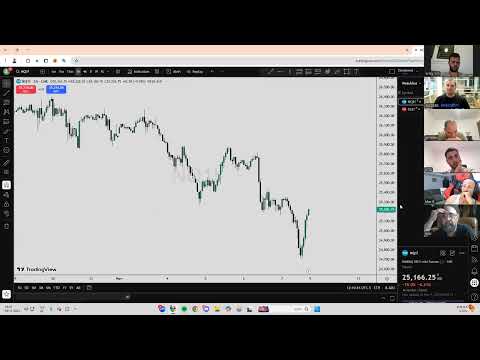
מבנה שוק מתקדם - שני השלבים בשוק 09.11
Welcome to the Live Session
Introduction and Overview
- The session begins with a warm welcome, introducing Zohar for the first time in a live format, alongside other participants who have previously attended.
- Discussion on topics covered in the digital course, including market structures, trends, and FVG (Fair Value Gap), emphasizing continuous learning and engagement.
- Acknowledgment of participant Tamir's achievements after passing two exams and receiving gifts for his hard work.
Personal Engagement and Rewards
- Announcement of personal coaching sessions offered to those who pass the exam as a reward for their efforts.
- Emphasis on the importance of hard work and dedication in achieving results within trading.
Market Structure and FVG
Understanding Market Dynamics
- Introduction to the main topic: market structure and FVG. Explanation of how these concepts are marked on charts.
- Encouragement for participants who haven't reached certain lessons yet; reassurance that they will eventually understand these concepts.
Tools for Analysis
- Overview of different contracts available in trading such as NQ (Nasdaq), MNQ (micro contract), ES (E-mini S&P 500), focusing on Nasdaq due to its larger movements.
Key Concepts in Trading
Market Balance vs. Imbalance
- Explanation of two primary states in markets: balance between buyers and sellers versus imbalance. This is crucial for understanding price movements.
- Importance placed on recognizing market trends before reacting to news or indicators; focus remains on price movement rather than external factors.
Price Movement Patterns
- Description of typical price movement patterns observed in markets, highlighting that they rarely follow textbook examples but instead fluctuate based on buyer-seller dynamics.
Price Agreement Among Traders
Historical Price Examples
- Discussion about historical pricing trends using iPhone prices as an analogy to illustrate how demand influences pricing over time.
Buyer-Seller Consensus
- Insight into how traders agree upon fair prices over time through collective actions leading to upward or downward price movements.
Understanding Future Contracts
Trading Instruments Explained
- Clarification that various financial instruments like futures contracts can be traded similarly across different platforms while maintaining consistent price behavior.
Risk Assessment
- Differentiation between trading futures contracts versus ETFs (Exchange-Traded Funds), explaining risk levels associated with each type.
Energy Movements in Markets
Psychological Factors Influencing Prices
- Introduction of psychological elements affecting market prices; changes can occur due to significant news events or shifts in trader sentiment.
Energy Dynamics
- Conceptualization of energy dynamics among traders during buying/selling processes; fewer willing buyers at higher prices lead to potential stagnation or decline.
Practical Application: Fibonacci Retracement
Measuring Price Movements
- Instructional segment focused on applying Fibonacci retracement techniques effectively by identifying key swing points within price movements.
Key Measurement Techniques:
- Identifying Swing Points - Use significant lows/high points as reference markers when measuring retracements.
- Fibonacci Levels - Apply Fibonacci ratios from identified swing points to predict potential reversal areas during trades.
Conclusion: Continuous Learning & Adaptation
Final Thoughts
- Reinforcement that successful trading requires ongoing education about market behaviors, emotional intelligence, and adaptability based on changing conditions.
This structured approach ensures clarity while providing essential insights into trading strategies discussed throughout the session.
Analysis of Market Trends and Fibonacci Levels
Understanding Support and Resistance Levels
- The speaker discusses the importance of measuring market levels, emphasizing that breaking below a certain low indicates potential support or resistance.
- A specific low point is referenced, highlighting its significance in determining market trends and the necessity to analyze previous lows for accurate predictions.
- The concept of Fibonacci retracement is introduced, suggesting that traders should focus on significant lows from which upward movements began.
- If a recent low is broken but closes above it, this may indicate manipulation rather than a true breakdown, stressing the need for careful analysis of closing prices.
- The speaker emphasizes that wicks (or tails) on candles represent noise and should not be considered definitive indicators unless confirmed by closing prices.
Analyzing Market Movements
- The discussion continues with examples of price action where closing above or below key levels determines market sentiment and future movements.
- A pattern emerges where repeated failures to close above certain levels suggest strong selling pressure, indicating a bearish trend.
- The importance of understanding fair value pricing between buyers and sellers is highlighted as essential for predicting future price actions.
- The speaker notes how multiple attempts to break through resistance without success can signal an impending downward movement in price.
Utilizing Fibonacci Retracement
- New Fibonacci levels are marked based on recent price movements, illustrating how traders can identify potential reversal points in the market.
- Emphasis is placed on not targeting long positions when there’s evidence of downward momentum; instead, short positions may be more appropriate during these times.
- A metaphorical comparison is made regarding purchasing decisions at discounted prices versus premium prices to illustrate trader psychology in decision-making processes.
Identifying Swing Points
- Clarification on identifying clear swing points within price charts is provided; these points serve as critical markers for potential reversals or continuations in trends.
- A swing point consists of three candles: one lower candle flanked by two higher ones. This structure signals potential shifts in market direction.
- Historical patterns are discussed where past swings influence current trading strategies; recognizing these patterns aids traders in making informed decisions.
Market Sentiment Analysis
- Continuous upward movement without significant pullbacks suggests bullish sentiment; however, any failure to maintain higher highs could indicate weakness in buying pressure.
- Traders are encouraged to monitor days with no long opportunities while focusing on shorting strategies during periods of declining prices due to lack of buyer interest at higher levels.
Conclusion: Navigating Market Dynamics
- Observations about buyer exhaustion highlight the need for traders to adapt their strategies based on prevailing market conditions rather than sticking rigidly to preconceived notions about trends.