Mapa De Procesos: Que es?, Modelo y Ejemplos
Process Mapping in Organizations
Introduction to Process Maps
- The session introduces the concept of process maps, emphasizing their importance in organizational strategy and quality processes aimed at customer satisfaction and market positioning.
Understanding Processes
- A process is defined as a sequence of activities that transform inputs into desired outputs, adding value for the customer. This definition highlights the sequential nature of processes and their purpose.
Quality Perspectives
- Quality has two perspectives: objective (defined by the organization) and subjective (perceived by customers). Both are crucial for understanding how products or services are received.
Definition of Process Maps
- A process map is a graphical representation of all activities involved in a process, providing clarity on which activities add value to the product or service delivered to customers.
Steps to Create a Process Map
Identifying Actors
- The first step involves identifying all actors involved in the process, including individuals, institutions, or companies that impact the organization's processes.
Establishing Operational Lines
- Next, establish operational lines by determining what the company does. This helps identify key processes that need mapping.
Identifying Support Processes
- Identify support processes necessary for completing main processes. These additional processes aid in fully developing primary operations.
Defining Strategic Processes
- Strategic processes relate to company direction (e.g., marketing, accounting). They must be clearly defined as they contribute to achieving customer satisfaction objectives.
Compiling All Processes into a Map
- Finally, compile all identified processes into a cohesive map that illustrates their relationships and functions within the overall business activity.
Importance of Process Mapping
- Process maps communicate an organization's focus and illustrate interactions between various processes essential for operational success.
Standard Model for Process Mapping
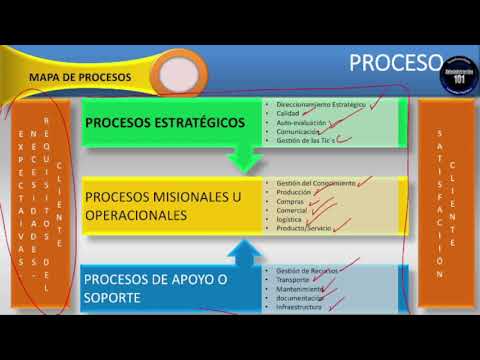
Customer Requirements
- Understand customer expectations as they represent critical inputs needed for developing effective process maps.
Strategic Processes Overview
- Strategic processes help define organizational strategies and objectives; they analyze societal needs and market conditions to ensure alignment with strategic goals.
Mission-Critical Operations
- Mission-critical operations directly interact with customers; these operational processes are vital for delivering perceived quality through products or services offered by the organization.
Continuous Improvement
- Regular review of mission-critical operations is essential for improvement based on market changes or shifts in customer needs.
Processes of Support and Their Importance
Overview of Support Processes
- Support processes are essential for providing the organization with necessary resources, including personnel, machinery, and raw materials. They add significant value throughout the production chain.
- These processes do not directly impact product or service production but are crucial for effective development. Without them, fulfilling the organization's purpose would be impossible.
Role in Resource Management
- Support processes ensure that all necessary resources—financial, human talent, infrastructure—are managed effectively. This includes documentation, maintenance, and transportation.
- Customer satisfaction is the ultimate output of these processes. The process begins with inputs based on customer needs and expectations.
Feedback Mechanism
- A feedback loop is established to assess performance; positive feedback indicates smooth operations while negative feedback necessitates identifying issues to restore functionality.
Mapping Processes: Examples and Analysis
Understanding Process Maps
- The first step involves identifying customer needs and expectations as inputs into the process map. Strategic processes include strategic direction, communication, quality management, evaluation, and control.
Mission-Critical Processes
- For a university context, mission-critical processes encompass academic program design and student admission management alongside teaching and research activities.
Value Generation through Support Processes
- Support processes generate value by managing financial resources, human talent structure, legal affairs, documentation management among others.
Stakeholders in Educational Institutions
Identifying Stakeholders
- In a university setting, stakeholders include students (primary customers), parents, society at large, government entities, competitors etc., all contributing to input requirements for educational products.
Educational Outcomes
- The end product is knowledge development aimed at equipping individuals with competencies needed to meet societal demands.
Strategic Process Mapping in Organizations
Strategic Macroprocesses
- An example from Colombia's Ministry of ICT highlights various strategic macroprocesses essential for addressing stakeholder interests within their operational framework.
Additional Insights from Other Organizations
- Another example from a well-known bottling company illustrates how inputs such as clients and industrial sectors lead to defined strategic processes focused on continuous improvement across quality engineering and environmental considerations.
Operational Efficiency
- Operational or mission-critical processes include commercial activities like purchasing production logistics while support functions cover HR management and maintenance—all contributing towards customer satisfaction through effective feedback loops.