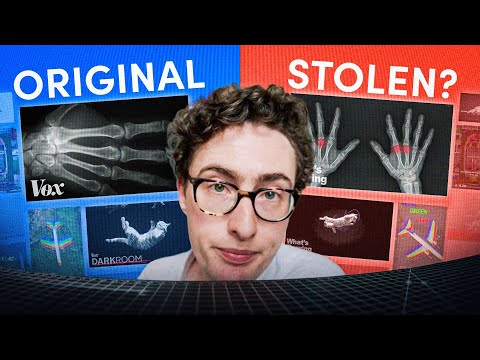
They stole my work. I tried to find them
The Impact of AI on Content Creation
Introduction to Copying and Remixing
- The speaker discusses their experience with video content creation over nearly a decade, highlighting the ongoing issue of others downloading and re-uploading their videos for personal gain.
- A new trend has emerged where old videos are being transformed into sloppy AI versions, often featuring altered visuals or recorded interpretations by other creators.
Examples of Copycat Content
- The speaker notes instances where entire videos have been remade in different languages, such as Arabic, maintaining the original's structure and content.
- There is an observable increase in AI-generated copies that mimic not only the ideas but also the visual style and voices of original creators.
Frustration and Fascination with Copying
- The speaker expresses mixed feelings about these developments; while frustrating, they find it fascinating how easily existing material can be modified to appear new.
- They reflect on the internet's foundation built on copying and remixing but raise concerns about legality and ethical implications surrounding this practice.
Case Study: "What's Buzzing"
- The speaker introduces "What's Buzzing," a copycat account focused primarily on content from Vox, showcasing a targeted approach to stealing ideas.
- While not all videos are direct rip-offs, many utilize original interviews and animations lifted from other sources, sometimes garnering more views than the originals.
Investigating Ownership and Authenticity
- The speaker investigates the origins of "What's Buzzing," noting suspicious credits that resemble those used by Vox without confirmation of authenticity.
- Despite efforts like reverse image searches to uncover identities behind the channel, concrete information remains elusive.
Importance of Visual Accuracy in Storytelling
- Emphasizing meticulousness in sourcing visuals for storytelling, the speaker highlights challenges faced due to generic categorization on stock video sites.
- They introduce Storyblocks as a solution for high-quality media downloads that ensure accurate representation in their narratives while maintaining integrity against generative content submissions.
Distinguishing Between Genuine Content and AI Remixes
- Upon reviewing "What's Buzzing" videos, some were found to genuinely differ in substance despite appearing similar at first glance; this raises questions about originality versus imitation.
Understanding Copyright and Expression in Journalism
The Case of the 19th Century Photographer
- A discussion begins about a 19th-century photographer who discovered why cats always land on their feet, leading to questions about copyright legality regarding similar content.
Insights from a Copyright Lawyer
- The narrator consults a copyright lawyer to clarify what is legally permissible when it comes to creative works that share factual information.
Idea Expression Dichotomy
- The lawyer explains that while facts and ideas cannot be owned, the unique expression of those ideas can be copyrighted.
- This concept is known as the Idea Expression Dichotomy; creators must discern if their original expression has been copied or if only factual elements have been used.
Moral Implications vs. Legal Reality
- Creators often feel a strong moral claim over their work, believing that derivative works should acknowledge their contributions, but copyright law does not support this sentiment.
- An example is given where creators recognize their work in reworded forms, yet they learn that such instances may not constitute legal infringement.
Legal Precedents in Copyright
- The case of Feist v. Rural Telephone Company illustrates how hard work does not guarantee copyright protection for factual compilations.
- Courts uphold that facts remain free for public use regardless of the effort involved in gathering them.
Creator Responses and Industry Challenges
- Following an interaction with "What's Buzzing," the narrator reflects on challenges faced by creators when seeking acknowledgment or response from platforms using similar content.
New Press Initiative
- The narrator introduces "New Press," aimed at enhancing transparency and community engagement in journalism amidst evolving media landscapes influenced by AI and algorithms.
Plagiarism Matrix Conceptualization
- A plagiarism matrix is proposed to differentiate between various types of content copying: direct copies versus AI-generated derivatives, highlighting varying degrees of effort involved.
Distinction Between Types of Content Creation
- Clear distinctions are made between shot-for-shot remakes (which require significant effort), AI-generated derivatives (which may lack depth), and simple reuploads (which involve minimal work).
Ecosystem of Content Creation Tools
- Discussion on how some platforms utilize AI tools to modify existing content just enough to avoid detection, raising concerns about originality and ethical standards in content creation.
Understanding Content Reuse on YouTube
The Mechanics of Content Creation
- Discussion on the legality of reusing content, emphasizing tutorials that guide users on how to legally copy and paste others' work.
- Kevis shares his experience managing six channels, highlighting efficiency in video production where each clip can be created in about 10 minutes with optimizations.
- Acknowledgment of the challenges faced when original creators are asked to take down their content due to reuse by others.
The Impact of Copying and AI
- Kev's transition from documentary-style content to republishing viral videos raises concerns about originality versus monetization strategies.
- Original creators express discomfort with their work being treated as raw material for AI transformation, questioning the ethics behind such practices.
- The ruthless nature of business is highlighted, where lazy creators may simply copy existing videos instead of creating original content.
Challenges for Original Creators
- Reflection on the mechanical nature of YouTube creation, where original creators struggle to keep pace with faster copycats who can easily replicate ideas.
- Mention of accounts deleting copied content but raising concerns over control and ownership in a landscape dominated by AI-generated clones.
Legal and Ethical Considerations
- Discussion around the inadequacy of current laws protecting voices against cloning technology, leading to potential exploitation without legal repercussions.
- Comparison made between stolen physical property (like a bike) and intellectual property theft through voice cloning, emphasizing feelings of helplessness among creators.
The Value of Original Work
- Recognition that while voice cloning might not break laws, it undermines the effort put into creating unique content based on research and thought.
- Insight into how lesser-known creators feel their voices lack recognition or value compared to more famous individuals, despite significant effort behind their work.
- Acknowledgment that shortcuts taken by copycats diminish the hard work involved in idea generation and research for original projects.