3 Pensamiento crítico y creativo
Introduction to Life Skills
Welcome and Introduction
- The session begins with a welcome from Elena García, who introduces herself as a clinical psychologist involved in teaching life skills alongside another instructor, Charo.
- Elena works in the psychopedagogy department at the Faculty of Medicine and expresses her eagerness to assist students throughout their learning process.
Course Overview
- The course aims to guide students through an induction process, preparing them for selection into health-related careers.
- Topics covered include critical thinking, empathy, interpersonal relationships, problem-solving, and decision-making—essential skills for future healthcare professionals.
Importance of Human Skills in Healthcare
Relevance of Emotional Intelligence
- Emphasizes the necessity for medical professionals to understand human emotions and challenges when working with patients.
- Stresses the importance of creating compassionate healthcare providers who are not only skilled but also empathetic towards patients' experiences.
Critical Thinking and Creative Thinking
Session Focus
- Today's session will focus on critical thinking and creative thinking as essential components of effective problem-solving in healthcare settings.
Historical Context
- Introduces three key historical figures: Socrates, Descartes, and Thomas Aquinas, whose ideas laid the groundwork for modern critical thinking.
Socratic Method
- Socrates developed a method that encourages rational questioning based on evidence to analyze concepts critically.
Descartes' Approach
- Descartes argued against accepting information at face value; he advocated for deeper inquiry to ascertain truth through systematic analysis.
Thomas Aquinas' Contribution
- Aquinas introduced techniques for self-reflection and questioning one's own beliefs—important for personal growth and understanding complex issues.
Understanding Critical Thinking
Definition and Application
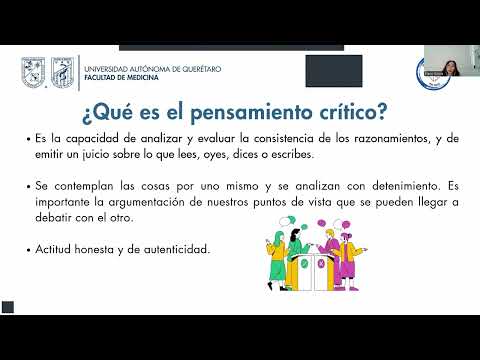
- Critical thinking is defined as the ability to analyze information consciously before forming judgments about what we read or hear. This skill is vital across various contexts including communication and decision-making.
Understanding Critical Thinking
The Importance of Objective Analysis
- Emphasizes the need for careful analysis to form personal viewpoints and arguments, especially in debates.
- Highlights the significance of honesty and authenticity in critical thinking, acknowledging personal beliefs while remaining open to alternative realities.
Avoiding Extremes in Thought
- Discusses the spectrum of critical thinking, warning against naive acceptance of information versus overly critical skepticism.
- Illustrates naive thinking with an example about believing false statements without questioning their validity.
The Role of Questioning
- Stresses the necessity of questioning received information rather than blindly following it or dismissing others' opinions.
- Defines critical thinking as fundamentally rooted in inquiry and self-questioning.
Understanding Naive Thinking
- Describes naive thinking as a comfortable but limited understanding of reality, akin to blinders on a horse that restrict vision.
- Encourages reflection on the consequences of one's thoughts and actions through central questions about truth and understanding.
Listening and Openness to Other Perspectives
- Advocates for considering different viewpoints before forming opinions, emphasizing active listening as part of critical thought.
- Points out how past experiences shape opinions but stresses the importance of setting them aside for professional objectivity.
Developing Critical Thinking Skills
- Outlines essential skills for critical thinking: clarifying information, evaluating reliability, and making informed judgments based on credible sources.
- Warns against relying on questionable sources like social media platforms compared to reputable scientific information.
Understanding Critical and Creative Thinking
The Role of Information in Thought Processes
- The process of how we gather information influences our arguments and conclusions, which we express throughout our lives. This highlights the importance of critical thinking.
Levels of Critical Thinking
- Critical thinking involves multiple levels: analysis, organization, reasoning, questioning, evaluation, positioning, and decision-making. Each step is crucial for effective thought processes.
Understanding Creative Thinking
- Creative thinking is often mistakenly associated only with the arts (music, painting). However, it extends beyond that to transform individuals fundamentally.
Defining Creativity
- Creativity is complex and cannot be universally defined; it gives meaning to our lives and evolves through awareness and learning over time.
Cognitive Skills Related to Creativity
- Key cognitive skills linked to creative thinking include perception (how we capture information), idea development (internalizing concepts), and communication (expressing organized thoughts).
Socio-Affective Skills in Creativity
- Creativity also encompasses socio-affective skills such as adaptability—how well one adjusts to new experiences—and tolerance for ambiguity—accepting uncertainty in situations.
Coping with New Environments
- For newcomers in unfamiliar settings (like students from different cities), creativity aids adaptation by managing feelings of loneliness and self-sufficiency challenges.
Attitude Towards Challenges
- A positive attitude towards difficulties can enhance one's ability to cope with new dynamics. It’s essential to confront challenges with openness rather than negativity.
Social Capabilities in Creative Thinking
- Human beings are inherently social; thus, exploring relationships enhances creativity. Curiosity drives problem-solving abilities and motivates personal growth.
Impact on Youth Happiness
- Research indicates that fostering creative thinking among youth can lead to greater happiness and satisfaction with personal achievements.
Understanding Creativity and Critical Thinking in Medicine
The Relationship Between Creativity and Personal Challenges
- The speaker reflects on their analytical nature, acknowledging difficulties in creative expression, which may hinder acceptance of personal achievements or failures.
- Factors that impede creativity include lack of freedom, excessive self-criticism, and fear of ridicule. These elements can block emotional expression and stifle innovative thinking.
- While self-reflection is important, overemphasis on negative self-assessment can lead to feelings of inadequacy and hinder creative processes.
- Emotions play a crucial role in creativity; if individuals feel constrained or emotionally blocked, it becomes challenging to explore new ideas.
- Other barriers to creativity include lack of empathy, distrust (both self-directed and towards others), authenticity issues, and disrespect towards oneself.
Importance of Critical Thinking in Medical Practice
- Critical thinking is essential for objectively evaluating medical information throughout one's career. It helps discern credible sources from unreliable ones.
- This skill enables healthcare professionals to make evidence-based clinical decisions rather than relying on assumptions or personal beliefs about treatments.
- Identifying diagnostic errors is vital; practitioners must ensure they provide the best care possible by recognizing potential mistakes in treatment plans.
- Questioning outdated or unethical practices is necessary for maintaining high standards in patient care. Awareness of evolving medical practices ensures relevance in treatment approaches.
- Continuous evolution in medicine necessitates critical thinking skills to adapt to new research findings and methodologies effectively.
The Role of Creative Thinking in Medicine
- Creative thinking fosters innovative solutions for complex medical problems. It prepares professionals for unforeseen challenges like emerging diseases or epidemics.
- Adaptability is key; being open to learning about unfamiliar conditions allows healthcare providers to respond effectively when faced with novel situations.
- Designing personalized treatment plans for patients with multiple health issues requires both critical analysis and creative problem-solving skills.
This structured approach highlights the interplay between creativity and critical thinking within the medical field while emphasizing the importance of emotional intelligence as a foundation for both skills.
Contributions to Medical Advancement
The Importance of Innovation in Medicine
- Emphasizes the need for continuous advancement in medicine through new ideas, research, and technologies. It highlights that medical professionals must propose innovative solutions rather than remain stagnant.
- Acknowledges that medical cases do not always follow a standard pattern; each case is unique, requiring practitioners to adapt their approaches based on individual circumstances.
Empathy and Human Connection in Healthcare
- Stresses the significance of fostering empathy and communication in patient care. The goal is to treat patients more humanely while developing innovative treatments.
- Critiques the notion of robotic doctors who may possess theoretical knowledge but lack the ability to communicate compassionately with patients facing serious health issues or life changes.
Creative and Critical Thinking in Medicine
- Briefly discusses the concepts of creative and critical thinking as essential components within the medical field, emphasizing their importance for future healthcare professionals.
- Concludes by indicating that further resources on critical and creative thinking will be provided for deeper understanding.