1 Crushed Garlic Clove a Day...Your Heart & Arteries Will Thank You in Many Ways | Dr Mandell

1 Crushed Garlic Clove a Day...Your Heart & Arteries Will Thank You in Many Ways | Dr Mandell

The Cardiovascular Benefits of Garlic

Understanding Cardiovascular Disease

  • Cardiovascular disease is a serious condition with many silent symptoms that manifest in later stages. Key risk factors include high blood pressure, high cholesterol, obesity, poor diet, and genetics.

The Role of Garlic in Cardiovascular Health

  • Clinical studies indicate that garlic can significantly impact cardiovascular health by inhibiting platelet aggregation, which is linked to blood vessel narrowing and acute thrombotic events.
  • Allicin, the main compound in garlic, lowers both systolic and diastolic blood pressure by preventing the production of angiotensin II—a compound that constricts blood vessels—and increasing nitric oxide production for better vessel dilation.
  • Garlic also improves cholesterol levels by lowering bad LDL cholesterol while raising good HDL cholesterol and reducing triglycerides.

Preparing Garlic for Maximum Benefits

  • To harness garlic's medicinal properties effectively against cardiovascular disease, it should be crushed or chopped to activate its beneficial compounds.
  • After chopping garlic, it should sit exposed to air for about 10 minutes to enhance its active components before consumption.

Consumption Tips

  • If raw garlic is too strong due to its sulfur smell, it can be mixed with lemon juice or honey. If necessary to cook it, use low heat for a short duration to preserve allicin's benefits.
Video description

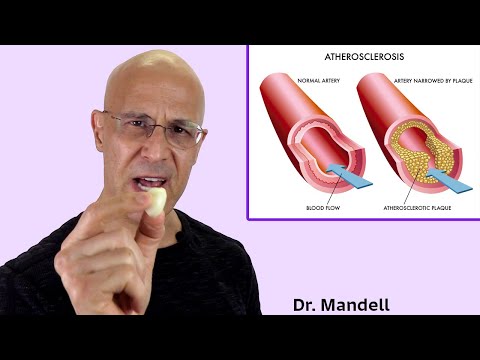
Garlic has many cardiovascular health benefits. When garlic is chopped or crushed many chemical changes take place. The production of allicin and other natural compounds in garlic relax blood vessels, reduce clogged arteries (fibrinolytic properties), and have anti-inflammatory effects, which lower blood pressure and benefit heart health. Clogged arteries result from the build-up of a substance called plaque in the arterial walls. It is also medically referred to as arterial plaque. This plaque can reduce blood flow or even block it altogether. Clogged arteries increase your risk of developing other health complications like a heart attack or stroke. Some of the most common risk factors for clogged arteries are: High levels of LDL (bad cholesterol) or low levels of HDL (good cholesterol) A high blood pressure Smoking tobacco Diabetes or elevated blood sugar levels A family history of atherosclerosis or clogged arteries Stress Obesity A sedentary lifestyle Most cases of clogged arteries do not exhibit any symptoms until a heart attack or blood clot presents itself. However, in cases where 70% or more of the arteries are blocked, you will notice the following symptoms. Severe cases of clogged arteries may exhibit symptoms like: Shortness of breath Sweating Nausea Chest pain or angina Palpitations of the heart Dizziness Weakness Please subscribe so you and your family can stay healthy and happy. https://www.youtube.com/user/motivationaldoc Please share this video with your friends and family. Wishing you and your family many Blessings! ❤️😊🙏 Dr M Make sure you like us on facebook: https://www.facebook.com/motivationaldoc/ Please leave your reviews if you wouldn't mind taking the time. Thank you. Website: https://www.motivationaldoc.com