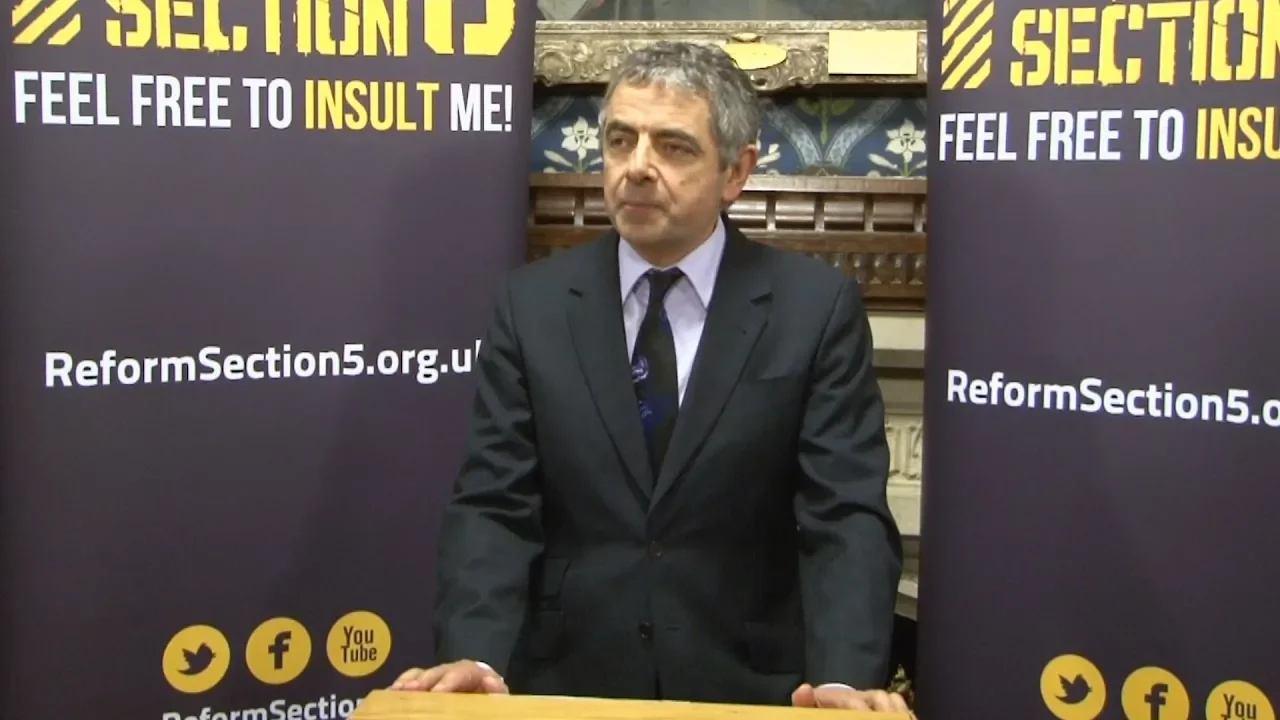
In full: Rowan Atkinson on free speech
Free Speech: A Precious Right
The Value of Free Expression
- The speaker emphasizes that free expression is the second most precious thing in life, just below basic needs like food and shelter.
- They express a personal belief in their own safety regarding free speech due to their public profile but are concerned for those with less visibility.
Examples of Misuse of Free Speech Laws
- The speaker cites absurd cases where individuals were arrested for trivial expressions, such as calling a police horse gay or labeling the Church of Scientology a cult.
- They recall a comedic sketch from "Not the Nine O'Clock News" that parodied ridiculous arrests, highlighting how art can reflect real-life absurdities.
Critique of Law Enforcement Actions
- The speaker critiques defenders of current laws who claim they work well because some cases were dropped; they argue this ignores the chilling effect on free expression.
- They highlight that many individuals face arrest and questioning without media attention, raising concerns about the law's impact on society.
Legislative Concerns and Cultural Intolerance
- Parliament's Joint Committee on Human Rights states that merely insulting language should not be criminalized, emphasizing the subjective nature of what constitutes an insult.
- The speaker argues that laws intended to control offensive speech have led to an authoritarian culture suppressing dissenting voices.
Addressing Intolerance and Promoting Dialogue
- They challenge the notion that intolerance can be countered by silencing others, suggesting it only replaces one form of intolerance with another.
- Advocating for more open dialogue rather than legal repercussions, they compare exposure to offensive speech to building immunity against childhood diseases.
Conclusion: More Speech as a Solution
- The speaker concludes that increasing robust dialogue is essential for societal resilience against hateful speech; more speech is necessary rather than repression.
The Outrage Industry and Free Speech
The Role of the Outrage Industry
- Rushdie discusses the concept of the "outrage industry," which consists of self-appointed arbiters who claim to promote public good by inciting media outrage.
- This industry pressures law enforcement to react to perceived insults, often leading to unnecessary panic among police forces.
Legal Implications and Public Order Act
- Police often resort to Section 5 of the Public Order Act, allowing arrests for statements that could be interpreted as insulting without a clear victim.
- There is a troubling lack of requirement for actual offense; merely potential offense suffices for legal action.
Challenges to Free Speech
- The rise of social media has highlighted significant issues regarding free speech that society has yet to fully address.
- While individuals must take responsibility for their words, there is an alarming increase in intolerance towards even mild criticism.
Call for Reform
- Rushdie argues that current laws should not support this growing intolerance, as it ultimately harms free speech.
Turn any video into a summary like this
YouTube links, meetings, lectures — with transcripts, search, and chat.