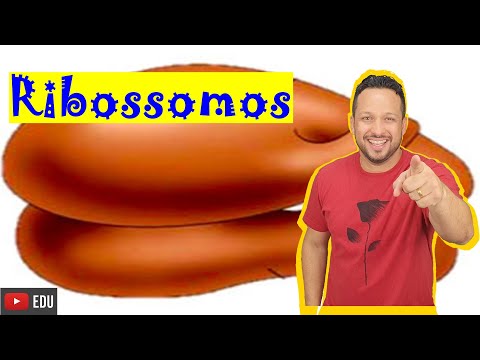
Ribossomos - Organela Citoplasmática - Citoplasma - Citologia
Introduction to the Biology Lesson
Engaging the Audience
- The speaker welcomes viewers and encourages them to subscribe, like, and share the video to help grow their community.
- Emphasizes that a larger audience allows for more educational support.
Overview of Cell Components
Focus on Ribosomes
- The lesson will focus on ribosomes, crucial cytoplasmic organelles discovered in 1955.
- Ribosomes are highlighted as non-membranous organelles found in both prokaryotic and eukaryotic cells.
Characteristics of Prokaryotic Cells
Ribosomes in Prokaryotes
- Prokaryotic cells lack membrane-bound organelles; ribosomes are the only organelle present.
- Ribosomes in prokaryotes are smaller than those in eukaryotes, which is an important distinction.
Formation of Ribosomes
Origin and Composition
- Ribosomes are formed in the nucleolus of the nucleus and consist of rRNA (ribosomal RNA) and proteins.
- They function within the cytoplasm despite being formed in the nucleus.
Structure of Ribosomes
Subunits Explained
- Each ribosome has two subunits: a larger one and a smaller one that come together during protein synthesis.
- These subunits only join when ribosomes engage in their primary function: protein synthesis.
Functionality of Ribosomes
Protein Synthesis Role
- The main role of ribosomes is to synthesize proteins by linking amino acids together.
- Any mention of ribosomes indicates involvement with protein production; they are essential for this process.
Translation Process Insights
Sites Within Ribosome
- During translation, there are specific sites within the ribosome: site A for incoming tRNA and site P for peptide exit.
- tRNA molecules bring amino acids to the ribosome based on mRNA sequences during protein assembly.
Locations of Ribosomes
Distribution Within Cells
- Ribosomes can be free-floating in cytoplasm or attached to rough endoplasmic reticulum (RER).
- Polysomes form when multiple ribosomes translate a single mRNA strand simultaneously.
Unique Presence in Organelles
Mitochondria and Chloroplast Insights
- Both mitochondria and chloroplast contain their own ribosomes due to having their own DNA, enabling local protein synthesis.
Conclusion & Engagement Reminder
Closing Remarks
- The speaker wraps up by encouraging viewers to engage with content through subscriptions, likes, comments, and sharing.
Turn any video into a summary like this
YouTube links, meetings, lectures. With transcripts, search, and chat.