The Scientific Method: Steps, Terms and Examples
Understanding the Scientific Method
Overview of the Scientific Method
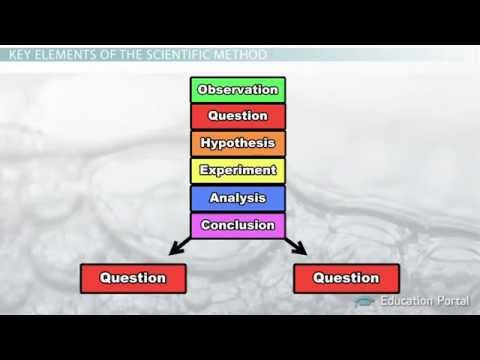
- The scientific method is a structured set of procedures that scientists use to gain knowledge about the world. It includes steps like hypothesis, experiment, and observation.
- Different scientific disciplines (e.g., chemistry, psychology, geology) may follow variations of the scientific method, leading to questions about whether there is a singular method applicable across all sciences.
Key Steps in the Scientific Method
- Question: The process begins with a scientist proposing a problem or question they want to solve. A well-formulated question typically leads to a hypothesis.
- Hypothesis: This is a potential answer or prediction regarding the outcome when testing the hypothesis through experimentation.
- Experiment: Experiments are systematic investigations designed to test hypotheses by gathering data through observations. These observations can be made using senses or scientific equipment.
- Data Analysis: After conducting experiments, scientists analyze results by comparing them against their initial predictions based on their hypotheses and observations made during experiments. Conclusions are drawn from this analysis regarding whether the hypothesis was supported or refuted.
- Conclusion: The conclusion summarizes findings and indicates if the original hypothesis was validated or disproven by gathered observations; however, it’s important to note that these steps may not always occur in a linear fashion as real-world science often requires revisiting previous steps multiple times before reaching conclusions.
Fluidity of the Scientific Process
- The scientific method is more fluid than traditionally taught; for instance, an observation might lead directly to formulating an initial question rather than following strict sequential order. Observations during experiments can also inspire new questions needing answers.
Practical Example of Applying the Scientific Method
- An example illustrates how personal experience can reflect scientific inquiry:
- Initial Observation: Difficulty connecting to the internet led to questioning whether it was an issue with just one device (laptop) or with broader connectivity issues (internet itself). Hypothesis formed based on this observation guided further investigation into other devices (desktop).