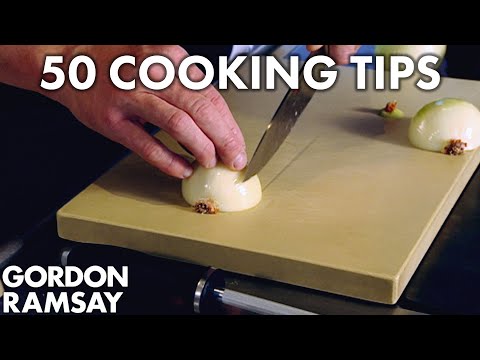
50 Cooking Tips With Gordon Ramsay | Part One
How to Improve Your Kitchen Skills
In this video, the chef shares various tips and techniques to improve your kitchen skills. From keeping your knife sharp to chopping onions and using spices effectively, these tips will help you become a more efficient cook.
Keeping Your Knife Sharp
- It is important to keep your knife sharp for better performance in the kitchen.
- Grip the steel comfortably, imagining you are holding a tennis racket or playing squash.
- Hold the steel at a 45-degree angle and grip it with your fingers behind the butt of the steel.
- Sharpen the knife by making nice long strokes from bottom to top, ensuring that you cover the entire blade.
Chopping Board Stability
- To prevent your chopping board from rocking or slipping, wet a kitchen cloth, kitchen paper, or tea towel and place it underneath.
- This will provide stability and allow you to chop with confidence.
Getting More Out of Your Veg Peeler
- The veg peeler can be used for slicing ultra-thin ribbons of vegetables, perfect for Asian dishes.
- It is also great for making delicate parmesan shavings or chocolate curls.
Maximizing Your Pepper Mill
- Adjusting the top screw of your pepper mill allows you to control the coarseness of ground pepper.
- Tighten it for finely ground pepper ideal for soups and sauces, set it in the middle for medium ground pepper suitable for general seasoning, and loosen it completely for coarse pepper perfect for steaks and fish.
Efficient Garlic Peeling
- To peel one clove of garlic, bash it with the back of a knife and easily remove the skin.
- For peeling a whole head of garlic quickly, separate the cloves into a bowl, cover, and shake vigorously for about 10 seconds. The peeled cloves can then be easily picked out.
Mastering Onion Chopping
- Leave the root of the onion intact to prevent it from bleeding and causing tears.
- Slice the onion going forward, using a three-finger grip with one finger in front and two behind.
- Guide the knife with your knuckle, keeping your fingers on top of the onion and pointing the knife towards the root.
- Make long strokes and push the onion back together. Then, halfway through, tilt the knife down and grip the onion like a tennis ball to cut through it effectively.
Starting with High Heat
- Many great cooking techniques require starting with high heat.
- If a recipe calls for a hot pan, put it on early so that it gets smoking hot.
- Remember to preheat your oven at least 20 minutes before cooking.
Maintaining a Tidy Cooking Area
- Keep a waste bowl next to you while cooking to avoid frequent trips to the bin.
- This helps maintain cleanliness and efficiency in your cooking area.
Seasoning Tips
- Avoid adding salt to eggs before cooking as it ruins texture and dulls color. Save seasoning until the end.
- Ensure meat is at room temperature before cooking for better results. Cook straight from the fridge results in tough meat. Also, let cooked meat rest afterward for tenderness.
De-seeding Chilies
- Hold chili upright and rub between hands to release seeds from inside.
- Cut off the top of chili and open it up to remove seeds easily.
Drying Spare Chilies
- Tie together chili stalks using string and hang them in your kitchen for a few weeks to dry.
- Dried chilies can be crumbled into dishes for added heat.
Chili in Sweet Dishes
- Add chilies to melty chocolate ganache for chocolate chili truffles or sprinkle them over fresh fruit like mango or watermelon.
Handling Chili Heat
- To remove chili heat from sensitive skin, squeeze a little lemon juice on your fingers.
- Lemon juice instantly gets rid of the heat.
Zesting Lemons
- Use a fine zester to zest lemons, avoiding the pith. Lift off zest from a plate rather than a cutting board for easier handling.
The transcript is already in English, so there is no need to translate it.
New Section
This section provides tips and tricks for cooking techniques and ingredient handling.
Finely Chopping Garlic and Ginger
- Adding a pinch of salt when chopping or mincing garlic helps break down the fibers for better results.
- To easily remove the skin from ginger, use a teaspoon instead of a knife.
Maximizing Flavor
- Don't throw away vanilla pods; stick them inside jars of sugar to infuse flavor.
- Store leftover ground spices in an airtight jar for up to two months.
Cooking Perfect Rice
- Rinse rice with cold water before cooking to prevent clumping.
- Infuse plain rice with cardamom pods and star anise for added flavor.
- Use one part rice to one and a half parts water for perfect basmati rice.
- Simmer rice covered without lifting the lid for 8 to 10 minutes until all water is absorbed.
- Fluff cooked rice with a fork to separate grains and make it light and fluffy.
Kitchen Tips
- Use leftover rice in stir-fries, scrambled eggs, or salads.
- Prevent browning of potatoes, apples, and avocados by covering them with water and adding lemon juice.
- Keep herbs fresh by placing them in a glass of water; they can stay fresh for up to a week.
- Make flavored oil using leftover herb stems soaked in warmed olive oil; great for salads and pastas.
Cooking Pasta
- Cook pasta in a large pan with plenty of water and olive oil to prevent sticking.
- Bring the water to a rolling boil before adding pasta for even cooking.
- Test pasta for doneness by lifting a strand; it should be firm but not crunchy.
- Drain cooked pasta in a colander and mix with olive oil to prevent sticking.
Other Tips
- Use leftover bread to make breadcrumbs or freeze chunks for croutons.
- Season dried pulses like chickpeas or lentils at the end of cooking to avoid toughness.
- Start boiling potatoes in cold water to ensure even cooking without falling apart.
The transcript is already in English, so no language conversion is needed.
New Section
This section provides tips and techniques for skinning and filleting salmon.
Skinning and Filleting Salmon
- To remove the skin from the salmon, start by twisting the knife horizontally underneath the salmon. Pull the skin and slice the salmon underneath, letting the knife do the work.
- Flip the skin back over and check if you're not leaving too much salmon on top of it. Slowly pull it back and wrap it around your fingers.
- Pull the salmon towards you and slice all the way through to separate it from the skin.
- The pin bones in a fillet of salmon only go halfway along. Remove them easily by running a knife down and using tweezers to pull them out.
New Section
This section provides tips for utilizing fish trimmings, making fish stock, steaming vegetables, and achieving crispy roast potatoes.
Utilizing Fish Trimmings
- Use fish trimmings to make a simple but versatile fish stock by adding them to water, wine, bay leaf, and chopped vegetables.
Steaming Vegetables
- Steam vegetables in their own juices for intense flavor. Add them to a pan with butter, seasoning, and cook on low heat with a lid on to lock in moisture.
Crispy Roast Potatoes
- Parboil potatoes, let them steam dry, then sprinkle with semolina or flour before roasting for extra crispiness.
New Section
This section provides tips for browning meat or fish before cooking.
Browning Meat or Fish
- Dry meat or fish with kitchen roll before cooking to achieve better browning. Excess moisture can cause steaming instead of searing, resulting in a less rich brown crust.
New Section
This section provides tips for freezing leftover wine, using frozen lemons and limes as ice cubes, and making homemade ice cream.
Freezing Leftover Wine
- Freeze remaining wine in freezer bags or ice cube trays for later use in stocks and sauces.
Frozen Lemons and Limes as Ice Cubes
- Cut lemons and limes into wedges, freeze them, and use them as flavor-enhancing ice cubes that won't dilute your drink.
Homemade Ice Cream
- Enhance store-bought vanilla ice cream by mixing in berries, chocolate, rum, or boozy raisins.
New Section
This section provides tips for jointing a chicken for fast food dishes.
Jointing a Chicken
- Open up the legs of the chicken and pierce the skin carefully without cutting into the breast.
- Pull back the drumstick to pop out the joint. Slice through the joint using the weight of the knife.
- Scrape tendons from halfway down the drumstick. Slice through to separate it from the thigh.
- Pull out the wing and slice through at its joint.
- Slice down on the back of the crown to separate two plump chicken breasts from each side.
- Utilize all parts of the chicken: two drums, two thighs, two wings, two breasts, and the carcass for stock.
New Section
This section provides tips for skewers, marinades, and juicing lemons.
Skewers
- Soak skewers in water before making kebabs to prevent them from burning. Alternatively, use rosemary branches stripped of their leaves for added flavor.
Marinades
- Place fish or meat in a plastic storage bag while marinating for easy storage and less cleanup.
- Roll lemons hard under your palm before juicing to extract maximum juice. Add a couple of drops of lemon juice to rice while cooking to keep it white and bright.
- Touching steak can indicate its doneness. Rare is similar in firmness to the inside of the thumb, medium is semi-firm with slight resistance, well-done is firmer.
New Section
This section provides tips for scoring meat or fish to cook faster and preventing stains on Tupperware containers.
Scoring Meat or Fish
- Score meat or fish to allow heat penetration and deeper absorption of marinades.
Stain-Free Tupperware
- Coat Tupperware thinly with oil as a barrier between plastic and food to prevent staining.
The transcript ends abruptly without completing the last tip mentioned in the video.
New Section Starting Seeds Indoors
This section discusses the process of starting seeds indoors and then moving them outside when they are ready.
Starting Seeds Indoors
- Shell or seedling trays are used to start seeds indoors.
- The seeds are planted in these trays and kept indoors until they are ready to be moved outside.
- This method allows for better control over the growing conditions and helps the plants establish a strong root system before being exposed to outdoor elements.