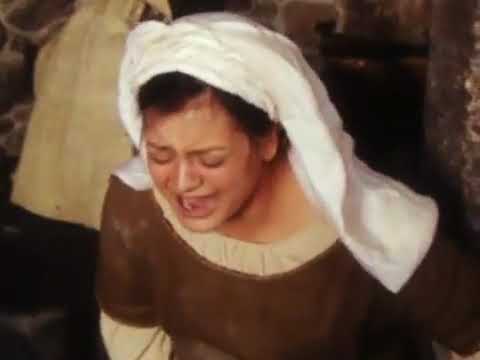
📼 Historias da Galiza | 10 | A historia de ser mulleres (Documentario Completo en Galego, 2007)
The Statue of Maria Pita in the Crown
This section introduces the statue of Maria Pita, a woman who played a significant role in changing the history of her city. The question is raised whether Maria Pita truly represents the spirit of Galician women and their history.
Maria Pita's Heroic Act
- In 1589, during a battle with Admiral Drake's troops, Maria Pita fought bravely alongside other women from the city.
- She confronted an enemy soldier who had managed to breach the city wall.
- Her courageous act had a psychological impact on the British soldiers, leading them to retreat.
Exploring Maria Pita's History
- Visiting Maria Pita's house reveals that she was a woman associated with weapons and bravery.
- While she is often mentioned alongside other notable Galician women such as Queen Urraca, Rosalía de Castro, and Emilia Pardo Bazán, her story is unique.
- To truly understand Galician women's history, we must also consider the anonymous heroines who maintained households throughout centuries.
Women's History in Galicia
This section delves into the historical context of women in Galicia. It explores how patriarchy shaped society and discusses the special relationship between women and land.
Patriarchy and Women's Role
- Throughout history, Galician society has been predominantly patriarchal, influenced by Greco-Latin ideas that relegated women to subordinate positions.
- Christian beliefs reinforced gender discrimination but also established a special connection between Galician women and land.
Women's Relationship with Land
- Women played essential roles in both productive and reproductive aspects of life in Galicia.
- They worked on land even while fulfilling domestic responsibilities such as cooking and caring for livestock.
- Women's contributions to the economy were significant, but they often did not receive proper recognition or compensation.
Maria Martinez and Land Ownership
This section focuses on the life of Maria Martinez, a woman who worked on land and had responsibilities both at home and in agriculture.
Maria Martinez's Life
- Maria Martinez, at 22 years old, was already engaged in agricultural work while expecting her first child.
- She worked alongside her partner Joan Pérez on land owned by the homoste of Santo Estebo de Rivas de Sil.
- The couple faced challenges as forayers (non-local residents), but they managed to secure a contract for housing and marriage.
Gender Inequality in Land Ownership
This section explores gender inequality in land ownership and highlights the struggles faced by women like Maria Martinez.
Unequal Contracts
- In Galicia, around 75% of land contracts favored men over women.
- Women were often forced to pay for land if they wanted to have any rights or control over it.
Maria Martinez's Responsibilities
- In addition to working on land, Maria Martinez also took care of domestic tasks such as cooking and managing livestock.
- Her diet mainly consisted of pan de centeo (rye bread), which was a staple food based on what she could produce or acquire locally.
Conclusion
The transcript provides insights into the history of Galician women through the story of Maria Pita and other anonymous heroines. It highlights the patriarchal nature of society, the special connection between women and land, and the challenges faced by women in terms of ownership and recognition.
New Section
This section discusses the representation of childbirth in medieval times and the role of women in society.
Representation of Births in Medieval Times
- The old Santa Maria figures out miniatures that represent a part of rich and powerful with a tomato and a help.
- These miniatures simplify the importance that the young farmer had.
- There were many medieval representations of births.
Role of Women in Childbirth
- Maria, at age 1, is recovering from childbirth perfectly.
- Women risked their lives during childbirth in those times.
- Old women would accompany young women to be domestic and educated.
- Women would breastfeed rich sons in the countryside during summer.
- Women had specific occupations apart from being housewives.
New Section
This section explores various occupations for women in medieval times.
Occupations for Women
- Women were frequent in artisan offices and trade activities like selling goods at markets.
- They also participated in hospitals and private-seated houses as caregivers or servants.
- Some women worked as soldiers or artisans, although acceptance was limited.
- In Santiago, certain guild rights were granted to women by law in 1443.
New Section
This section discusses the roles of men and women in different occupations during medieval times.
Gender Roles in Occupations
- Men primarily worked as artisans while women worked more often in markets or servitude roles.
- Men were taken for war, while women had specific occupations apart from household duties.
- Women engaged in selling goods at markets and exchanging them for cards or agricultural products.
New Section
This section focuses on the story of Maruja Pantín, a woman facing difficulties in finding employment.
The Story of Maruja Pantín
- Maruja Pantín lives in a humble house and is trying to find a job at the tobacco factory.
- She faces challenges due to her family situation and lack of opportunities.
New Section
This section highlights the struggles faced by women from old families and how they are helped by men.
Challenges Faced by Women
- Maruja's case exemplifies the difficulties faced by women from old families who receive help from men.
Maruja's Work in the Factory
This section discusses Maruja's role in the factory and the challenging nature of her work.
Maruja's Role and Hard Work
- Maruja helps her family enter the factory.
- Her occupation involves separating tobacco leaves from fire.
- The work is physically demanding and requires great attention to detail.
- The owners of the factory implemented forced institutional industrialization.
Working Conditions in Galicia
This section explores the working conditions in Galicia during the 19th century.
Family Members Working Together
- Families often worked together, with multiple generations present.
- Some workers started as young as nine years old and continued working until their seventies.
- Illiteracy was common among workers, who mostly came from rural areas.
Gender Pay Gap and Cost Reduction
- Women received significantly lower salaries compared to men for doing similar work.
- Substituting male workers with female workers helped reduce production costs.
Women's Rights and Civil Wars
This section discusses women's rights during civil wars and their struggle for independence.
Women's Rights During Civil Wars
- Solidarity with societies was important for women during civil wars.
- Women had limited rights before the 20th century but gradually gained more labor opportunities.
Symbolic Importance of Female Workers
- Female workers played a crucial role in the tobacco industry, being pioneers in Galicia.
- Their work was seen as a tribute to their dedication and independence.
Women's Education and Social Status
This section focuses on women's education and social status during different time periods.
Limited Access to Education
- Female access to education was limited, especially in rural areas.
- The number of educated women increased with the expansion of primary schools.
Women's Role in Society
- Women were often assigned traditional roles as wives and mothers.
- Some exceptional women challenged societal norms and contributed to improving women's conditions.
Ernestino Teros Estelo's Contribution
This section highlights the contribution of Ernestino Teros Estelo, an educator, towards improving education for children.
Ernestino Teros Estelo's Efforts
- Ernestino worked as a teacher and played a significant role in promoting education.
- He visited families and encouraged children to attend school.
Teachers' Impact on Education
This section discusses the influence of teachers on education and their efforts to introduce new ideas.
Innovative Teachers
- Teachers like Gayo or Louis de Zulueta brought new pedagogical ideas.
- In 1915, Ernestino became a teacher at the Ponte Vedra school and collaborated with other educators.
Conclusion
The transcript provides insights into Maruja's work in the factory, working conditions in Galicia, women's rights during civil wars, women's education and social status, and the contributions of educators like Ernestino Teros Estelo. It sheds light on the challenges faced by workers and advocates for improved opportunities for women in society.
New Section
This section focuses on Ernestino Tero's initiatives and his visit to the school of Villagarcian. It also mentions his interest in knowing about the children of the Mariner family.
Ernestino Tero's Initiatives and School Visit
- Ernestino Tero, as president of the provincial council of education, is proud of initiatives like Yascantins or school comedors.
- He visits the school of Villagarcian to meet the press, assess the state of classes, identify needs of teachers and students.
- He is particularly interested in knowing if the children from the Mariner family are attending this school.
- The small students are there with their team but not happy to share their classmates with other schools.
- Ernestino is satisfied with Joseu Rostro's enthusiasm as a teacher.
New Section
This section highlights Ernestino Tero's personal victory as an educator and his support for women's rights during the Republican era.
Personal Victory and Support for Women's Rights
- As a teacher, Ernestino saw all kids' success as a personal victory.
- The old school where he was born 20 years ago was called "School of the Mariner".
- Despite not belonging to any feminist association, he defended women's rights throughout his career.
- The republican constitution in 1931 aimed at achieving equality between men and women through various laws and provisions.
- However, these political conquests were hindered by civil war and Francoism.
New Section
This section discusses the repression faced by teachers during Francoism and highlights the reform of Ernestino's family house in Rdondela.
Repression and Family House
- Ernestino's family house in Rdondela was used as a measure of pressure against families of teachers during Francoism.
- In 1936, Ernestino received a letter suspending him from the pre-Sold service. He later left the service altogether.
- Many teachers in Galicia were repressed during that time. It was a sad and cruel story for women who lost their rights under Franco's regime.
- The family house has been completely reformed and remodeled today.
New Section
This section mentions Elisa and Jimena Fernández de la Vega, the first licensed medical professionals in Galicia, and highlights the progress made by women in various fields.
Progress of Women
- Elisa and Jimena Fernández de la Vega were the first licensed medical professionals in Galicia in 1909.
- Today, there is an increasing number of women enrolled in higher education programs, holding high-ranking positions, earning salaries, and contributing to their families' income.
- However, there are still some pending issues regarding gender equality for Galician women in the 21st century.